

What Is CBD Bioavailability and Why It Matters
TL;DR:
- CBD bioavailability is the percentage of cannabidiol that enters your bloodstream and produces a therapeutic effect after consumption. Different delivery methods and formulations significantly impact how much CBD your body absorbs and how quickly it acts. Understanding these factors helps optimize CBD use rather than relying solely on milligram labels.
CBD bioavailability is the percentage of cannabidiol that actually enters your bloodstream and produces a therapeutic effect after you consume it. Most people focus on milligrams on the label, but that number tells only part of the story. A 50mg gummy and a 50mg tincture deliver very different amounts of active CBD to your system. Understanding what is CBD bioavailability is the single most useful thing you can do to get real value from any CBD product you buy.
What is CBD bioavailability and how does it work?
CBD bioavailability is defined as the fraction of a consumed dose that reaches systemic circulation unchanged and available to act on the body. The term comes from pharmacology, where it applies to any drug or supplement. For CBD specifically, bioavailability is the key limiting factor affecting dose efficiency, meaning the number on the label does not equal the amount your body actually uses.
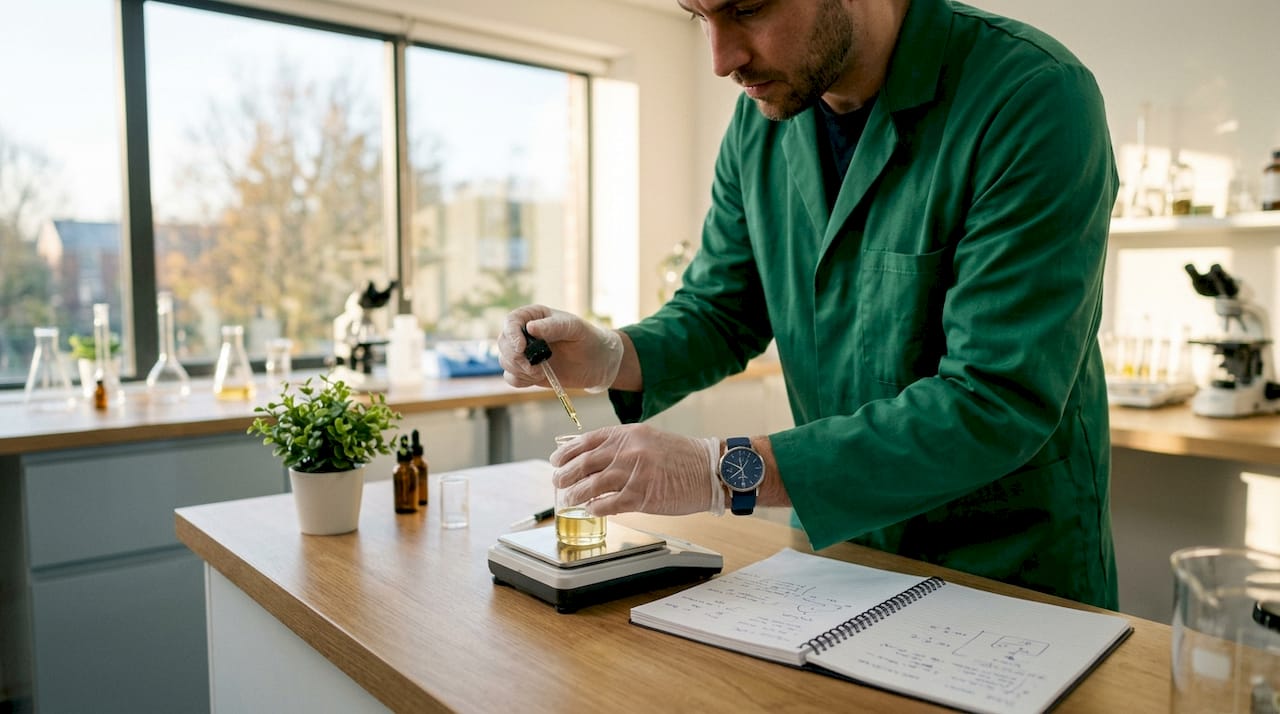
Poor oral bioavailability is the central challenge with CBD. The compound is fat-soluble, which means it does not dissolve easily in the watery environment of your gut. On top of that, your liver intercepts a large portion of orally consumed CBD before it ever reaches your blood. This process is called first-pass metabolism, and it is the main reason swallowing CBD is the least efficient way to take it.
The practical consequence is significant. Bioavailability, not dose alone, predicts how effective a product will be. A lower-dose product with high bioavailability can outperform a higher-dose product with poor absorption. Knowing this shifts your buying decisions from chasing big milligram numbers to understanding how a product is formulated and how you take it.
How do different delivery methods affect CBD absorption?
The route of administration is the biggest single variable in CBD absorption rate. Each method bypasses or engages the liver differently, which changes how much CBD reaches your blood and how quickly you feel it.
| Delivery method | Estimated bioavailability | Onset time | Duration |
|---|---|---|---|
| Oral (swallowed) | 6%–15% | 60–120 minutes | 6–8 hours |
| Sublingual (under tongue) | Up to ~35% | 15–45 minutes | 4–6 hours |
| Inhalation (hemp flower) | 30%–50% | 5–15 minutes | 2–3 hours |
| Topical | Localized only | 15–45 minutes | 4–6 hours |
| Rectal | 70%–80% | 30–60 minutes | 6–8 hours |
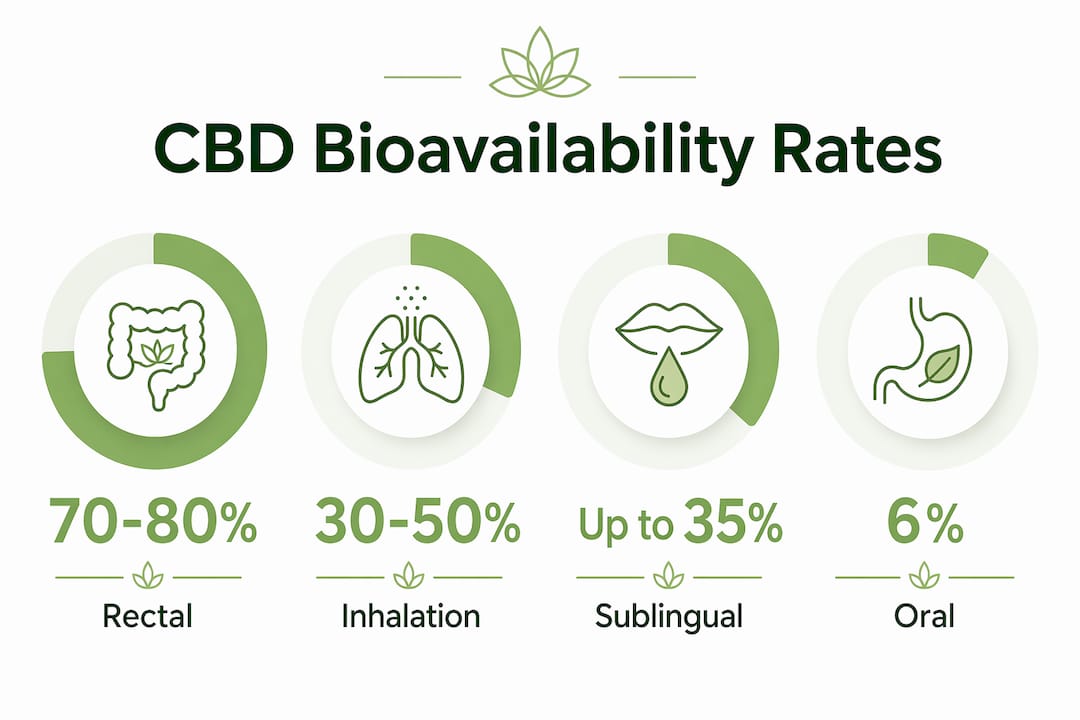
Inhalation delivers CBD directly into the lungs and from there into the bloodstream, skipping the liver almost entirely. That is why hemp flower produces effects within minutes. The tradeoff is a shorter duration and the respiratory considerations that come with smoking or vaping.
Sublingual tinctures offer a practical middle ground. Holding a tincture under your tongue allows CBD to absorb through the mucous membranes directly into the bloodstream, bypassing first-pass metabolism. Sublingual bioavailability can reach up to 35% when held for 60–90 seconds, which is a meaningful improvement over swallowing.
Topicals work differently from every other method. They do not enter the bloodstream in meaningful amounts. Instead, they act locally on skin receptors and underlying tissue, which makes them useful for targeted relief but not for systemic effects. You can read more about topical absorption nuances and how formulation affects how deep a product penetrates.
Pro Tip: If you use a CBD tincture, hold it under your tongue for a full 60–90 seconds before swallowing. Most people swallow within 10–15 seconds and lose a significant portion of the absorption benefit.
What formulation technologies increase CBD bioavailability?
Formulation science is where the biggest gains in CBD absorption are happening right now. Two technologies stand out: nanoemulsions and powdered emulsion formulations.
A nanoemulsion breaks CBD oil into microscopic droplets, typically under 100 nanometers in size. Those tiny droplets have a much larger surface area relative to their volume, which means your gut absorbs them far more efficiently than standard oil. Nanoemulsion formulations improve bioavailability by approximately 3–4 times compared to traditional oil-based products and produce onset times of 10–30 minutes. That is a dramatic difference for someone who has been waiting two hours for a gummy to work.
Powdered emulsion formulations offer similar advantages. Powdered CBD formulations show superior bioavailability and more consistent pharmacokinetics compared to oil-based CBD, and their absorption profiles hold up under both fed and fasted conditions. That consistency matters for people who want predictable dosing rather than results that vary based on when they last ate.
Here is what these technologies mean in practical terms:
- A nanoemulsion product at 25mg may deliver more active CBD than a standard oil product at 75mg.
- Faster onset reduces the temptation to re-dose prematurely, which is one of the most common CBD mistakes.
- More consistent absorption means you can actually calibrate your dose over time, rather than guessing.
- Water-soluble CBD powders can be mixed into beverages, making them easier to incorporate into a daily routine.
Understanding how carrier oils influence absorption is also worth your time, since the base oil in a tincture affects how well CBD disperses and absorbs in your gut.
Pro Tip: When shopping for CBD tinctures or gummies, look for products that specifically mention nanoemulsion or water-soluble technology on the label. These are not marketing terms. They reflect real differences in how your body processes the product.
What personal factors affect how your body absorbs CBD?
Even with the same product and the same dose, two people can have very different experiences. Several individual factors drive that variability.
-
Diet and meal timing. Consuming CBD with high-fat meals increases peak plasma concentration by approximately 2.8 times compared to taking it on an empty stomach. Avocado, nuts, olive oil, or full-fat dairy eaten alongside an oral CBD product can meaningfully boost how much CBD your body absorbs.
-
Liver enzyme activity. Your liver uses a family of enzymes called cytochrome P450 to metabolize CBD. People with higher enzyme activity break down CBD faster, which reduces the amount that reaches circulation. This is partly genetic and partly influenced by other medications or supplements you take.
-
Gut health. A healthy gut lining with good microbial diversity absorbs fat-soluble compounds more efficiently. Chronic inflammation, leaky gut, or poor microbiome diversity can reduce CBD absorption, even from a high-quality product.
-
Body composition. CBD is fat-soluble and accumulates in fatty tissue. People with higher body fat percentages may find that CBD distributes into fat stores before reaching the bloodstream, which can delay or reduce peak effects.
-
Dose titration. Individual variability in anatomy and liver enzyme activity means CBD effects are genuinely unpredictable from person to person. Titration, starting low and increasing gradually, is the only reliable way to find your personal effective dose. A CBD dosage guide built around individual factors is far more useful than any generic recommendation.
Common mistakes that reduce CBD effectiveness
Several widespread misconceptions lead people to waste money and get poor results from CBD.
Mistaking label dose for absorbed dose. The milligrams on a CBD label represent total CBD in the product, not the amount your body will use. Total CBD concentration on product labels does not equate to therapeutic efficacy. A 100mg product with 8% bioavailability delivers about 8mg to your system. A 30mg product with 35% bioavailability delivers about 10.5mg. The second product wins, despite the smaller number on the label.
Dose stacking from oral products. Delayed CBD onset from oral ingestion runs 60–120 minutes. Many people take a second dose at the 30-minute mark because they feel nothing, then experience the full effect of both doses at once. That is dose stacking, and it is the most common cause of uncomfortable CBD experiences.
Skipping sublingual technique. True sublingual absorption requires holding the product under the tongue long enough for transmucosal uptake to occur. Swallowing quickly converts a sublingual product into an oral one, with all the first-pass metabolism losses that come with it.
- Always wait the full onset time before considering a second dose.
- Use a timer when taking sublingual products to hold for the full 60–90 seconds.
- Track your doses and effects in a simple journal to identify patterns over time.
- Consider CBD side effects that can arise from improper dosing before adjusting upward.
Pro Tip: Set a phone timer for 90 minutes after taking an oral CBD product. Do not re-dose until that timer goes off. This single habit eliminates dose stacking for most people.
Key Takeaways
CBD bioavailability determines how much of any dose actually reaches your bloodstream, making delivery method and formulation technology more important than the milligram count on any label.
| Point | Details |
|---|---|
| Bioavailability defines real dose | The labeled mg is not what your body absorbs; bioavailability is the actual limiting factor. |
| Delivery method matters most | Sublingual and inhalation routes outperform oral ingestion in absorption rate and speed. |
| Nanoemulsions raise absorption | Advanced formulations improve bioavailability by 3–4 times over standard oil-based products. |
| Fat-rich meals boost oral CBD | Eating high-fat food with oral CBD can increase absorption by approximately 2.8 times. |
| Titrate before increasing dose | Individual metabolism varies widely; start low and increase slowly to find your effective dose. |
Why bioavailability changed how I think about CBD
Most people come to CBD with a simple question: how much should I take? I spent a long time focused on that same question before I realized it was the wrong one. The better question is: how much is actually reaching my system?
Once I started thinking in terms of bioavailability rather than milligrams, everything shifted. I stopped buying the highest-mg products and started paying attention to formulation. I switched to sublingual tinctures and actually held them under my tongue. I started taking oral products with a meal that had some fat in it. The results were noticeably more consistent, not because I changed the dose, but because I changed how much of the dose my body could use.
The other thing I would tell anyone starting out: patience is not optional. CBD does not work like ibuprofen. Your body needs time to absorb it, and your personal physiology shapes the experience in ways no label can predict. Chasing higher mg numbers without understanding absorption is expensive and often disappointing. Education about how CBD works in the body is worth more than any single product purchase.
— Juiced
Kingbuddha products formulated for real absorption
Understanding bioavailability is only useful if you apply it to what you actually buy. Kingbuddha builds its product line around this principle, offering formats that work with your body's absorption pathways rather than against them.
Kingbuddha's CBD tinctures are designed for sublingual use, giving you the faster onset and higher absorption that comes from bypassing first-pass metabolism. For those who prefer a familiar format, CBD sleep support gummies combine CBD with sleep-supporting ingredients in a consistent, measured dose. If localized relief is your goal, CBD topicals deliver targeted support without entering the bloodstream. Every Kingbuddha product is third-party tested and made with U.S.-sourced hemp, so you know exactly what you are getting.
FAQ
What is CBD bioavailability in simple terms?
CBD bioavailability is the percentage of a CBD dose that actually enters your bloodstream and produces an effect. The rest is broken down or excreted before it can work.
Which CBD delivery method has the highest bioavailability?
Rectal delivery reaches 70%–80% bioavailability, but inhalation (30%–50%) and sublingual administration (up to 35%) are the most practical high-absorption options for most people.
Does eating before taking CBD increase absorption?
Yes. Consuming CBD with a high-fat meal can increase peak plasma concentration by approximately 2.8 times compared to taking it on an empty stomach, making meal timing a simple and effective strategy.
What is dose stacking and why does it matter?
Dose stacking happens when someone takes a second CBD dose before the first one has fully kicked in, typically because oral CBD takes 60–120 minutes to produce effects. Taking both doses at once can cause unwanted side effects.
How do nanoemulsion CBD products differ from standard oil?
Nanoemulsion products break CBD into microscopic droplets that absorb far more efficiently in the gut, improving bioavailability by approximately 3–4 times and reducing onset time to 10–30 minutes compared to traditional oil-based formats.