

CBD Side Effects Explained: What You Need to Know
TL;DR:
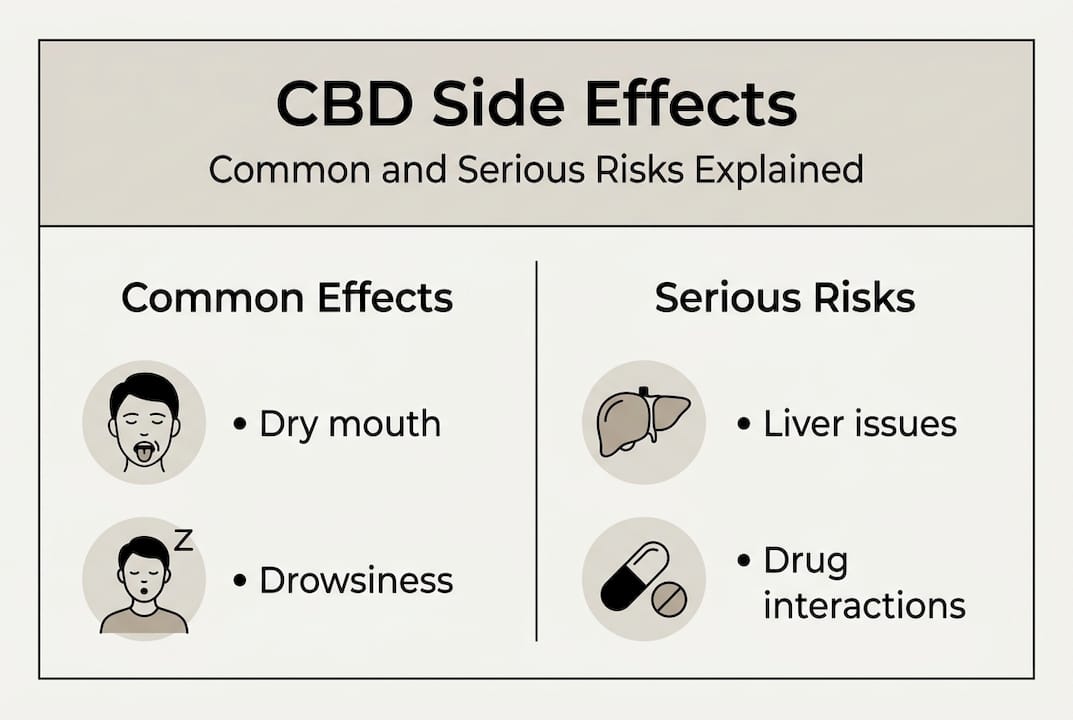
- CBD can cause mild side effects like dry mouth, drowsiness, and mood changes.
- Serious risks include liver toxicity, especially at high doses or for at-risk groups.
- People on medications or with health conditions should consult a doctor before use.
CBD has earned a reputation as a gentle, natural wellness tool, but calling it completely side effect-free is misleading. A growing body of clinical research shows that cannabidiol (CBD) can cause real, measurable effects in the body, ranging from mild dry mouth to rare liver enzyme changes. Knowing what those effects are, who faces the highest risk, and how to spot them early is the difference between a positive wellness experience and an avoidable problem. This guide walks you through what the science actually says, so you can make a genuinely informed decision.
Table of Contents
- What are the most common CBD side effects?
- More serious and less common side effects
- Special risks: Drug interactions and unique reactions
- Unregulated products and unknowns: What most users overlook
- Our perspective: Why 'natural' doesn't mean risk-free
- Shop smarter: Explore quality CBD options with confidence
- Frequently asked questions
Key Takeaways
| Point | Details |
|---|---|
| Common side effects | Most people experience only mild side effects like dry mouth, drowsiness, and digestive issues at low doses. |
| Serious risks exist | Higher doses and certain health conditions can increase the chance of liver damage, drug interactions, or severe reactions. |
| Drug interactions | CBD affects how your body processes other medications, which can make some drugs stronger or less safe. |
| Unknowns remain | There are still unanswered questions about the safety of long-term and unregulated CBD use. |
What are the most common CBD side effects?
Most people who try CBD for the first time expect to feel relaxed. What they don't expect is a cottonmouth sensation, a sudden trip to the bathroom, or feeling oddly sluggish the next morning. These reactions are more common than many wellness blogs let on, and understanding them upfront saves a lot of frustration.
Our CBD side effects guide covers these reactions in depth, but here is the core list of what users most frequently report:
- Dry mouth (also called xerostomia)
- Diarrhea or loose stools
- Decreased appetite
- Drowsiness or sleepiness
- Fatigue
- Mood changes, including irritability
Common side effects include dry mouth, diarrhea, decreased appetite, drowsiness, fatigue, and mood changes, particularly at higher doses or when starting out. The good news is that most of these effects are dose-dependent, meaning they tend to appear when someone takes too much too fast.
| Side effect | Reported frequency | Typical dose range |
|---|---|---|
| Dry mouth | Very common | Any dose |
| Drowsiness | Common | Medium to high |
| Diarrhea | Common | High doses |
| Appetite changes | Moderate | Varies |
| Fatigue | Moderate | Medium to high |
| Mood changes | Less common | High doses |
"Many users only experience one or two of these effects, not all of them. Starting low and going slow is the most practical way to find a dose your body tolerates well."
A key point worth noting: people new to cannabidiol (CBD) are more likely to experience these effects simply because their bodies haven't adjusted. Tolerance builds with consistent use, and for many people, mild side effects fade after the first week.
More serious and less common side effects
While common side effects are often mild, it's equally important to recognize the more serious risks that can affect certain people. These aren't everyday occurrences, but they are real, documented in clinical settings, and worth knowing about before you start a CBD routine.
The most clinically significant concern is liver toxicity. Serious side effects can include liver damage or elevated liver enzymes, especially at higher doses above 300mg per day, along with interactions with medications that the liver processes. This was observed most clearly in clinical trials for Epidiolex, the only FDA-approved CBD medication.
| Side effect | Frequency | Severity | Primary risk factor |
|---|---|---|---|
| Elevated liver enzymes | Uncommon | Moderate to serious | High doses, liver disease |
| Severe drowsiness | Uncommon | Moderate | Polypharmacy, high dose |
| Compromised motor skills | Rare | Moderate | High dose, elderly users |
| Liver toxicity | Rare | Serious | Pre-existing liver conditions |
People in the following groups face a meaningfully higher risk of serious side effects:
- Older adults whose liver and kidney function may already be reduced
- People on multiple medications (polypharmacy), since CBD can change how those drugs are processed
- Anyone with liver disease, fatty liver, or elevated baseline liver enzymes
- People taking blood thinners or seizure medications
CBD effects on older adults are particularly worth understanding because physiological changes with age can amplify both CBD's benefits and its risks.
Pro Tip: If you're in any of the higher-risk groups listed above, ask your doctor for a liver enzyme panel before starting CBD and again after 4 to 6 weeks of regular use. It's a simple blood test that gives you real data instead of guesswork.
The good news is that most serious side effects are reversible once CBD use stops or doses are reduced. Catching the warning signs early, like unusual fatigue, nausea, or yellowing of the skin, makes a significant difference.

Special risks: Drug interactions and unique reactions
Beyond general risks, some effects come from CBD's complex interaction with other medications and the body's chemistry. This is one area where the gap between popular wellness messaging and clinical reality is widest.
CBD is metabolized by a group of liver enzymes called CYP450 enzymes, particularly CYP3A4 and CYP2C19. When CBD inhibits these enzymes, it slows down the breakdown of other drugs in your system, which means those drugs build up to higher levels than intended. The result can range from increased sedation to dangerous toxicity.
CBD inhibits CYP enzymes, increasing blood levels of antiseizure medications, sedatives, and blood thinners, while also raising hepatotoxicity risk when combined with acetaminophen or valproate.
Drugs most commonly affected include:
- Clobazam (antiseizure): blood levels rise significantly with CBD
- Methadone (opioid treatment): elimination slows, increasing overdose risk
- Warfarin (blood thinner): risk of bleeding increases
- Valproate (seizure and mood disorder medication): serious liver risk when combined
- Sedatives and sleep aids: compounded drowsiness
Example: A person taking warfarin who adds CBD gummies without telling their doctor may see their bleeding time increase substantially within weeks. This is not a theoretical risk. It has been reported in clinical settings.
There are also rarer reactions worth knowing about. Cannabinoid hyperemesis syndrome (CHS) is one. CHS causes cyclical vomiting and nausea that only resolves with hot showers or stopping cannabis use entirely. It's more associated with high-THC use, but heavy CBD product users who consume trace THC over time have reported it.
Researchers studying CBD drug interaction mechanisms continue to find new pathways, which is one reason why treating CBD like a harmless supplement when you're on a complex medication regimen is risky.
For those wondering about CBD effects for elderly individuals specifically, the interaction risks are compounded because many older adults are already managing multiple prescriptions.
Unregulated products and unknowns: What most users overlook
Even with a solid understanding of side effects and interactions, choosing a safe CBD product remains a major challenge for most consumers. The market is flooded with options, and not all of them are what they claim to be.
Unregulated OTC products vary widely in purity and THC content, which increases unpredictable risks including reactions to delta-8 THC, a hemp-derived compound that behaves more like traditional THC than standard CBD does.
Adding to the challenge: long-term effects are still unknown, and the FDA explicitly warns against CBD use during pregnancy due to insufficient safety data. This is not a fringe concern. It is a regulatory position backed by the absence of long-term human trials.
Here's a practical framework for choosing and using CBD safely:
- Look for a Certificate of Analysis (COA): This is a third-party lab report confirming what's actually in the product.
- Verify the THC content: Legal hemp-derived CBD should contain less than 0.3% THC.
- Avoid products with vague ingredient lists: If the label doesn't tell you what's in it, that's a red flag.
- Start with a low dose: 10 to 15mg per day is a reasonable starting point for most adults.
- Give it two weeks before adjusting: Your body needs time to respond, so don't jump to higher doses too quickly.
- Tell your doctor: Especially if you take any prescription medications.
Understanding how long CBD stays in your system also helps you manage dosing decisions and plan around any drug testing obligations.
Pro Tip: Pharmaceutical-grade or pharma-inspired CBD products with verified lab results are not just a marketing claim. They're the clearest signal a company can send that they actually tested what's in the bottle.
Our perspective: Why 'natural' doesn't mean risk-free
The wellness world has a language problem. Words like "natural," "plant-based," and "herbal" carry an implied safety that the evidence doesn't always support. Hemlock is natural. So is arsenic. The word natural describes origin, not outcome.
CBD is a genuinely interesting compound with real potential. But empirical data from Epidiolex trials show clear dose-dependent side effects, with discontinuation rates of 4 to 13% compared to placebo. That's not a scare statistic. It's a reminder that CBD behaves like a pharmacologically active compound because that's exactly what it is.
What frustrates us about the CBD conversation is how often community narratives erase individual variation. One person's life-changing dose is another person's migraine trigger. The CBD effects in men vs women literature shows that body weight, hormone cycles, and metabolism all change how CBD behaves in any given person.
The smarter move is to treat CBD the same way you'd treat any other supplement with real biological activity: with curiosity, respect, and professional input. The goal isn't fear. It's precision.
Shop smarter: Explore quality CBD options with confidence
For those ready to explore CBD with safety in mind, high-quality options matter most. At King Buddha, every product starts with U.S.-sourced hemp and goes through rigorous third-party testing before it ever reaches your hands.
If you're looking for a low-dose starting point that's easy to control, our CBD sleep gummies are formulated with sleep support in mind and give you a predictable, measured dose each time. For something more personalized, our custom CBD gummies let you match your product to your specific wellness goals. Every option comes with full ingredient transparency so you know exactly what you're getting.
Frequently asked questions
What are the side effects of CBD oil?
CBD oil may cause dry mouth, drowsiness, diarrhea, fatigue, and changes in appetite or mood, particularly at higher doses. Most people experience only one or two of these effects, not the full list.
Can CBD interact with my medications?
Yes, CBD inhibits CYP enzymes, which can increase blood levels of blood thinners, seizure medications, and sedatives to potentially dangerous levels. Always tell your prescribing doctor before adding CBD to your routine.
Is it safe to use CBD every day?
Short-term daily use at low doses appears generally safe for healthy adults, but long-term effects remain unknown and the FDA advises against CBD use during pregnancy due to limited safety data.
Who should avoid using CBD?
FDA warnings specifically flag pregnant women, elderly individuals, people with liver disease, and those managing multiple prescription medications as groups who should only use CBD under direct medical supervision.