
Using Hemp for Better Sleep: Your 2026 Guide
TL;DR:
- Hemp contains cannabinoids like CBD, CBN, and trace THC that support better sleep by reducing anxiety and improving sleep continuity. Full spectrum hemp products outperform isolates because of the entourage effect, combining cannabinoids and terpenes for enhanced results. Proper dosing, timing, and sleep hygiene are essential for maximizing hemp's sleep benefits.
Using hemp for better sleep means leveraging cannabinoids like CBD, CBN, and trace THC to reduce the time it takes to fall asleep and improve how long you stay asleep. A 2026 Phase II randomized controlled trial found a traditional cannabis-based formulation as effective as lorazepam, a common prescription sleep medication, in improving sleep quality over four weeks. That result matters because it places hemp-derived compounds in the same clinical conversation as pharmaceutical options, without the dependency risks associated with benzodiazepines. The key is understanding which compounds do what, which product formats work best, and how to combine them with solid sleep habits. This guide covers all of it, drawing on the latest clinical evidence and practical product knowledge from Kingbuddha.
Which hemp compounds most effectively improve sleep?
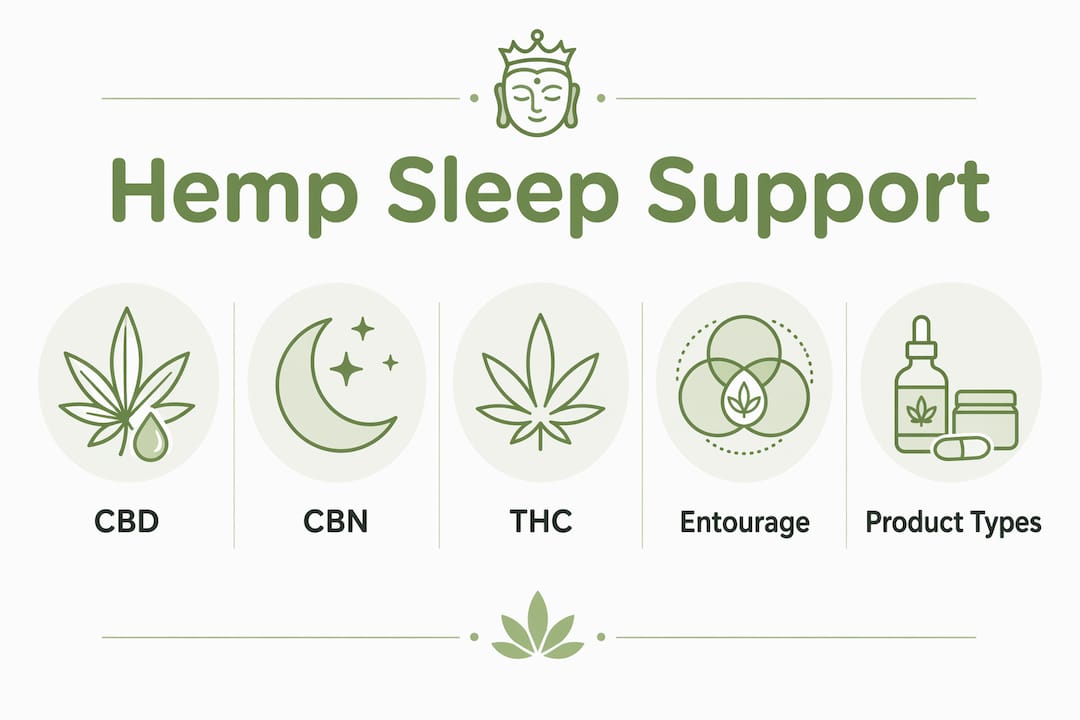
Hemp contains several cannabinoids that each play a distinct role in sleep support. CBD, CBN, and THC serve different sleep functions: CBD reduces the time it takes to fall asleep by calming anxiety, CBN supports staying asleep through the night, and THC reduces sleep latency through mild sedation and pain relief. Understanding these differences helps you choose the right product for your specific sleep problem.
CBD does not sedate you directly. Instead, it modulates endocannabinoid and serotonergic signaling, which dials down the physiological hyperarousal that keeps anxious minds awake at night. Think of it as turning down the volume on a racing brain rather than hitting a power switch. That distinction matters for setting realistic expectations.
CBN is the compound most closely linked to sleep continuity. People who wake up repeatedly during the night, rather than struggling to fall asleep, tend to respond better to CBN-forward formulations. THC, even at trace levels legal under the 2018 Farm Bill, adds a mild sedative quality and can reduce physical discomfort that disrupts sleep.
Full spectrum hemp extracts combine all three cannabinoids alongside terpenes and phenolics. This combination produces what researchers call the entourage effect: the compounds work together to influence mood, pain, inflammation, and sleep pathways more effectively than any single compound alone. Full spectrum products consistently outperform CBD isolates for sleep support.
- CBD: Calms anxiety and shortens time to fall asleep
- CBN: Supports uninterrupted sleep through the night
- THC (trace): Adds mild sedation and addresses pain-related wakefulness
- Terpenes like myrcene and linalool: Amplify calming effects through the entourage effect
Pro Tip: If your main complaint is waking up at 3 a.m. and struggling to get back to sleep, look for a product that lists CBN prominently on the label, not just CBD.
What are the best hemp product types for sleep support?
The format of your hemp product affects how quickly it works and how long the effects last. Choosing the right format for your sleep pattern is as important as choosing the right cannabinoids.
Tinctures and oils
Full spectrum CBD tinctures with added CBN are among the most effective formats for sleep. Kingbuddha's Sleep CBD Tincture Oil + CBN delivers 1,500mg of full spectrum extract in 30ml, combining CBD and CBN in a single dose. Tinctures absorb under the tongue in 15–30 minutes, making them well-suited for people who want predictable timing. Hemp oil by itself is not proven to induce sleep, but full spectrum tinctures with active cannabinoids are a different category entirely.
Gummies
Sleep gummies take 45–90 minutes to kick in because they pass through digestion. That slower onset is actually an advantage when you take them well before bed. Kingbuddha's CBD Sleep Support Gummies are formulated with cannabinoid ratios designed specifically for sleep onset and quality. Gummies also make dosing simple and consistent, which matters when you are tracking your response over time.
Hemp flower
Hemp flower delivers cannabinoids through inhalation, producing effects within minutes. This format suits people who need rapid relief from acute anxiety or pain before bed. The tradeoff is shorter duration compared to edibles or tinctures.
Topicals and bath products
Topicals do not enter the bloodstream in meaningful amounts, so they do not directly affect sleep architecture. They work as relaxation aids by soothing muscle tension and signaling to your body that it is time to wind down. Use them as part of a pre-sleep ritual rather than as a primary sleep intervention.
| Product format | Onset time | Duration | Best for |
|---|---|---|---|
| Full spectrum tincture | 15–30 minutes | 4–6 hours | Falling asleep, anxiety |
| Sleep gummies | 45–90 minutes | 6–8 hours | Staying asleep, convenience |
| Hemp flower | 5–10 minutes | 2–3 hours | Rapid anxiety relief |
| Topicals | Immediate (local) | 1–2 hours | Relaxation ritual |
Pro Tip: Always check for a Certificate of Analysis (COA) from a third-party lab before buying any hemp sleep product. Kingbuddha publishes its lab reports openly, so you know exactly what is in each product.
How to incorporate hemp safely into your sleep routine
A structured approach to using hemp for sleep produces far better results than guessing. Follow these steps to build a routine that works.
-
Start with a low dose. Begin with the lowest recommended dose on the product label. For tinctures, that is typically 15–25mg of CBD. For gummies, start with one piece. Your body's response to cannabinoids is individual, so starting low protects you from grogginess the next morning.
-
Time your dose correctly. Take tinctures 30–45 minutes before bed. Take gummies 60–90 minutes before bed to account for digestion time. Timing is one of the most crucial factors for maximizing hemp's sleep benefits while minimizing side effects.
-
Pair hemp with good sleep hygiene. Dim your lights an hour before bed. Put your phone face-down. Keep your bedroom cool. Hemp works best when your environment supports sleep. Cannabis-based interventions do not replace good sleep hygiene; they amplify it.
-
Cut caffeine by early afternoon. Caffeine has a half-life of roughly five to six hours. A 3 p.m. coffee still has significant stimulant activity at 9 p.m. Hemp cannot fully counteract that level of arousal.
-
Track your sleep for two weeks. Write down your dose, timing, and how you slept each night. Patterns emerge quickly. You may find that a slightly higher dose or a different timing works better for your body.
-
Talk to your doctor if you take medications. CBD inhibits certain liver enzymes that process common drugs, including blood thinners. A quick conversation with your healthcare provider prevents unwanted interactions.
Hemp compounds influence multiple biological pathways rather than acting as simple sedatives. That means results build over days and weeks, not overnight. Give any new hemp sleep routine at least two weeks before judging its effectiveness.
What mistakes should you avoid when using hemp for sleep?
Most people who try hemp for sleep and give up do so because of avoidable errors. Knowing these pitfalls in advance saves you time and frustration.
-
Overdosing early. Taking too much CBD at once can cause grogginess, dry mouth, or a paradoxical increase in alertness. Start low and adjust gradually over several days.
-
Expecting instant sedation. Hemp promotes physiological homeostasis rather than knocking you out. If you take a gummy and expect to feel drowsy in 20 minutes, you will be disappointed. The effect is subtle and cumulative.
-
Choosing CBD isolate over full spectrum. Isolate products contain only CBD, stripped of all other cannabinoids and terpenes. Full spectrum products with multiple cannabinoids consistently show better results for sleep continuity because of the entourage effect. Pay attention to the label.
-
Ignoring sleep hygiene. Hemp is not a rescue remedy for chaotic sleep habits. Erratic bedtimes, late-night screen use, and high stress will undermine even the best hemp product. Hemp works as a complement, not a replacement.
-
Skipping lab verification. The hemp market includes products with inaccurate labels. Always buy from brands that publish third-party COAs. Unverified products may contain less cannabinoid content than advertised, or unwanted contaminants.
Mild side effects like dry mouth or slight next-day grogginess are the most common complaints. Both typically resolve by adjusting your dose downward or shifting your timing earlier in the evening.
Key Takeaways
Hemp supports better sleep by calming the nervous system, reducing sleep latency, and improving sleep continuity through the combined action of CBD, CBN, and trace THC.
| Point | Details |
|---|---|
| Cannabinoids serve distinct roles | CBD shortens time to fall asleep; CBN helps you stay asleep; trace THC adds mild sedation. |
| Full spectrum beats isolate | The entourage effect makes full spectrum products more effective than CBD-only isolates for sleep. |
| Timing and dose matter | Take tinctures 30–45 minutes before bed; take gummies 60–90 minutes before bed and start low. |
| Hemp amplifies good habits | Hemp works best alongside consistent sleep hygiene, not as a substitute for it. |
| Verify product quality | Always check third-party lab reports before buying any hemp sleep product. |
What I've learned after years of watching people use hemp for sleep
The biggest misconception I see is that hemp is a sleep switch. People take a gummy, feel nothing dramatic, and conclude it does not work. What they miss is that hemp's effect on sleep is more like turning a dimmer than flipping a light. The nervous system quiets gradually. Anxiety loosens its grip. The body remembers how to wind down.
What actually works, in my experience, is combining a full spectrum product with a deliberate pre-sleep routine. The hemp does its part biologically. The routine does its part behaviorally. Neither one alone is as effective as both together.
The 2026 clinical trial comparing cannabis formulations to lorazepam is significant not because it proves hemp is a drug, but because it proves hemp belongs in the conversation about sleep medicine. That is a meaningful shift. Researchers are now asking better questions, and the answers are pointing toward cannabinoid combinations rather than single-compound solutions.
My honest recommendation: start with a full spectrum tincture with CBN if you struggle to stay asleep, or a sleep gummy if you struggle to fall asleep. Give it two weeks. Track it. Adjust. The people who get real results from hemp sleep products are the ones who treat it like a practice, not a pill.
— Juiced
Kingbuddha's hemp sleep products worth trying
Adults who want a natural, lab-verified option for sleep have a clear starting point with Kingbuddha's sleep line.
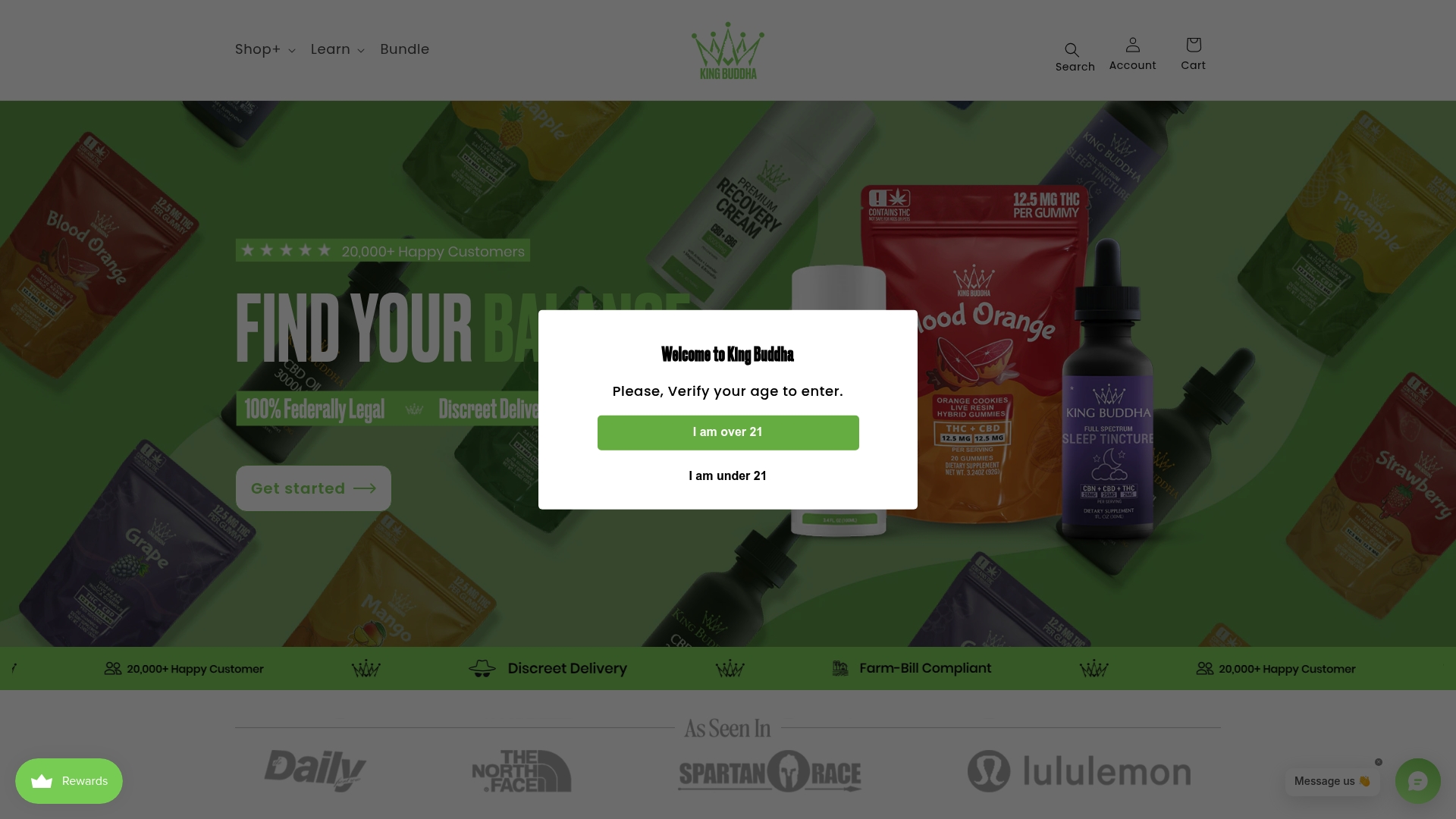
Kingbuddha's CBD Sleep Support Gummies are formulated with cannabinoid ratios designed specifically for sleep onset and quality, made from U.S.-sourced hemp and tested by third-party labs. For those who prefer a tincture, the Sleep CBD Tincture Oil + CBN Full Spectrum 1500mg delivers both CBD and CBN in a single sublingual dose. Every product in Kingbuddha's CBD sleep line comes with published lab reports so you know exactly what you are getting. If you have questions about which product fits your sleep pattern, Kingbuddha's customer support team can help you choose.
FAQ
How does hemp help with sleep?
Hemp cannabinoids like CBD and CBN calm the nervous system and reduce physiological hyperarousal, shortening the time it takes to fall asleep and improving sleep continuity. They work through the endocannabinoid system rather than acting as direct sedatives.
What is the difference between CBD and CBN for sleep?
CBD primarily reduces anxiety to help you fall asleep faster, while CBN is more closely linked to staying asleep through the night. Products combining both cannabinoids address both problems simultaneously.
How long does it take for hemp products to work for sleep?
Tinctures typically take effect in 15–30 minutes, while gummies require 45–90 minutes due to digestion. Most people notice consistent improvement after two weeks of regular use.
Is full spectrum hemp better than CBD isolate for sleep?
Full spectrum hemp extracts are more effective for sleep because the entourage effect, produced by cannabinoids and terpenes working together, provides broader support than CBD alone.
Can hemp replace prescription sleep medication?
Hemp is not a replacement for prescription medication and should not be stopped without consulting a doctor. A 2026 clinical trial showed cannabis-based formulations comparable to lorazepam in efficacy, but individual responses vary and medical guidance is always recommended.
Recommended
- Discover CBD for Sleep and Insomnia: A Comprehensive Guide | King Budd – King Buddha
- Shop here our range of cbd sleep products and oils – King Buddha
- How Do CBD Bath Salts Help With Sleep? – King Buddha
- Why You Can’t Stay Asleep? – King Buddha