

How Hemp Origin Affects Legality for U.S. Consumers
A hemp product's origin is necessary for federal "hemp" status but not sufficient to guarantee lawful retail sale. Where the plant was grown, whether the producer holds a license under the USDA Domestic Hemp Production Program, and whether a documented chain-of-custody exists from field to finished product all determine whether the plant material qualifies as hemp under federal law. But the U.S. Food and Drug Administration (FDA) and your state's own rules can still block retail legality even when origin is fully compliant. The U.S. Agricultural Marketing Service (AMS) oversees producer licensing and testing standards at the production stage.
Two things to do before you buy:
- Ask for producer licensing and a batch-specific Certificate of Analysis (COA) before purchasing any hemp-derived product.
- Check your state's retail rules, because state restrictions and FDA product-type regulations can override a compliant origin.
Table of Contents
- What "origin" actually means for a hemp product
- How federal law splits authority: USDA controls the plant, FDA controls the product
- How state and tribal rules change what you can legally buy
- How to verify a product's origin before you buy
- Red flags that signal an origin problem
- What to do if a product's origin or legality is unclear
- What good origin disclosure looks like: the Kingbuddha example
- Key Takeaways
- Why origin transparency is the one thing buyers should not skip
- Kingbuddha makes origin verification straightforward
- Authoritative sources to consult
What "origin" actually means for a hemp product
Origin is not just a zip code. For legal purposes, it covers several distinct components:
- Licensed grower identity: The producer must hold a license or authorization under a USDA-approved state plan, a USDA-approved tribal plan, or the federal USDA hemp program directly.
- USDA/state/tribal plan participation: Licensed production requires pre-harvest testing and disposal procedures for out-of-spec material. Without that documentation, the plant material loses its federal "hemp" status.
- Harvest and testing records: Batch numbers, test dates, and pre-harvest THC results form the paper trail that makes origin defensible.
- COA (Certificate of Analysis): A third-party lab report tied to a specific batch, showing cannabinoid concentrations including total THC.
- Chain-of-custody: Documented transfer records from the licensed farm through processing and into the finished product.
- Plant-derived vs. synthesized cannabinoids: This distinction matters more than ever. Under P.L. 119-37, signed November 12, 2025, cannabinoids that cannot be naturally produced by a cannabis plant, or that were synthesized outside the plant, are now expressly excluded from the federal definition of hemp regardless of THC concentration.
| Term | What it means |
|---|---|
| USDA Domestic Hemp Production Program | Federal program licensing and overseeing hemp cultivation |
| COA | Third-party lab report showing cannabinoid levels for a specific batch |
| Total THC | Delta-9 THC plus converted THCA; the current compliance standard |
| Chain-of-custody | Documented transfer records from farm to finished product |
| Licensed producer | A grower authorized under a USDA, state, or tribal hemp plan |

How federal law splits authority: USDA controls the plant, FDA controls the product
The role of origin in hemp legality runs through two separate federal agencies with different mandates.
USDA/AMS determines whether plant material qualifies as hemp at the production stage. The 2018 Farm Bill set the original threshold at no more than 0.3% delta-9 THC by dry weight. The November 2025 amendment in P.L. 119-37 shifted that standard to total THC, including THCA, at the same 0.3% threshold for production-level material.
FDA retains full authority over finished hemp-derived products marketed as food, dietary supplements, or drugs. A batch from a licensed grower can still be unlawful at retail if the finished product makes drug claims, is added to food without authorization, or contains synthesized cannabinoids now excluded from the hemp definition.
| Agency | What it regulates | Origin signals it cares about |
|---|---|---|
| USDA / AMS | Hemp production, grower licensing, pre-harvest testing | Licensed producer, state/tribal plan approval, pre-harvest THC test results |
| FDA | Finished products: food, supplements, drugs | Whether cannabinoids are plant-derived; marketing claims; product format |
Satisfying USDA's production rules does not satisfy FDA's finished-product rules. Legal advisories are explicit: compliance with the CSA and compliance with the FD&C Act are separate obligations, and clearing one does not clear the other.
How state and tribal rules change what you can legally buy
Federal compliance sets a floor, not a ceiling. States and tribal nations can restrict retail sales of hemp-derived cannabinoids even when the raw hemp was produced under a fully compliant USDA or state plan. The Farm Bill's interstate commerce provision protects the transportation of compliant hemp across state lines but does not override a state's authority to ban retail sale or possession within its borders.
Common state-level restrictions include:
- Outright retail bans on inhalable hemp flower
- Age verification requirements (often 21+)
- Restrictions on specific cannabinoids such as delta-8 THC or novel psychoactive compounds
- Mandatory labeling and child-resistant packaging standards
- Retailer licensing requirements separate from producer licensing
To confirm your state's rules:
- Visit your state's department of agriculture website and search for the hemp or cannabis program page.
- Check your state health department for any consumer product restrictions.
- For tribal lands, contact the tribal government's agriculture or regulatory office directly, since tribal plans approved by USDA operate under their own frameworks and may differ significantly from surrounding state rules.
How to verify a product's origin before you buy
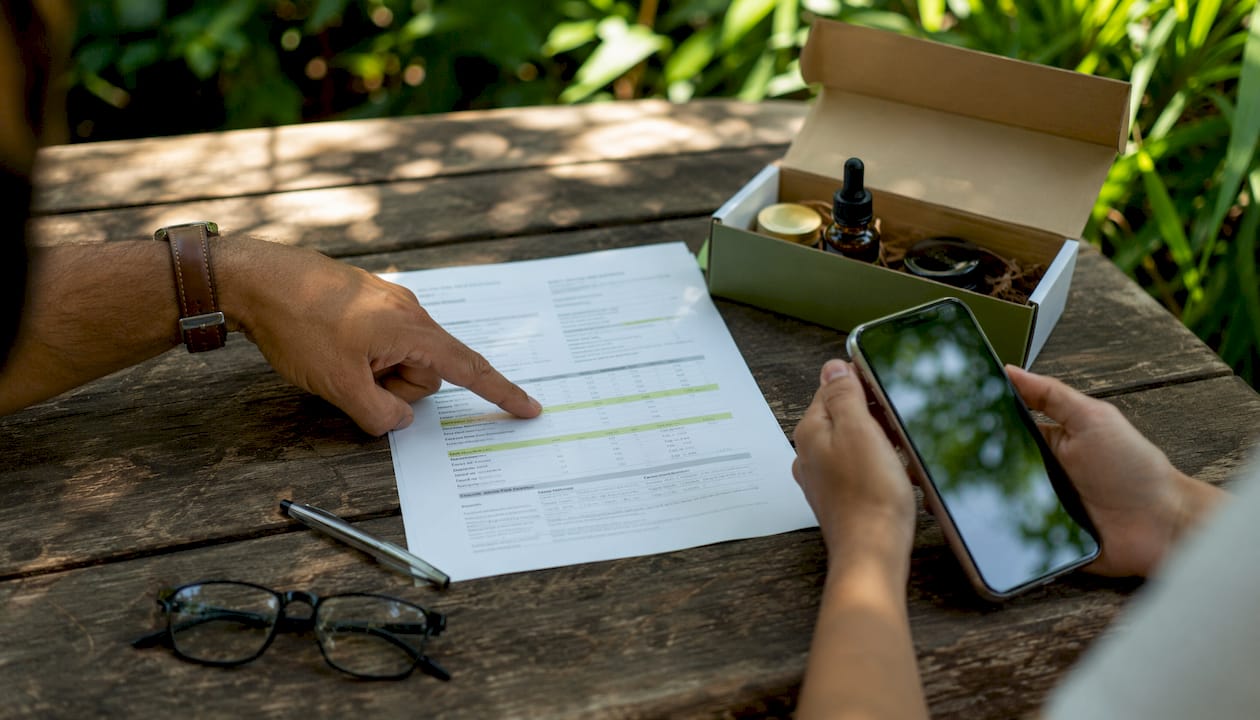
Always confirm producer licensing and a matching, batch-specific COA before purchasing. Here is a practical checklist:
- Confirm the grower's license. Look for a grower name, license number, or state/tribal program reference on the product page or packaging. Unlicensed production is reportable to the U.S. Attorney General.
- Match the batch number to a COA. The COA must reference the exact batch number on your product. A generic or undated COA is not sufficient.
- Check total THC, not just delta-9. Regulators now calculate total THC as delta-9 plus converted THCA. Compare COAs on a total THC basis, not delta-9 alone.
- Confirm cannabinoids are plant-derived. Look for a sourcing statement or ask the vendor directly. Synthesized cannabinoids are now excluded from the federal hemp definition.
- Check retailer and state rules. Confirm the product type is lawful for retail sale in your state before completing a purchase.
- Request chain-of-custody documentation if you want full supply-chain confidence, especially for higher-potency products.
Pro Tip: When reading a COA, find the "total THC" line, not just "delta-9 THC." Total THC = delta-9 THC + (THCA × 0.877). Also check that the testing lab holds ISO 17025 accreditation, which is the standard for hemp testing laboratories. A COA from a non-accredited lab carries far less weight.
Red flags that signal an origin problem
Missing provenance, COA mismatches, and synthesized cannabinoids are the clearest warning signs. Scan for these before buying:
- No grower name, license number, or program reference anywhere on the product or website
- Generic or batch-unspecific COA (e.g., a COA with no batch number or one that covers an entire product line)
- Total THC above the 0.3% threshold on the COA
- No mention of whether cannabinoids are plant-derived or a disclaimer that the product contains lab-made or converted cannabinoids
- Import paperwork gaps for products claiming foreign hemp origin, with no documentation of U.S. re-testing or compliance review
- Unverifiable supply chain where the vendor cannot name the grower or provide a license reference
- COA from a non-accredited lab or a lab with no verifiable ISO 17025 status
Congressional research confirms that policymakers are actively closing regulatory gaps for synthesized cannabinoids. Products built on those compounds carry growing enforcement risk regardless of current retail availability.
What to do if a product's origin or legality is unclear
If in doubt, don't use the product. Verify documentation first, then escalate if needed.
- Contact the retailer and request the grower's license number, the state or tribal program name, and a batch-specific COA. A legitimate vendor can provide all three quickly.
- Check USDA's license lookup. The USDA hemp program maintains license status information. If the grower name on the product does not appear, that is a serious red flag.
- Contact your state agriculture department if the retailer cannot resolve the issue. Most state hemp programs have a consumer inquiry or complaint channel.
- Report to USDA/AMS if you believe production was unlicensed. AMS accepts reports through its hemp program contact channels.
- Report to FDA for mislabeled food or supplement claims. FDA's MedWatch program accepts consumer safety reports for products making unauthorized health claims.
For broader guidance on staying compliant as a buyer, state-specific rule checks are the most practical first step.
What good origin disclosure looks like: the Kingbuddha example
A transparent vendor publishes grower or sourcing statements, batch-level COAs, supply-chain traceability notes, and licensing or USDA plan references directly on product pages. That is the standard worth holding every vendor to.
Kingbuddha's product pages demonstrate this approach. Look for these fields when evaluating any vendor:
- Grower name and license or program reference
- Harvest and test date tied to the specific batch
- Batch number with a matching COA link or downloadable PDF
- Lab accreditation status (ISO 17025 or equivalent)
- Statement that cannabinoids are plant-derived, not synthesized
- Clear labeling of both total THC and delta-9 THC concentrations
Kingbuddha's compliance practices reflect what the AMS guidance describes as a defensible paper trail: grower license, harvest/test records, and a batch-specific COA working together rather than a single low-THC result standing alone.
A single lab result showing low delta-9 THC is not a provenance document. The full paper trail — grower license, pre-harvest test records, and a batch-specific COA from an accredited lab — is what actually demonstrates origin compliance under current federal standards.
Key Takeaways
Origin is necessary for federal hemp status, but state rules, FDA authority, and the plant-derived requirement mean buyers must verify more than just a THC number.
| Point | Details |
|---|---|
| Origin is necessary, not sufficient | A licensed farm and compliant THC level are required but do not guarantee lawful retail sale. |
| Total THC is the current standard | Regulators now calculate total THC as delta-9 plus converted THCA; check COAs on that basis. |
| Synthesized cannabinoids are excluded | Cannabinoids made outside the plant are no longer covered by the federal hemp definition as of November 2025. |
| State rules override federal compliance | States can ban retail sale of hemp-derived products even when origin is federally compliant. |
| Kingbuddha publishes batch COAs | Kingbuddha product pages include batch-specific COAs, sourcing statements, and plant-derived cannabinoid disclosures. |
Why origin transparency is the one thing buyers should not skip
The hemp market has a provenance problem that most shoppers underestimate. The legal framework is genuinely layered: USDA handles the farm, FDA handles the finished product, and your state handles what actually sits on a shelf near you. Most buyers focus on the THC number and stop there. That is the wrong place to stop.
What actually protects you is the paper trail. A grower license tells you the plant was grown under regulatory oversight. A batch-specific COA from an accredited lab tells you what is in the product you are holding. A plant-derived sourcing statement tells you the cannabinoids were not synthesized in a lab and then classified as hemp. Without all three, you are taking a legal and safety risk that the THC number alone cannot resolve.
The November 2025 amendment to the hemp definition made this more urgent, not less. Products built on synthesized cannabinoids that were sold freely under the old delta-9-only threshold are now in a different legal category. Buyers who relied on "it's under 0.3% delta-9" as their only check are exposed. Insisting on full provenance documentation is not overcautious. It is the minimum standard the current law actually requires.
Kingbuddha makes origin verification straightforward
Knowing what to look for is half the work. Finding a vendor who actually provides it is the other half.
Kingbuddha publishes batch-specific COAs, U.S.-sourced ingredient statements, and cannabinoid type disclosures across its product line. Whether you're looking at CBD sleep gummies or browsing the full CBD tinctures collection, each product page is built to answer the provenance questions this article covers: who grew it, what the batch tested at, and whether the cannabinoids are plant-derived.
When you land on a Kingbuddha product page, match the batch number on the packaging to the COA linked on that page. If you have questions about sourcing or licensing, the customer support team can provide additional documentation. That is what verified origin looks like in practice.
Authoritative sources to consult
| Source | What it covers | Why consult it |
|---|---|---|
| USDA/AMS Hemp Program | Producer licensing, state/tribal plan approvals, HeMP platform | Look up grower license status; understand production-level compliance |
| AMS FAQ | Pre-harvest testing, disposal, documentation requirements | Understand what documentation licensed producers must maintain |
| CRS IF11088 | 2018 Farm Bill hemp definition, 0.3% threshold, interstate commerce | Foundational federal law reference for production-level compliance |
| CRS IN12620 | Synthetic cannabinoid oversight, regulatory gap closures | Track enforcement trends for novel and synthesized cannabinoids |
| Arnold & Porter Advisory | P.L. 119–37 changes, total THC definition, FDA/CSA split | Legal analysis of the November 2025 definition amendment |
| CRS LSB11381 | CSA legal considerations, synthesized cannabinoid exclusions | Detailed legal analysis of the amended hemp definition |
This article is general consumer information, not legal advice. Verify current rules with USDA, FDA, your state agriculture department, or a qualified attorney for your specific situation.