

How Hemp-Derived Products Are Legal in 2026
TL;DR:
- The 2026 federal regulations redefine hemp's legality by shifting from delta-9 THC to total THC, limiting products to 0.4 mg per container. Many current hemp products, especially edibles and high-THCA flowers, will no longer be compliant after this change. Additionally, synthetically derived cannabinoids like delta-8 THC are excluded from legal protection, complicating the market further.
Most people assume hemp and marijuana occupy separate, clearly defined legal boxes. They don't. The line between legal hemp and a controlled substance has always been thin, and in 2026, that line got redrawn entirely. Understanding how hemp-derived products are legal now requires knowing more than the 2018 Farm Bill basics you've read a dozen times. Federal law changed significantly, product categories once considered safe are now restricted, and state rules add another layer of complexity on top. This guide cuts through the confusion with specifics.
Table of Contents
- Key takeaways
- How hemp-derived products are legal: the federal definition explained
- What the 0.4 mg container cap actually means for products
- State-level regulations and why they complicate everything
- Practical guidance on what stays legal and what doesn't
- My take on where this leaves the hemp market
- Compliant hemp products you can trust today
- FAQ
Key takeaways
| Point | Details |
|---|---|
| 2026 federal definition change | The hemp definition now uses a total THC standard, not just delta-9 THC, narrowing what qualifies as legal. |
| 0.4 mg per container cap | Finished consumer products face a strict 0.4 mg total THC limit per container, eliminating most current edibles. |
| Synthetic cannabinoids excluded | Delta-8 THC, HHC, and other chemically converted cannabinoids are no longer protected under federal hemp law. |
| State laws vary significantly | Some states banned intoxicating hemp products before the federal effective date, creating a fragmented market. |
| FDA guidance still pending | Consumers and producers should monitor FDA publications for permitted cannabinoid lists and container definitions. |
How hemp-derived products are legal: the federal definition explained
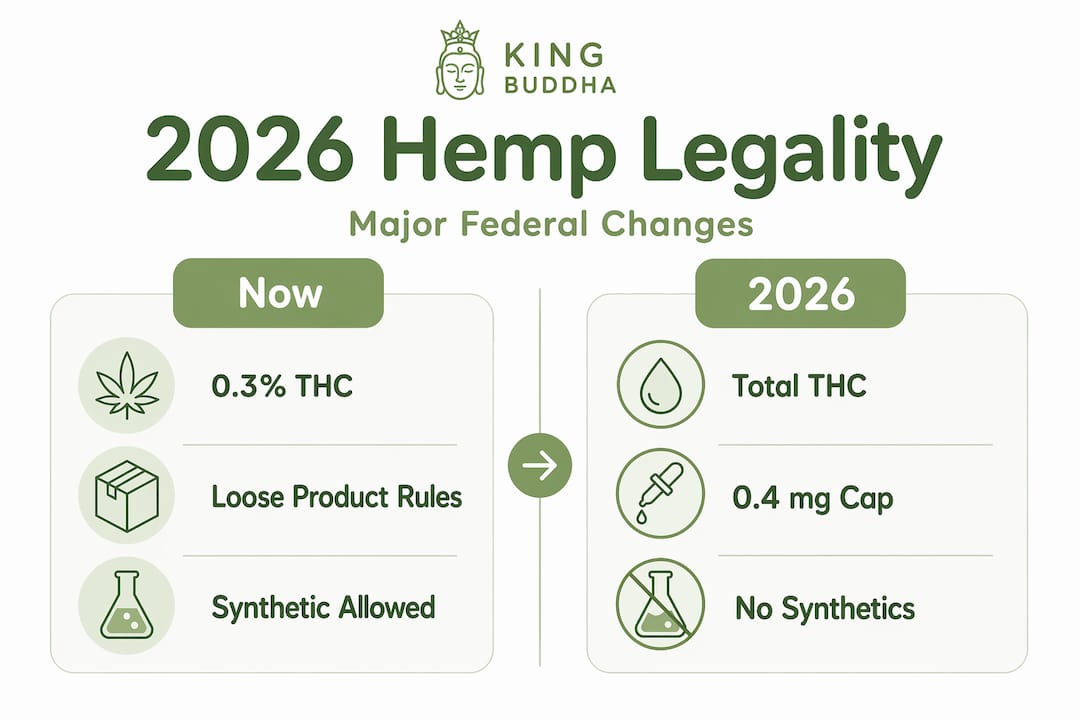
The foundation of hemp product legality in the United States starts with a single statutory definition. The 2018 Farm Bill legalized hemp as cannabis containing no more than 0.3% delta-9 THC on a dry weight basis. That definition was deliberately narrow in one sense and inadvertently wide in another. It opened the door to a market explosion in delta-8 THC, THCA-rich hemp flower, HHC, and dozens of other cannabinoid products that technically stayed under the delta-9 limit while still producing psychoactive effects.
That loophole closed with the Continuing Appropriations Act of 2025, which amended the federal hemp definition with effects beginning November 12, 2026. The amendment shifts the measurement standard from delta-9 THC alone to a total THC calculation that includes delta-9 THC, THCA, and other cannabinoids with similar pharmacological effects. This change is not minor. It fundamentally redefines which plants and products qualify as hemp under federal law.
Here is what the new definition framework covers:
- Delta-9 THC and THCA combined must not exceed 0.3% total THC under the post-decarboxylation calculation method
- THCA converts to THC when heated, so high-THCA flower that tested "legal" under the old standard now fails under the new one
- Synthetic and chemically converted cannabinoids like delta-8 THC and HHC are excluded from the hemp definition entirely and will be regulated as controlled substances
- Naturally occurring cannabinoids may still qualify, pending FDA identification lists due in February 2026
- Plant-based industrial hemp for fiber, seed, and non-intoxicating use remains fully legal
Pro Tip: If you currently purchase THCA flower products marketed as legal hemp, those products will not meet the new federal standard after November 2026. Check with your supplier about their reformulation plans before that date.
The shift to total THC functions as a regulatory reset for the entire market. Products that have been sold in wellness shops and online for years will need to be reformulated or pulled from shelves entirely.
What the 0.4 mg container cap actually means for products
Understanding hemp legality at the product level requires looking beyond plant testing and into finished goods. The 2026 amendments establish a hard limit: 0.4 mg total THC per container in the innermost retail package. That number is not a typo. It is extraordinarily restrictive.
To put it in perspective, a typical hemp gummy sold today contains 10 to 50 mg of THC per serving. A standard tincture bottle often contains hundreds of milligrams. The 0.4 mg cap eliminates approximately 95% of current intoxicating hemp-derived consumer products on the market.
Here is how different product categories fare under the new cap:
| Product type | Typical current THC content | Compliant after Nov 2026? |
|---|---|---|
| Hemp gummies (10 mg per piece) | 10 mg per container | No |
| CBD tincture (300 mg bottle) | Varies, may contain trace THC | Possibly, if total THC stays under 0.4 mg |
| Hemp flower (1% THCA) | Exceeds 0.3% total THC post-decarb | No |
| Topical CBD cream | Negligible THC absorption | Likely yes |
| Hemp seed oil | Zero cannabinoids present | Yes |
The prohibition on synthetically derived cannabinoids adds a second layer. Products containing delta-8 THC, delta-10 THC, HHC, or similar compounds created through chemical conversion of CBD or other cannabinoids will be classified as controlled substances regardless of their THC content. The FDA Cannabis Product Committee coordinates cross-agency regulation of these substances under the FD&C Act.
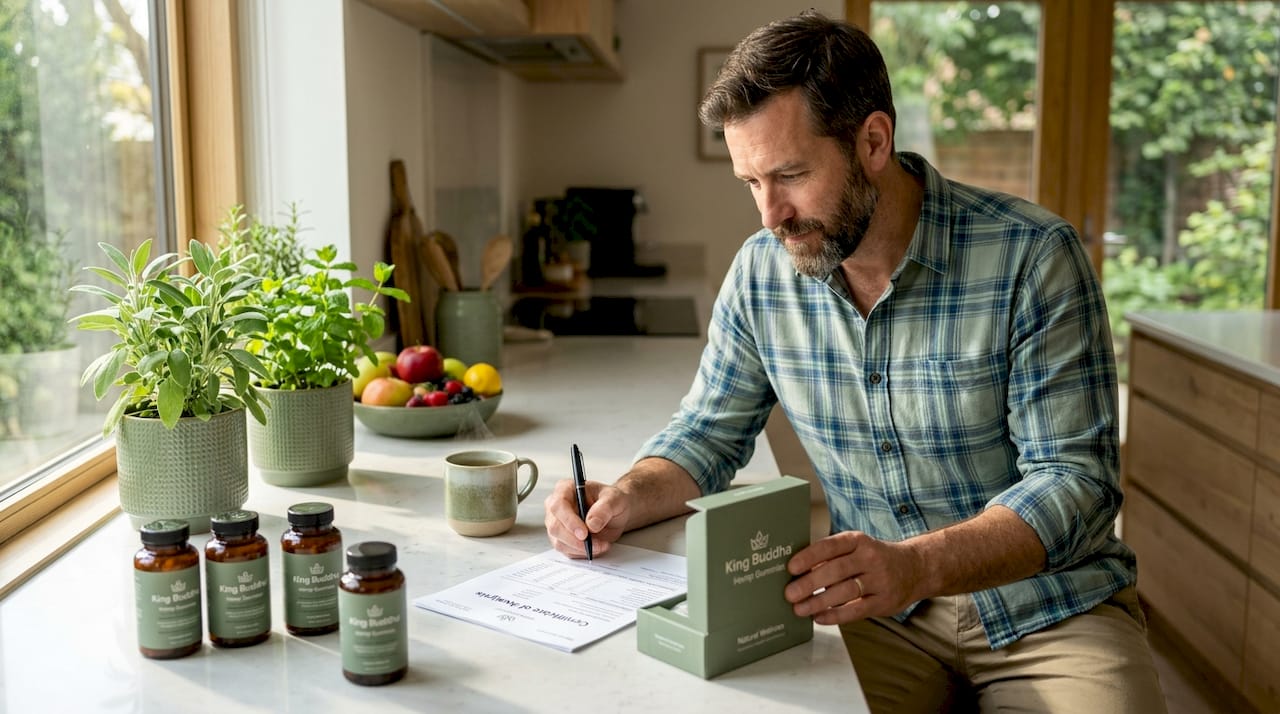
Pro Tip: Read product Certificates of Analysis carefully. Under the new rules, labs must report total THC, not just delta-9. A product that shows 0.2% delta-9 but 15% THCA is not federally legal after November 2026.
State-level regulations and why they complicate everything
Federal law sets the floor. States set their own rules on top, and those rules vary enormously. Some states moved to restrict intoxicating hemp products well before the federal effective date. California banned intoxicating hemp products ahead of the federal deadline, creating immediate enforcement challenges for businesses shipping across state lines.
Other states remain more permissive, creating a patchwork that confuses consumers and puts businesses in difficult positions. A product that is legal to manufacture in one state may be illegal to possess in the state it ships to. Federal law does not automatically preempt state law in this space, so the two regulatory layers coexist without clean resolution.
A few patterns worth knowing as you think about hemp product legality across states:
- States with early restrictions: California, Oregon, and several others enacted bans on delta-8 and similar products years before the federal amendments
- States with permissive rules: Some states still allow intoxicating hemp products through their own licensing frameworks, at least temporarily
- Grace period uncertainty: The federal November 2026 effective date does not bind state enforcement timelines, meaning some states may act earlier or later
- Interstate commerce risk: Shipping hemp-derived products across state lines carries legal exposure even if the origin state considers the product compliant
State laws may accelerate enforcement or impose stricter limits than the federal standard, which complicates product distribution planning for any business operating at scale. Consumers should check their state's specific rules rather than assuming federal compliance equals full legal protection everywhere.
Practical guidance on what stays legal and what doesn't
Not everything gets swept off the shelf by the 2026 changes. Understanding which hemp-derived products remain legal helps you make informed purchasing decisions right now.
- Industrial hemp products including fiber, textiles, rope, and construction materials face no new restrictions. These never involved cannabinoid content at scale.
- Hemp seed oil contains no cannabinoids and remains fully legal at every level of government. It is not the same as CBD oil, a distinction that still confuses many consumers.
- Low-THC hemp flower can still be legal if the total THC calculation, including post-decarboxylation THCA, stays under 0.3%. Most commercially available hemp flower does not meet this bar, but selectively bred low-THCA varieties may. You can review how hemp flower legality applies to specific products on a case-by-case basis.
- Topical CBD products face less scrutiny under the container cap because transdermal absorption is negligible, though FDA rules on CBD as a cosmetic ingredient still apply.
- CBD in food and dietary supplements remains in a complicated legal position. The FDA's drug exclusion rule prohibits CBD from being added to food or dietary supplements because it was first approved as a prescription drug. Limited enforcement discretion exists but does not equal broad legalization.
The FDA's narrow enforcement discretion for CBD in dietary supplements is often misread as a green light. It is not. Regulatory tolerance is not the same as legal approval, and that distinction matters when you are deciding which products to buy or sell. For a thorough breakdown of what is and isn't approved, the overview of CBD uses and regulations explains the current state in practical terms.
Consumers and businesses face significant challenges adapting to these changes, with many products requiring reformulation. The Farm Bill reauthorization process is being watched closely as a potential avenue for amending the most restrictive elements of the new rules.
Pro Tip: Always request a third-party Certificate of Analysis from any hemp product supplier. Look for labs that report total THC, not just delta-9. That single document tells you more about a product's legal status than any marketing claim.
My take on where this leaves the hemp market
I've watched this industry evolve through every major regulatory shift since 2018, and the 2026 changes hit differently. The delta-9 loophole that drove explosive market growth was always fragile. Building a product line on a technicality in a federal definition was never a sustainable business strategy, and the industry knew it.
What concerns me more than the restrictions themselves is the consumer education gap. Most people buying hemp products at gas stations or wellness shops have no idea these changes are coming. They don't know the difference between total THC and delta-9 THC. They don't know that the CBD gummy they've been taking for sleep may need to be reformulated or pulled from shelves. That gap creates real confusion and erodes trust in the entire category.
I'm cautiously optimistic about the FDA guidance expected to clarify permitted cannabinoid lists. Clear, science-based lists of naturally occurring cannabinoids would restore some market certainty. The legal distinction between controlled substances compliance and FDA regulatory authority is something even industry professionals get wrong, and official clarity would help everyone.
My practical advice: stick with brands that show you their lab results before you ask. Transparency at that level signals that a company understands the regulatory environment and takes compliance seriously. The companies cutting corners now are the ones who will disappear after November 2026 anyway.
— Juiced
Compliant hemp products you can trust today
Regulatory complexity shouldn't stop you from accessing hemp-derived products that genuinely support your wellness routine. Kingbuddha builds every product with third-party lab testing, U.S.-sourced ingredients, and strict compliance with current federal THC standards.
Whether you're exploring CBD for better sleep, stress relief, or everyday balance, Kingbuddha's lineup is formulated to stay on the right side of current law. The CBD sleep support gummies are a popular starting point for anyone new to hemp-derived wellness products, and every batch comes with a publicly available Certificate of Analysis. For those who prefer oils, the terpene tinctures use broad-spectrum hemp extract with clearly labeled cannabinoid content. Shop with confidence, knowing what you're buying has been tested and documented.
FAQ
What makes hemp federally legal in the United States?
Hemp is federally legal when it contains no more than 0.3% total THC under the new 2026 federal standard, which includes delta-9 THC and THCA in the calculation. Products must also comply with the 0.4 mg per container cap for finished consumer goods.
Why is hemp flower legal in some cases but not others?
Hemp flower is legal only if its total THC, calculated after THCA decarboxylation, stays under the 0.3% federal threshold. Most high-THCA hemp flower sold today will not meet this standard after November 12, 2026.
Why are hemp-derived cannabinoids like delta-8 THC losing their legal status?
Delta-8 THC and similar cannabinoids lose legal hemp protection because the 2026 amendments exclude synthetically derived and chemically converted cannabinoids from the hemp definition, reclassifying them under the Controlled Substances Act.
Are hemp products legal in every state?
No. State laws vary widely, and some states have already banned intoxicating hemp products ahead of the federal deadline. Federal compliance does not guarantee legality in every state, so checking your state's specific rules is necessary.
What should consumers look for when buying hemp products now?
Look for products with a third-party Certificate of Analysis that reports total THC, not just delta-9 THC. Verify the brand sources from U.S.-grown hemp and confirms compliance with the 2026 federal standards before purchasing.