

CBD for Mood Enhancement: What Actually Works in 2026
TL;DR:
- CBD is effective for reducing anxiety and stress but offers limited evidence for treating depression. Different product forms influence how quickly and strongly CBD affects mood, with full-spectrum tinctures and inhaled flower providing the fastest results. Proper dosing involves starting low, tracking responses, and gradually increasing while ensuring product transparency and safety.
CBD for mood enhancement is defined as using cannabidiol, a non-intoxicating hemp-derived compound, to reduce anxiety, ease stress, and support emotional balance without producing a high. Research confirms CBD delivers a large effect on anxiety (Hedges' g = −0.92 across 316 participants), making it one of the more evidence-backed natural options for mood support. The evidence for treating major depressive disorder is far weaker. Adults exploring CBD as a complementary wellness tool will find the most consistent benefits in anxiety and stress reduction, not as a replacement for clinical depression treatment.
1. What is CBD for mood enhancement and how does it differ from antidepressants?
CBD, short for cannabidiol, is a phytocannabinoid extracted from Cannabis sativa hemp plants. Unlike SSRIs or SNRIs, CBD does not directly target serotonin reuptake. Instead, it works through the endocannabinoid system (ECS), the body's internal network for regulating stress, emotion, and homeostasis. The distinction matters because CBD's mood benefits are primarily modulatory, meaning it helps the body manage stress responses rather than chemically forcing a neurochemical shift.
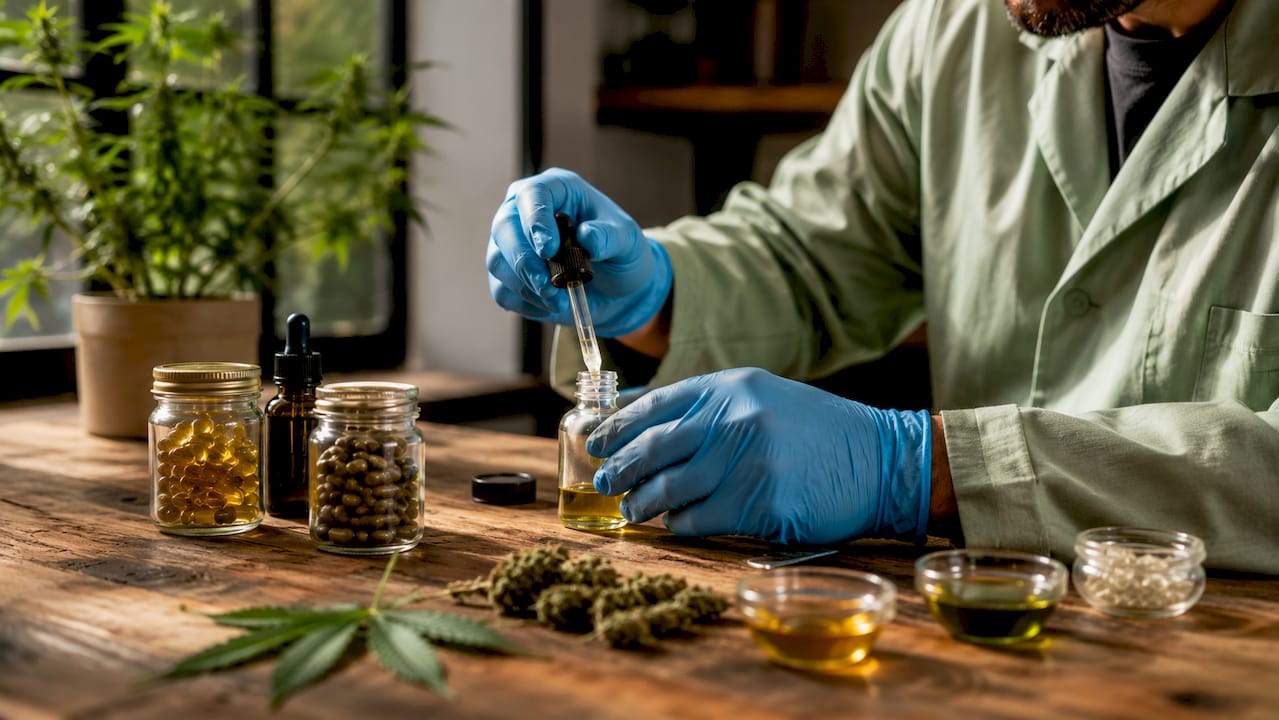
CBD also carries no intoxicating effects, which separates it from THC-based products. Adults who want emotional support without cognitive impairment or psychoactive effects consistently choose CBD-dominant products for this reason.
2. Top CBD product forms for mood support
The form you choose shapes how quickly and how strongly CBD affects your mood. Each delivery method has real trade-offs worth knowing before you buy.
- Full-spectrum CBD oil or tinctures: Contain CBD alongside minor cannabinoids, terpenes, and trace THC (under 0.3%). The combined effect, often called the entourage effect, may amplify mood benefits. Tinctures absorb under the tongue in 15–45 minutes, making them one of the faster-acting options.
- Broad-spectrum CBD oil: Includes multiple cannabinoids but removes THC entirely. A solid choice for people subject to drug testing or those sensitive to THC.
- CBD isolate products: Pure CBD with no other cannabinoids. Predictable and consistent, but may lack the synergistic benefits of full or broad-spectrum formulas.
- CBD gummies for mood enhancement: Edibles are convenient and discreet. Onset takes 45–90 minutes since they pass through digestion first. CBD gummies for mood enhancement are popular for sustained, lower-intensity effects throughout the day.
- CBD hemp flower (inhaled): The fastest onset, typically within minutes. A 30-day naturalistic study found CBD flower reduced anxiety by 34.8%, while THC+CBD flower reduced it by 39.5%. Edibles showed a lower 24.9% reduction. Flower delivers more immediate relief but requires smoking or vaping, which carries its own health considerations.
- CBD topicals: Creams and balms applied to the skin do not reach the bloodstream in meaningful amounts. They work best for localized tension rather than systemic mood effects.
Pro Tip: If you are new to CBD for anxiety relief, start with a full-spectrum tincture or CBD gummies rather than flower. The controlled dosing makes it easier to track your response and adjust gradually.
3. How CBD works biologically to influence mood
CBD's mood-related effects trace back to at least three biological pathways, each supported by recent research.
Endocannabinoid system modulation is the primary mechanism. CBD inhibits FAAH, the enzyme that breaks down anandamide, a naturally occurring cannabinoid often called the "bliss molecule." Higher anandamide levels support stress buffering and reduce symptoms like anhedonia and emotional instability.
HPA axis and inflammation regulation is the second pathway. The hypothalamic-pituitary-adrenal (HPA) axis controls the body's cortisol stress response. CBD modulates HPA axis inflammation via FKBP51 inhibition, a protein involved in stress sensitivity. Disrupted FKBP51 activity is linked to anxiety disorders and mood dysregulation. CBD's anti-inflammatory and antioxidant properties may help restore balance in this system.
Acute calming effects represent the third pathway. A pilot study found that a 300 mg CBD dose increased self-reported calm by 21% and relaxed feelings by 22% in participants. These are state-level effects, meaning they reflect how you feel in the moment rather than a long-term change in mood disorder symptoms.
| Mechanism | Effect on mood | Evidence strength |
|---|---|---|
| FAAH inhibition / anandamide increase | Reduces stress, supports emotional stability | Moderate (preclinical + review) |
| HPA axis modulation via FKBP51 | Lowers cortisol-driven anxiety | Emerging (2026 review) |
| Acute CB1/CB2 receptor activity | Increases subjective calm and relaxation | Pilot-level (small sample) |
| Anti-inflammatory pathways | May reduce mood-disrupting neuroinflammation |
Moderate (review-based)
|
Pro Tip: CBD works best as a stress buffer, not a mood cure. Think of it as reducing the volume on anxiety rather than switching it off entirely.
4. CBD dosage guidance for mood enhancement
Dosage is the most uncertain variable in CBD for mood support. Clinical studies have used doses ranging from 2 mg to 300 mg per day, with no consensus on an optimal amount. That range reflects how differently individuals metabolize CBD based on body weight, metabolism, and the specific mood condition being addressed.
The optimal CBD dose for mood enhancement remains unknown according to current literature. This is not a reason to avoid CBD. It is a reason to approach dosing methodically.
A practical starting framework:
- Start low: Begin with 10–25 mg per day, either as a tincture or gummy.
- Track your response: Note anxiety levels, sleep quality, and general mood daily for two weeks. A simple journal or app works well.
- Adjust gradually: Increase by 5–10 mg every one to two weeks if you notice no effect. Do not jump to high doses quickly.
- Evaluate at 30 days: Acute effects like calm and relaxation may appear within days. Sustained mood improvements need at least a month of consistent use to assess fairly.
- Know when to stop: If side effects like fatigue, digestive discomfort, or mood changes appear, reduce the dose or discontinue. Review the CBD side effects profile before starting.
Safety considerations matter here. The EFSA has set a provisional safe intake of approximately 2 mg per day for a 70 kg adult in a food context, though therapeutic studies use far higher doses. People under 25, pregnant individuals, and those taking medications like blood thinners or antidepressants should consult a physician before using CBD. The CBD dosage guide from Kingbuddha covers these clinical nuances in more detail.
5. Real-world evidence on product type and mood outcomes
Naturalistic studies give a more honest picture of how CBD performs outside a lab. The 30-day study mentioned earlier tracked people using cannabis therapeutically for anxiety. CBD-dominant products consistently outperformed THC-only products. Flower outperformed edibles across all cannabinoid profiles.
| Product type | Anxiety reduction | Notes |
|---|---|---|
| CBD flower | 34.8% | Fastest onset, highest reduction |
| THC + CBD flower | 39.5% | Strongest result, but includes THC |
| CBD edibles | 24.9% | Slower onset, more moderate effect |
| THC-only edibles | Less consistent | Variable and less reliable for anxiety |
The real-world product data shows that cannabinoid composition and delivery method both matter significantly. This is not just a marketing distinction. It changes outcomes.
One important caveat: naturalistic studies cannot establish causality. Variable dosing, mixed cannabinoid exposures, and placebo effects all influence results. A 60-day randomized controlled trial using 45 mg/day of CBD-rich oil found no significant improvement over placebo for depressive symptoms, though the product was well tolerated. This reinforces the pattern: CBD supports anxiety and stress reduction more reliably than it treats clinical depression.
Product transparency is non-negotiable. Third-party lab testing, clear cannabinoid labeling, and U.S.-sourced hemp are the baseline standards for any CBD product you trust with your mental wellness. If a product does not publish a certificate of analysis, skip it.
Key takeaways
CBD's most reliable mood benefit is anxiety and stress reduction, not treatment of major depressive disorder. Adults who approach it as a complementary stress buffer, choose the right product form, and dose carefully will see the most consistent results.
| Point | Details |
|---|---|
| Anxiety over depression | CBD shows strong evidence for anxiety reduction but limited evidence for treating major depressive disorder. |
| Product form matters | CBD flower reduces anxiety more than edibles; tinctures offer a controlled middle ground. |
| Dose low and track | Start at 10–25 mg daily and adjust over weeks based on tracked mood and anxiety responses. |
| Biological mechanisms | CBD raises anandamide levels and modulates the HPA axis, supporting stress buffering rather than direct antidepressant action. |
| Safety first | People under 25, pregnant individuals, and those on medications need medical guidance before using CBD. |
What I have learned about CBD and mood after years in the wellness space
The biggest mistake I see adults make with CBD is expecting it to work like a prescription antidepressant. It does not. CBD is not a replacement for therapy, SSRIs, or clinical care for serious mood disorders. What it does well is take the edge off chronic low-grade anxiety and stress, the kind that accumulates from work pressure, poor sleep, and modern life in general.
The research backs this up. The anxiety effect size is genuinely large. The depression evidence is not. That gap is not a flaw in CBD. It reflects that anxiety and depression are different conditions with different neurobiological drivers, and CBD's mechanisms align more closely with stress regulation than with the serotonin and dopamine pathways that antidepressants target.
What I advocate for is honest, informed use. Pick a full-spectrum tincture or a quality CBD gummy. Start low. Give it 30 days. Combine it with sleep hygiene, regular movement, and social connection. CBD works best as one tool in a broader wellness approach, not as the whole solution. The adults who report the most consistent mood benefits are the ones who treat it that way.
The role of CBD in mood enhancement is real, but it is specific. Knowing exactly what you are asking it to do makes all the difference.
— Juiced
Explore Kingbuddha's CBD products for mood and wellness
Kingbuddha offers a curated range of lab-tested CBD products designed for adults who take their wellness seriously. If you are looking to support mood and reduce daily anxiety, the CBD tinctures and oils are a strong starting point, with full-spectrum and broad-spectrum options that make dosing straightforward. For a more convenient daily format, the CBD sleep support gummies combine relaxation support with mood-friendly cannabinoid profiles. Every Kingbuddha product is third-party tested, made with U.S.-sourced hemp, and compliant with the 2018 Farm Bill. Transparent labeling and certificates of analysis are standard, not optional.
FAQ
What does CBD do for mood?
CBD reduces anxiety and stress by modulating the endocannabinoid system, raising anandamide levels, and regulating the HPA axis stress response. Evidence supports mood improvement primarily through anxiety reduction rather than direct antidepressant effects.
Are CBD gummies effective for mood enhancement?
CBD gummies for mood enhancement work, but they act more slowly than tinctures or flower, with onset taking 45–90 minutes. A naturalistic study found CBD edibles reduced anxiety by 24.9% over 30 days, which is meaningful but lower than inhaled CBD flower.
How much CBD should I take for mood support?
No consensus dose exists for mood enhancement. A practical approach is starting at 10–25 mg per day, tracking your response for two weeks, and adjusting gradually. Clinical studies have used doses ranging from 2 mg to 300 mg with varying results.
Can CBD treat depression?
Current evidence does not support CBD as a treatment for major depressive disorder. A 60-day randomized controlled trial using CBD-rich oil found no significant improvement over placebo for depressive symptoms. CBD is better positioned as a stress and anxiety support tool.
Is CBD safe to use daily for mood?
CBD is generally well tolerated at therapeutic doses. Safety concerns apply specifically to people under 25, pregnant individuals, and those taking medications that interact with CBD. Consulting a physician before daily use is the responsible starting point.