

What Are Nerve Pain Causes: Answers for Adults
Neuropathic pain — the clinical term for what most people call nerve pain — most commonly stems from metabolic disease (especially diabetes and prediabetes), mechanical compression or injury, toxic exposures, infections, autoimmune disorders, and nutritional deficiencies. According to a clinical review on diabetic neuropathy prevalence, a significant share of people with chronic diabetes develop peripheral neuropathy, making it the single most common identifiable cause in the U.S. The Merck Manual, NIH's NINDS, and Mayo Clinic all recognize the same core categories:
- Metabolic: diabetes, prediabetes, chronic kidney disease, hypothyroidism
- Mechanical/compressive: carpal tunnel syndrome, radiculopathy, trauma, surgical injury
- Toxic/medication-induced: chemotherapy agents, heavy metals (lead, mercury, arsenic), alcohol
- Infectious: shingles (postherpetic neuralgia), Lyme disease, HIV, hepatitis C
- Autoimmune/inflammatory: rheumatoid arthritis, lupus, vasculitis, Guillain–Barré syndrome
- Nutritional: B1, B6, B12, folate, and vitamin E deficiencies
- Inherited: Charcot–Marie–Tooth disease and related genetic neuropathies
- Central: multiple sclerosis, spinal cord injury, stroke
A 2026 Springer review on nutritional and metabolic causes notes that a substantial proportion of peripheral neuropathy cases remain idiopathic even after thorough workup — meaning no cause is found despite testing.
Table of Contents
- How does neuropathic pain differ from regular pain?
- What are the most common nerve pain causes?
- How do clinicians diagnose the cause of nerve pain?
- When should you seek urgent medical attention?
- Practical steps to reduce risk and what to do next
- Trusted resources for further reading
- Key Takeaways
- The part most articles skip
- Useful sources
How does neuropathic pain differ from regular pain?
Nerve pain results from damage or dysfunction in peripheral or central nerves, which causes abnormal electrical signaling rather than the normal tissue-injury response. That distinction matters clinically because the symptoms are different and the treatments often are too.
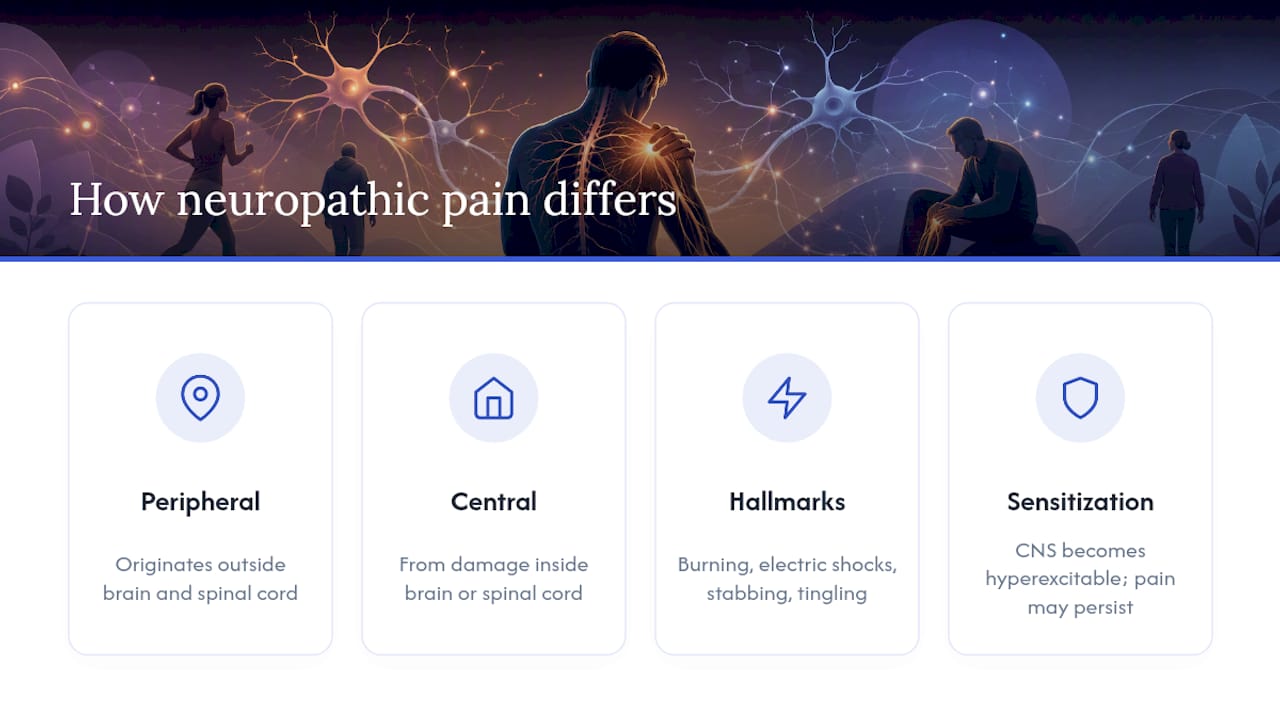
Peripheral neuropathic pain originates in the nerves outside the brain and spinal cord. Central neuropathic pain comes from damage within the brain or spinal cord itself, as seen in multiple sclerosis or after a stroke. Both produce the same hallmark descriptors: burning, electric shocks, stabbing, tingling, and dysesthesia (abnormal, often unpleasant sensations). Allodynia — pain triggered by something that shouldn't hurt at all, like a bedsheet touching your foot — is a strong indicator of neuropathic involvement, per the Merck Manual's clinical criteria.
Central sensitization complicates the picture further. When nerve signals fire abnormally for long enough, the central nervous system can become hyperexcitable, sustaining pain even after the original cause is treated. That's why some people still hurt after a shingles rash heals or after a compressed nerve is surgically released.
Pro Tip: When describing symptoms to a clinician, note whether pain wakes you at night, whether light clothing contact makes it worse, and whether it follows a specific pattern (e.g., both feet symmetrically). Those details narrow the cause faster than a general "burning pain" description.
What are the most common nerve pain causes?
Metabolic causes
Diabetes is the leading driver of peripheral neuropathy in the United States. Chronic hyperglycemia damages small blood vessels and peripheral nerves, and the damage accumulates silently for years before symptoms appear. Prediabetes carries real risk too — many people develop neuropathy before a formal diabetes diagnosis. Chronic kidney disease and hypothyroidism also produce metabolic nerve damage through different pathways: uremic toxins in kidney disease, and slowed axonal transport in hypothyroidism.
Mechanical and compressive causes
Carpal tunnel syndrome is the most common mononeuropathy in the U.S., caused by median nerve compression at the wrist. Radiculopathy from a herniated disc or spinal stenosis compresses nerve roots and produces shooting pain that follows a dermatomal pattern down an arm or leg. Prolonged external compression — from a cast, crutches, or even sleeping in an awkward position — can injure nerves directly. Surgical injury is an underappreciated cause, particularly after orthopedic or abdominal procedures, per Mayo Clinic's peripheral neuropathy overview.

Toxic and medication-induced causes
Chemotherapy agents — cisplatin, paclitaxel, and vincristine are the most studied — cause chemotherapy-induced peripheral neuropathy (CIPN) by damaging dorsal root ganglia and axons. Heavy metals including lead, mercury, and arsenic accumulate in nerve tissue and disrupt axonal function. Alcohol is a direct neurotoxin and also depletes B vitamins, creating a double mechanism for neuropathy. Industrial chemical exposures (solvents, organophosphates) round out this category.
Infectious causes
Shingles reactivation of the varicella-zoster virus can leave behind postherpetic neuralgia, one of the most treatment-resistant forms of nerve pain. HIV, Lyme disease, and hepatitis C damage nerves either through direct viral or bacterial invasion or by triggering immune responses that attack nerve tissue. Clinicians often add infectious serologies to the workup when the cause is unclear, particularly for HIV and Lyme in patients with relevant exposure histories.
Autoimmune and inflammatory causes
Rheumatoid arthritis, lupus, and vasculitis can inflame or compress peripheral nerves. Guillain–Barré syndrome is a rapid-onset autoimmune attack on peripheral myelin that can progress to paralysis within days. These causes matter because many are treatable — immunosuppression or IVIG can halt progression when caught early, according to Harvard Health's peripheral neuropathy overview.
Nutritional deficiencies
B12 deficiency is the most common nutritional cause in the U.S., often linked to long-term metformin use (which impairs B12 absorption), bariatric surgery, or strict vegan diets. B1 (thiamine) deficiency is the mechanism behind alcoholic neuropathy. B6 excess — not just deficiency — can also cause neuropathy, which catches many supplement users off guard. Folate and vitamin E deficiencies round out the list. A 2026 Springer review estimates nutritional deficiencies account for roughly 15% of peripheral neuropathy cases.
Inherited neuropathies
Charcot–Marie–Tooth disease is the most common inherited neuropathy, affecting motor and sensory nerves with a slowly progressive course. Family history of foot deformities, high arches, or unexplained weakness in relatives is a meaningful clue. Other genetic neuropathies are rarer but worth flagging when onset is in childhood or early adulthood with no other explanation.
Neoplastic and paraneoplastic causes
Tumors can compress nerves directly. Paraneoplastic syndromes occur when the immune system attacks nerves in response to an underlying cancer — lung, breast, and ovarian cancers are the most common triggers. These neuropathies often precede the cancer diagnosis, which is why unexplained rapid-onset neuropathy warrants tumor screening.
Central causes
Multiple sclerosis, spinal cord injury, and stroke can all produce central neuropathic pain through demyelination or direct CNS damage. These tend to present with additional neurological signs beyond pain alone.
Pro Tip: Before your appointment, write down any toxic exposures (occupational chemicals, heavy metals), every medication you take including supplements, and any family members with nerve or muscle problems. That list alone can cut the diagnostic workup significantly.
How do clinicians diagnose the cause of nerve pain?
Clinicians start with history and a focused neurologic exam, then order targeted tests based on what they find. The NCBI Bookshelf comprehensive review outlines a structured, stepwise approach that avoids unnecessary testing while catching treatable causes.
| Test | Why it's ordered | What it detects |
|---|---|---|
| Fasting glucose / HbA1c | First-line metabolic screen | Diabetes, prediabetes |
| B12, B1, folate, B6 | Nutritional screen | Deficiency-related neuropathy |
| TSH | Thyroid function | Hypothyroid neuropathy |
| Kidney/liver function panel | Metabolic screen | Uremic or hepatic neuropathy |
| HIV, hepatitis C serology | Infectious screen (when indicated) | Viral neuropathy |
| ANA, ANCA, RF | Autoimmune markers | Lupus, vasculitis, RA |
| EMG / nerve conduction studies | Electrodiagnostic testing | Large-fiber and demyelinating neuropathy |
| Skin biopsy | Small-fiber neuropathy confirmation | Intraepidermal nerve fiber density |
| MRI / CT spine or brain | Structural imaging | Radiculopathy, MS, spinal cord lesions |
| Paraneoplastic antibody panel | Cancer-related neuropathy screen | Paraneoplastic syndrome |
EMG and nerve conduction studies (NCS) are the workhorses for large-fiber neuropathy. Skin biopsy, which counts intraepidermal nerve fibers, is the gold standard for small-fiber neuropathy — a form that EMG often misses entirely because it affects unmyelinated fibers.
When should you seek urgent medical attention?
Most neuropathy develops slowly, but some presentations are emergencies. Seek care immediately if you notice:
- Rapidly worsening weakness in the legs or arms over hours to days
- Sudden loss of coordination or balance
- New bowel or bladder dysfunction (incontinence or retention)
- Spreading paralysis or inability to walk
- Fever combined with new or worsening neuropathy symptoms
- Severe, unrelenting pain that home measures cannot touch
Guillain–Barré syndrome in particular can progress to respiratory failure within days. Any ascending weakness that starts in the legs and moves upward is a 911-level concern, not a "wait and see."
Pro Tip: If you're heading to an urgent or emergency visit for nerve symptoms, bring a written list of all current medications (including supplements), recent blood sugar readings if you're diabetic, and a brief symptom timeline noting when symptoms started and how fast they've changed. That information can cut triage time significantly.
Practical steps to reduce risk and what to do next
The most effective prevention strategy combines good metabolic control, toxin avoidance, and correcting nutritional deficiencies before nerve damage becomes permanent. Here's a prioritized checklist to bring to your next clinician visit:
- Ask about topical options for localized symptom relief — capsaicin-based topicals have clinical evidence for neuropathic pain and are available without a prescription.
- Discuss adjunctive options with your clinician before starting any supplement, including CBD. Kingbuddha's CBD topicals are third-party lab-tested and U.S.-sourced, and may be worth discussing as a complementary option for localized discomfort — not as a replacement for primary treatment.
For symptom management, first-line neuropathic medications typically include gabapentinoids, SNRIs, and tricyclic antidepressants. Topical lidocaine and capsaicin are options for localized pain. Physical therapy reduces secondary complications like muscle atrophy. Referral to a pain specialist or neurologist is appropriate when first-line treatments fail. The Cleveland Clinic notes that neuropathic pain often requires a combination of approaches rather than a single treatment.

Kingbuddha's CBD tinctures are formulated with U.S.-sourced hemp and carry full third-party lab documentation. If you're exploring adjunctive options alongside your clinician's primary treatment plan, Kingbuddha's evidence-based CBD pain guide is a good starting point for understanding what the current science does and doesn't support.
This article is general health information, not medical advice. Confirm current diagnostic and treatment guidelines with your clinician or a qualified specialist.
Trusted resources for further reading
The most reliable sources for peripheral neuropathy information are clinical institutions with peer-reviewed editorial oversight:
- PubMed - Diabetic neuropathy prevalence (example reference)
- Mayo Clinic — Peripheral neuropathy: symptoms and causes
- Merck Manual Professional — Neuropathic pain
- NINDS (NIH) — Peripheral neuropathy overview
- Harvard Health — Peripheral neuropathy causes, symptoms, treatment, and prevention
- NCBI Bookshelf — Peripheral neuropathies (comprehensive review)
- Cleveland Clinic — Neuropathic pain overview
- Yale Medicine — Peripheral neuropathy overview
- Springer review (2026) — Nutritional and metabolic causes of peripheral neuropathy
Pro Tip: When evaluating any online health source, check for three things: named clinical authors or editorial board, cited references, and a recent review date. A page with no author and no citations — regardless of how professional it looks — is not a reliable source for medical decisions.
For Kingbuddha's internal resources on CBD and pain, the pain management with CBD guide and the CBD topicals overview both include sourced information and lab-testing context.
Key Takeaways
Diabetes and metabolic disease are the most common identifiable causes of peripheral neuropathy, but mechanical compression, toxins, infections, autoimmune conditions, and nutritional deficiencies each account for a meaningful share of cases.
| Point | Details |
|---|---|
| Diabetes leads all causes | About 30%–50% of people with chronic diabetes develop peripheral neuropathy, making it the single most common identifiable cause. |
| Multiple cause categories matter | Compression, chemotherapy, infections, autoimmune disease, and B-vitamin deficiencies are all common nerve pain origins. |
| A substantial proportion remain idiopathic | Even after thorough workup, 20%–30% of peripheral neuropathy cases have no identified cause. |
| Key diagnostics to expect | HbA1c, B12, TSH, EMG/NCS, and skin biopsy cover most common causes systematically. |
| Red flags need urgent care | Rapidly ascending weakness, bowel/bladder changes, or spreading paralysis require immediate evaluation. |
The part most articles skip
Most explainers on nerve pain causes hand you a list and stop there. What they underplay is how often the cause is already in your chart — a metformin prescription, a chemotherapy history, a B12 level that was borderline low two years ago and never rechecked. The diagnostic workup for neuropathy isn't usually exotic. It's a structured review of what's already happening metabolically, nutritionally, and pharmacologically.
At Kingbuddha, the editorial position is straightforward: clinicians diagnose and treat neuropathy; adjunctive options like topical CBD or capsaicin-based products may help manage localized symptoms alongside primary care, but they don't replace the workup. If you're living with unexplained nerve pain, the most useful thing this article can do is help you walk into your next appointment with a clearer list of questions and a better sense of what tests to ask about.
Useful sources
The sources below support the clinical claims in this article. Each covers a distinct aspect of peripheral neuropathy:
| Source | What it covers |
|---|---|
| PubMed — Diabetic neuropathy prevalence | Prevalence estimates for diabetic peripheral neuropathy (30%–50%) |
| Mayo Clinic — Peripheral neuropathy | Mechanical, toxic, and medication-induced causes |
| Merck Manual — Neuropathic pain | Mechanism, symptom descriptors, and diagnostic criteria |
| NIH/NINDS — Peripheral neuropathy | Infectious, autoimmune, and systemic causes |
| Harvard Health — Peripheral neuropathy | Broad cause categories and patient-facing symptom explanations |
| NCBI Bookshelf — Peripheral neuropathies | Classification, prevalence in older adults, diagnostic testing |
| Cleveland Clinic — Neuropathic pain | Treatment approaches and multidisciplinary care |
| Yale Medicine — Peripheral neuropathy | Clinical risk contexts and workup checklists |
| Springer review (2026) — Nutritional and metabolic causes | Nutritional deficiencies, metabolic etiologies, idiopathic prevalence |