

Types of Legal Cannabis Products: Your 2026 Wellness Guide
TL;DR:
- Legal cannabis products are classified by consumption method, affecting onset, duration, and effects. Choosing the right type depends on urgency, desired duration, and psychoactivity, with inhaled options acting quickly and edibles lasting longer.
Legal cannabis products are classified by how they are consumed, and that single factor shapes everything from how fast you feel effects to how long they last. The main cannabis product categories are flower, concentrates, edibles, tinctures, topicals, and capsules. Each category suits different wellness goals, whether you are managing pain, reducing stress, or improving sleep. The 2026 federal rescheduling of state-licensed medical marijuana from Schedule I to Schedule III marks the most significant policy shift in decades, and it makes understanding your options more relevant than ever.
1. What are the types of legal cannabis products?
Legal cannabis products fall into six core categories: flower, concentrates, vape products, edibles, tinctures, and topicals. Each category delivers cannabinoids differently, which changes the speed and strength of effects. Delivery method is the single most important factor when choosing between legal marijuana options. A product that works well for sleep may be completely wrong for acute pain relief.
The right category depends on three things: how fast you need relief, how long you need it to last, and whether you want psychoactive effects at all. Knowing these three factors before you shop saves you from wasted money and frustrating experiences.
2. Cannabis flower and pre-rolls
Cannabis flower accounts for about 40% of total legal cannabis sales nationwide. That dominance is not accidental. Flower delivers the full spectrum of cannabinoids and terpenes together, which many people find produces a more balanced effect than isolated extracts.
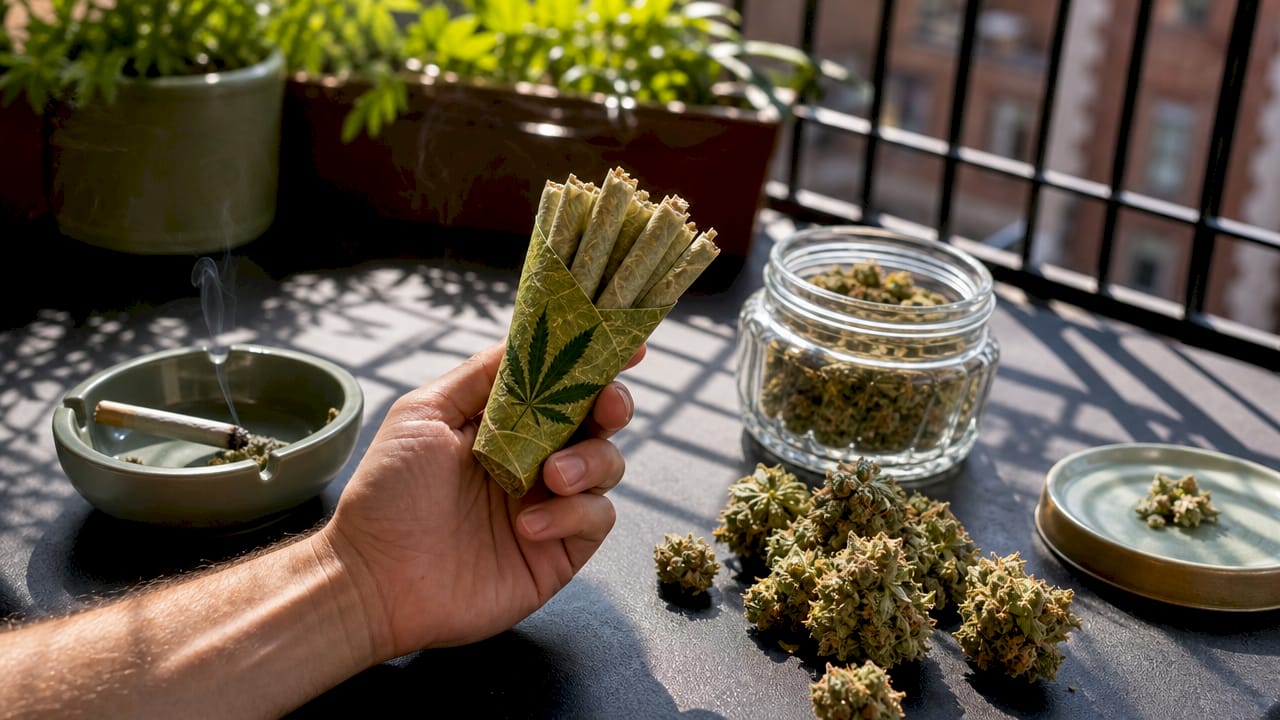
Smoking or vaporizing flower produces effects within 1–10 minutes, making it one of the fastest-acting options available. Effects typically fade within 1–3 hours, giving you short, controllable windows of relief. That rapid feedback loop is especially useful when you are still learning how cannabis affects you.
Pre-rolls offer the same experience without any preparation. They are convenient but offer less control over strain and freshness compared to buying whole flower. If you are new to inhalation products, pre-rolls from a licensed dispensary are a reliable starting point.
Key benefits of flower and pre-rolls:
- Full cannabinoid and terpene profile for a well-rounded effect
- Rapid onset for fast relief from acute pain or anxiety
- Short duration that allows you to manage timing and dosage
- Wide strain variety covering relaxing, energizing, and balanced options
- Immediate feedback so you can adjust your dose in real time
Pro Tip: Start with one or two small inhalations and wait five minutes before taking more. Flower potency varies by strain, and new consumers often overdo it in the first session.
3. How cannabis concentrates and vape products differ from flower
Concentrates are extracted forms of cannabis that strip away plant material and concentrate the active compounds. Concentrates can contain 60–90% THC, compared to flower's typical range of 15–30%. That gap is significant. A single small dose of concentrate can equal several sessions of flower.
Common concentrate types include wax, shatter, and live resin. Live resin is extracted from fresh-frozen plant material, which preserves more terpenes and produces a richer flavor profile than other extraction methods. Wax and shatter are more widely available and generally less expensive.
Vape cartridges and pens use cannabis oil rather than raw plant material. They produce minimal odor and are discreet enough for use in many settings. Onset is similar to flower at 1–10 minutes, but the higher potency means effects can be noticeably stronger at equivalent puff counts.
Concentrate and vape product highlights:
- High potency requires smaller doses for the same effect
- Vape pens produce no combustion byproducts and minimal odor
- Live resin preserves a broader terpene profile than distillate-based oils
- Rapid onset makes them suitable for fast-acting pain or nausea relief
- Not recommended for new consumers without guidance on dosing
Pro Tip: If you are switching from flower to concentrates, cut your usual dose by at least half. The potency difference catches even experienced consumers off guard.
To understand the differences between THC product types before buying concentrates, read up on how delta-9, delta-8, and live resin compounds behave differently in the body.
4. What you should know about cannabis edibles and capsules
Edibles are oral cannabis products that include gummies, baked goods, chocolates, beverages, and capsules. They work differently from inhaled products because your liver processes the THC before it enters your bloodstream. That metabolic step converts THC into 11-hydroxy-THC, a compound that is more potent and longer-lasting than standard THC.
The result is a delayed onset of 30–120 minutes and effects that last 4–8 hours. That extended duration makes edibles well-suited for sleep support, sustained pain management, and all-day stress relief. The tradeoff is that you cannot easily adjust your dose once you have consumed the product.
Regulated markets typically package edibles in 5 mg or 10 mg THC servings. Those increments exist for a reason. Starting at 5 mg gives your body a manageable introduction to the compound's effects.
| Edible type | Onset time | Effect duration | Best use |
|---|---|---|---|
| Gummies | 30–90 min | 4–8 hours | Sleep, stress relief |
| Capsules | 45–120 min | 4–8 hours | Consistent daily dosing |
| Baked goods | 30–90 min | 4–8 hours | Occasional recreational use |
| Beverages | 15–45 min | 2–4 hours | Faster onset, social settings |
New consumers frequently take a second dose before the first one has taken effect, which leads to an overwhelming experience. Waiting at least two hours before considering a second dose is the single most important rule with edibles.
Pro Tip: Start with 2.5–5 mg THC and wait the full two hours. If you feel nothing, add another 2.5 mg the next time. Never double up in the same session.
Kingbuddha offers a range of cannabis-infused edibles including gummies and THC-plus-CBD cookies for those who want a balanced experience.
5. How tinctures and sublingual sprays provide precise dosing
Tinctures are alcohol or oil-based cannabis extracts taken by placing drops under the tongue. Sublingual absorption bypasses the liver's first-pass metabolism, which means the cannabinoids enter your bloodstream faster than a swallowed edible. Onset typically falls between 15–45 minutes, with effects lasting 2–4 hours.
That middle ground between fast-acting inhalation and long-lasting edibles makes tinctures one of the most versatile cannabis oil varieties available. You can use them sublingually for faster onset, or mix them into food and drinks for a slower, edible-like experience. Medical cannabis programs favor tinctures precisely because they allow consistent, measurable dosing.
Tincture advantages worth knowing:
- Dose precision down to the milligram using a calibrated dropper
- Flexible delivery: sublingual, oral, or mixed into beverages
- No combustion or inhalation required, making them suitable for people with respiratory concerns
- Available in CBD-only, full-spectrum, and broad-spectrum formulations
- Discreet and easy to carry
Product labels must include THC and CBD concentration per serving, allergen information, and intended use. Reading that label before your first dose is not optional. It is the only way to know exactly what you are taking.
Pro Tip: Hold the tincture under your tongue for 60–90 seconds before swallowing. That contact time significantly improves sublingual absorption and speeds up onset.
Kingbuddha's CBD tinctures include full-spectrum options with CBN for sleep support, giving you a non-intoxicating path to nighttime relief.
6. What cannabis topicals and patches do for localized relief
Topicals are cannabis-infused balms, lotions, creams, and roll-ons applied directly to the skin. Standard topicals provide localized relief at the application site without entering the bloodstream. That means no psychoactive effects, which makes them a practical choice for people who want pain or inflammation relief without any mental alteration.
CBD topicals absorb more effectively through skin than THC topicals and can produce broader effects across a larger area. THC topicals act locally and stay at the application site. Both are useful for muscle soreness, joint pain, and skin conditions.
Transdermal patches are a different category entirely. They use penetration enhancers to push cannabinoids through the skin barrier and into the bloodstream. That systemic absorption means a transdermal THC patch can produce psychoactive effects, unlike a standard topical. The distinction matters when you are choosing between the two.
| Product type | Absorption | Psychoactive effect | Best for |
|---|---|---|---|
| Balm or cream | Surface level | No | Localized muscle and joint pain |
| CBD roll-on | Surface level | No | Post-workout soreness |
| Transdermal patch | Systemic | Possible with THC | Sustained full-body relief |
Topicals and patches suit people managing chronic pain, athletes recovering from training, and anyone who cannot or prefers not to inhale or ingest cannabis. Kingbuddha's CBD topicals are third-party tested and formulated for skin absorption without psychoactive effects.
Pro Tip: Check the label to confirm whether a product is a standard topical or a transdermal formula. The packaging will specify. Assuming they are the same is a common and costly mistake.
Key takeaways
The most effective way to choose between legal cannabis product types is to match the delivery method to your specific wellness goal, onset preference, and tolerance level.
| Point | Details |
|---|---|
| Delivery method determines effects | Inhaled products act in minutes; edibles take up to two hours and last far longer. |
| Edibles require patience | Wait at least two hours before considering a second dose to avoid overconsumption. |
| Topicals do not get you high | Standard topicals stay local; only transdermal patches deliver cannabinoids systemically. |
| Tinctures offer the most control | Sublingual drops allow precise dosing and flexible use without inhalation. |
| CBD is federally legal | Hemp-derived CBD under 0.3% THC is legal nationwide and suits wellness goals without intoxication. |
What I have learned from watching people choose cannabis products
The most common mistake I see is people choosing a product based on what sounds appealing rather than what matches their actual goal. Someone who wants better sleep buys a vape pen because it is familiar. Someone managing chronic back pain grabs a gummy because it is easy, then gets frustrated when it takes 90 minutes to work.
The second mistake is ignoring the label. Regulated markets require clear labeling of THC per serving, but people still skip that step. A 10 mg gummy and a 50 mg cookie are not the same experience, and treating them as equivalent is how people end up having a bad time.
The 2026 federal rescheduling of medical marijuana is a meaningful policy shift, but it does not change state law. You still need to know what is legal where you live before purchasing anything with THC above 0.3%.
My honest recommendation for anyone new to this space: start with CBD for sleep and stress before adding THC to the equation. Adults seeking wellness without intoxication consistently report better outcomes when they build a baseline with CBD first. It gives you a reference point. Once you know how your body responds to CBD, adding THC becomes a much more informed decision.
— Juiced
Kingbuddha's products for sleep, stress, and pain relief
Kingbuddha carries a curated range of lab-tested CBD and THC products designed for real wellness goals, not just general use.
The CBD Sleep Support Gummies are formulated specifically for nighttime relief, combining CBD with sleep-supporting compounds in a precise, easy-to-dose format. For those who prefer a tincture, the full-spectrum sleep tincture with CBN delivers 1,500 mg of cannabinoids per 30 ml bottle with sublingual precision. Every product is third-party tested, made from U.S.-sourced hemp, and compliant with the 2018 Farm Bill. If you want balanced THC and CBD together, the THC plus CBD cookies offer a 50 mg per cookie dose for experienced consumers ready for a longer-lasting effect.
FAQ
What are the main types of legal cannabis products?
The main categories are flower, concentrates, vape products, edibles, tinctures, and topicals. Each delivers cannabinoids differently, affecting onset time, duration, and whether psychoactive effects occur.
How long do cannabis edibles take to work?
Edibles have a delayed onset of 30–120 minutes because the liver metabolizes THC before it enters the bloodstream. Effects then last 4–8 hours, significantly longer than inhaled products.
Can cannabis topicals make you feel high?
Standard topicals do not produce psychoactive effects because they do not enter the bloodstream. Transdermal patches are the exception, as they are designed to deliver cannabinoids systemically and can produce intoxicating effects with THC formulas.
Is CBD legal everywhere in the United States?
Hemp-derived CBD containing less than 0.3% THC is federally legal under the 2018 Farm Bill. It is widely available for wellness use without a prescription or medical card.
How do I choose between a tincture and an edible?
Choose a tincture when you need faster onset and precise dose control, since sublingual absorption works in 15–45 minutes. Choose an edible when you need longer-lasting effects of 4–8 hours for sleep or sustained pain relief.