

The Role of THC in Sleep Aid: What Actually Works
TL;DR:
- THC can reduce sleep latency by activating CB1 receptors, helping users fall asleep faster. However, regular use suppresses REM sleep and may lead to tolerance, rebound insomnia, and emotional or cognitive effects over time. Proper dosing, cycling, and combining THC with other cannabinoids like CBN or CBD improve safety and sleep quality for most adults.
If you've spent another night staring at the ceiling, you've probably wondered whether THC could finally be the answer. The role of THC in sleep aid is genuinely promising, but it's also one of the most misunderstood topics in natural wellness. THC isn't a simple sedative you take and wake up refreshed. The reality is more layered than that, and understanding those layers is what separates people who use it effectively from those who end up more exhausted than before. Here's what the science and real-world experience actually say.
Table of Contents
- Key takeaways
- The role of THC in sleep aid: how it works in your body
- Benefits and risks: a clear-eyed view
- Dosing strategies that actually make sense
- THC vs. other sleep options: making the right call
- Practical habits for sustainable THC use
- My honest take on THC as a sleep tool
- Sleep products built for real results
- FAQ
Key takeaways
| Point | Details |
|---|---|
| THC reduces sleep latency | Low doses (2 to 5 mg) help you fall asleep faster by activating CB1 receptors that calm arousal. |
| REM sleep gets suppressed | Regular THC use reduces restorative REM sleep, which affects memory and emotional regulation over time. |
| Start at 2.5 mg | A 2.5 mg starting dose lets you assess your personal tolerance before increasing. |
| THC plus CBN outperforms THC alone | Combining THC with CBN delivers comparable results to prescription sleep aids with fewer side effects. |
| Nightly use builds tolerance | Frequent edibles or tinctures reduce effectiveness over time and can cause rebound insomnia when stopped. |
The role of THC in sleep aid: how it works in your body
THC doesn't make you sleepy the same way a sleeping pill or even melatonin does. It works primarily through the endocannabinoid system, which is a network of receptors throughout your brain and body that regulates mood, pain, appetite, and sleep cycles. When THC enters your system, it binds directly to CB1 receptors concentrated in the brain regions that control arousal and wakefulness.
This is where it gets specific. THC's sedative effects are tied to CB1 receptor activation and modulation of the orexin system. Orexin is the neurotransmitter responsible for keeping you awake and alert. By suppressing that signal, THC effectively lowers the neurological "alarm" that keeps restless sleepers from switching off at night.
Here's what makes THC distinct from other cannabinoids in the sleep context:
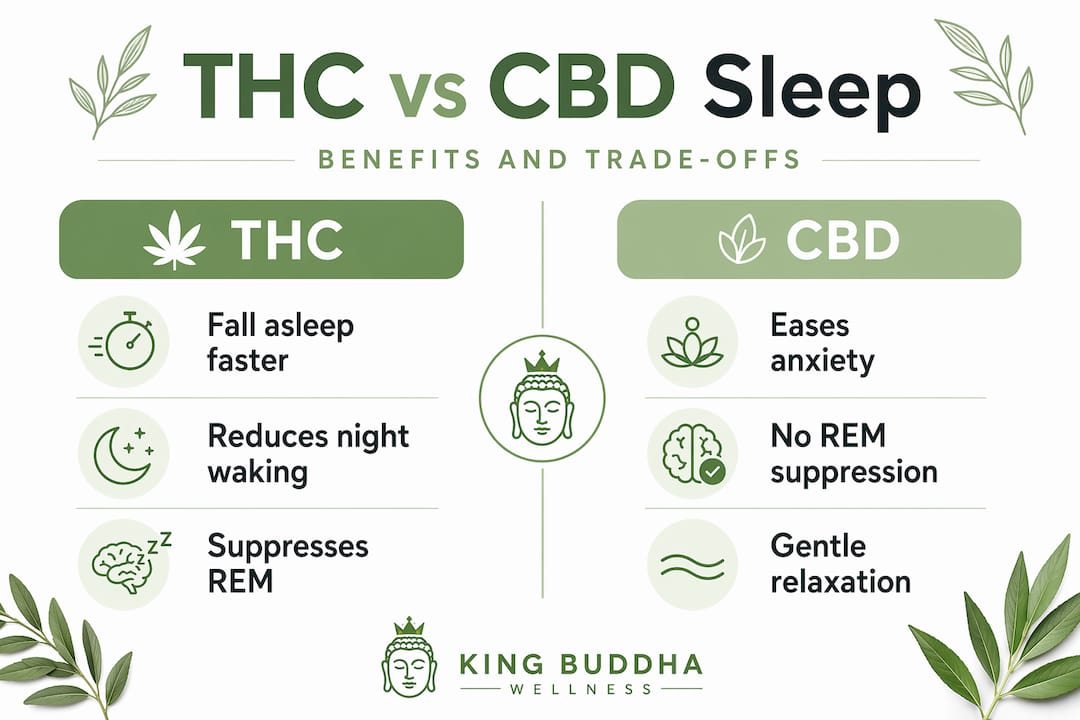
- THC binds directly to CB1 receptors and creates noticeable sedation, reducing the time it takes to fall asleep.
- CBD works indirectly, reducing anxiety and lowering cortisol without producing sedation. Better for anxious minds than for physical sleeplessness.
- CBN has mild sedative properties and works especially well when combined with THC to smooth out the psychoactive edge.
The difference matters. If your sleeplessness comes from a racing mind tied to anxiety, CBD may serve you better. If you lie awake due to pain, physical tension, or a nervous system that just won't power down, THC's direct action on arousal pathways is where it earns its place.
Pro Tip: If you're new to cannabinoids for sleep, try CBD on its own for two weeks first. It gives you a baseline understanding of how your nervous system responds before adding THC's stronger effects into the picture.
Benefits and risks: a clear-eyed view
The honest picture of THC for sleep is a mix of real advantages and real trade-offs. Let's look at both.

On the benefit side, THC can reduce sleep latency and nighttime arousal, meaning you fall asleep faster and wake less often in the early hours. For adults dealing with chronic pain, post-traumatic stress, or a hyperactive nervous system, this is clinically meaningful. People who would otherwise lie awake for hours can get to sleep in a fraction of the time.
| Factor | THC | Benzodiazepines (e.g., lorazepam) |
|---|---|---|
| Sleep onset | Faster | Faster |
| REM sleep | Suppressed | Suppressed |
| Dependency risk | Moderate | High |
| Withdrawal effects | Rebound insomnia | Severe, medically risky |
| Morning grogginess | Possible at higher doses | Common |
| Long-term safety | Emerging evidence | Well-documented risks |
On the risk side, the picture requires honesty. THC suppresses REM sleep, the phase your brain uses for emotional regulation and memory consolidation. You might feel like you slept, but over weeks and months, missing out on REM has real cognitive and emotional consequences. Higher doses can also increase anxiety in sensitive individuals, producing the opposite of what you want at bedtime.
Certain populations should approach THC with serious caution. Patients with a history of psychosis, bipolar disorder, or cannabis misuse are not good candidates for THC-based sleep support. For everyone else, the key variable is dose.
Pro Tip: Track your sleep quality with a simple journal for the first month of THC use. Note how you feel in the morning, not just whether you fell asleep. That data is more useful than any app.
Dosing strategies that actually make sense
Getting the dose right is the difference between THC working for you and working against you. Most people either take too much because they assume more equals more sleep, or they take inconsistent amounts and never find their window.
Here's a practical framework:
- Start at 2.5 mg. The recommended starting dose is 2.5 mg THC. This amount is enough to notice an effect without overwhelming your system or triggering anxiety.
- Move to 2 to 5 mg if needed. The effective dose range for reducing sleep latency is 2 to 5 mg. This is the therapeutic window for most adults.
- Consider a THC plus CBN formulation. A common synergistic ratio used in sleep-focused products is 5 mg CBN combined with 5 mg delta-9 THC. This blend promotes relaxation without the stronger psychoactive effect of THC alone.
- Time it right. Edibles and tinctures typically take 30 to 90 minutes to reach peak effect. Take your dose 60 minutes before you want to be asleep, not right at bedtime.
- Avoid going above 10 mg. Higher doses frequently cause excess anxiety and impaired morning function, especially in people who don't use cannabis regularly.
| Dose | Expected effect | Best for |
|---|---|---|
| 1 to 2.5 mg | Mild relaxation, shorter sleep onset | Beginners, low tolerance |
| 2.5 to 5 mg | Noticeable sedation, reduced waking | Most adults with insomnia |
| 5 to 10 mg | Stronger sedation, more REM suppression | Experienced users, chronic pain |
| Over 10 mg | Risk of anxiety, disrupted sleep | Not recommended for sleep |
The entourage effect of THC with CBN or CBD in specific ratios tends to deliver better outcomes than THC alone, reducing the psychoactive intensity while preserving the sleep-promoting benefit. Products that combine these cannabinoids are worth considering over single-compound options.
THC vs. other sleep options: making the right call
Understanding where THC fits within the broader sleep aid picture helps you make a smarter choice, not just the most popular one.
CBD reduces anxiety and cortisol without producing sedation. It works well for people who can't sleep because their minds won't quiet down, but it doesn't have the physical knockout effect that THC produces. If your body is tense and your nervous system is in threat mode, CBD alone often isn't enough.
The comparison with pharmaceutical sleep aids is where THC starts to look genuinely interesting from a clinical standpoint. A Phase II randomized controlled trial found that a THC and CBN combination was non-inferior to lorazepam for managing chronic insomnia, with comparable sleep quality scores and no significant adverse effects. That's not a minor finding. Lorazepam is a benzodiazepine with serious dependency risks and withdrawal effects that can be medically dangerous.
THC still carries its own risks, especially around REM suppression and rebound insomnia, but the dependency and withdrawal profile is considerably less severe than benzos. The key distinctions when comparing options:
- Benzodiazepines work fast and hard but create physical dependency quickly. Stopping them abruptly is dangerous.
- THC creates psychological dependence and tolerance over time but doesn't carry the same acute withdrawal danger.
- CBD offers the gentlest profile with the least direct sleep-inducing effect.
- CBN alone has the mildest sedative effect but pairs well with both THC and CBD.
THC is especially valuable for adults dealing with threat-related arousal, a nervous system state common in people living with chronic pain, PTSD, or high-stress situations. For anxiety-driven insomnia where the main problem is a racing mind, CBD or a CBD-heavy ratio may produce better results.
Practical habits for sustainable THC use
Using THC to sleep better isn't just about what you take. How and how often you use it determines whether it helps long-term or creates a new problem.
Frequent nightly edibles lead to increased tolerance, diminished sleep quality over time, and a real risk of dependence. This isn't theoretical. Many adults who start with a small nightly dose find themselves doubling it within a few months just to get the same effect. Then stopping it becomes its own problem.
Here's how to use THC responsibly as part of a sleep strategy:
- Use it on a schedule, not by default. Reserve THC for nights when you genuinely need support, not as a nightly ritual.
- Take breaks. Cycling off THC for a few nights per week helps preserve its effectiveness and reduces tolerance.
- Address what's underneath. Dependence on THC can mask underlying issues like sleep apnea, circadian rhythm disruption, or chronic anxiety that need their own treatment.
- Don't ignore sleep hygiene. A consistent sleep schedule, dark and cool room, and reduced screen time before bed matter more than any supplement.
- Know the withdrawal signs. Rebound insomnia after stopping THC peaks in the first few days and can feel intense. If this happens, tapering gradually helps far more than quitting cold.
If your sleep problems are getting worse over months of THC use, that's a clear signal to consult a sleep specialist or your doctor.
Pro Tip: Try two to three "THC-free" nights per week, using a CBD or CBN product instead. This simple habit dramatically slows tolerance buildup and keeps THC effective when you do use it.
My honest take on THC as a sleep tool
I've seen too many people come to THC for sleep expecting a cure and end up more confused about their sleep than before. The sedative effect is real. The fact that it can work as well as a prescription sedative in the right dose and formulation is clinically documented. But calling it a sleep aid without context does a disservice to everyone who picks it up hoping to fix a complex problem.
What I've learned from watching people navigate this is that THC works best as a bridge, not a foundation. If your nervous system is so wound up that you genuinely can't get to the first stage of sleep, a low-dose THC product gives you something pharmaceutical options often fail to: a way in without severe dependency strings attached. That matters.
But what I've also seen is that the people who get the best long-term results from using THC to sleep better are the ones who treat it as one part of a larger approach. They also work on their sleep schedule, their stress load, and their bedtime environment. THC amplifies a good sleep hygiene foundation. On its own, it papers over cracks that will eventually widen.
My honest recommendation is to start low, combine with CBN if you can, and use it intentionally rather than automatically. The goal isn't to sleep through sedation. The goal is to give your nervous system just enough support to do what it already knows how to do.
— Juiced
Sleep products built for real results
If you're ready to put this knowledge to use, Kingbuddha has a focused lineup of cannabinoid sleep products built with the ratios and quality standards that matter. The CBD sleep tincture with CBN delivers the synergistic CBN and delta-9 THC combination that clinical research points to as one of the most effective non-pharmaceutical options for chronic insomnia.
For a gummy-based option with precise dosing, the CBD sleep gummies are formulated specifically for sleep onset and staying asleep through the night. Every product is third-party tested, made with U.S.-sourced hemp, and compliant with the 2018 Farm Bill. If you want sleep support you can actually trust, Kingbuddha is a smart place to start.
FAQ
Does THC actually help you fall asleep faster?
Yes. THC reduces sleep latency by activating CB1 receptors that suppress the brain's arousal systems. Studies show effective doses of 2 to 5 mg can meaningfully shorten the time it takes to fall asleep.
What is the best starting dose of THC for sleep?
Start at 2.5 mg to assess your tolerance before increasing. Most adults find their effective window between 2 and 5 mg, with higher doses more likely to cause anxiety or grogginess the next morning.
Does THC affect sleep quality or just sleep onset?
THC helps with sleep onset but suppresses REM sleep, the restorative phase linked to emotional regulation and memory. Regular use can alter your natural sleep architecture even if you feel like you slept deeply.
Is THC safer than prescription sleep medication?
A clinical trial found a THC and CBN combination non-inferior to lorazepam for chronic insomnia with fewer serious risks. THC still carries tolerance and rebound insomnia risks, but its dependency profile is less severe than benzodiazepines.
Can you become dependent on THC for sleep?
Yes, with frequent nightly use. Tolerance builds over time, diminishing effectiveness, and stopping abruptly can trigger rebound insomnia. Cycling off a few nights per week and using the lowest effective dose significantly reduces this risk.