

Start 5 mg Twice Daily: Trial Backed CBD for Sciatica
CBD can genuinely ease sciatica symptoms for some people by calming inflammation, nerve irritation, and muscle tightness, but it will not fix a herniated disc or a pinched nerve at its root. Trial data shows modest, real pain reductions, not dramatic cures. The practical path: pick a lab-tested product, check with your doctor if you take other medications, start with a low dose, and track your results for two to three weeks before judging whether it's working.
TL;DR:
- CBD offers modest pain relief for nerve-related back pain, with a 1.9-point reduction in chronic low back pain trials, but it is not a cure for structural issues.
- Combining topical CBD applied along the sciatic pathway with systemic tinctures can improve symptom management and support physical therapy efforts.
- Starting doses around 5 mg twice daily and titrating up to 40 mg over two weeks helps identify effective relief without risking side effects or drug interactions.
- Using third-party lab-tested products with verified cannabinoid content and avoiding high doses without medical supervision enhances safety and efficacy.
- CBD's benefits depend on consistent use, proper dosing, and pairing with targeted therapies, as individual responses vary and it cannot address structural causes directly.
Table of Contents
- How Strong Is the Clinical Evidence for CBD and Sciatica?
- How Does CBD Help With Nerve Pain Like Sciatica?
- Which CBD Product Works Best for Sciatica Pain?
- What Is the Right CBD Dosage for Sciatica?
- Is CBD Safe to Take With Other Medications?
- Should You Use CBD Alongside Physical Therapy?
- How Do You Know a CBD Product Is Actually High Quality?
- What Actually Matters Here, and What Doesn't
- Where to Start With Kingbuddha's Lab-Tested CBD Options
- Primary Sources for Further Reading
- Sources
- FAQ
How Strong Is the Clinical Evidence for CBD and Sciatica?
No large trial has tested CBD specifically for sciatica. What exists is evidence for chronic low back pain and neuropathic pain, conditions that overlap with sciatica's mechanisms, and the picture is encouraging but not overwhelming.
The most rigorous data point comes from a phase 3 randomized placebo-controlled trial of a full-spectrum extract (VER-01) for chronic low back pain. Patients on the active treatment saw their pain scores drop by a mean of 1.9 points on a standard 0 to 10 scale, roughly 0.6 points more than the placebo group, a statistically significant difference that held up in follow-up phases.
By the numbers: In the VER-01 trial, treated patients averaged a 1.9-point pain reduction on the NRS scale, with a 0.6-point edge over placebo. That's a real effect, but it's the difference between "somewhat better" and "pain-free."
Other findings round out the picture:
- An open-label observational study of hemp-derived CBD gel caps in patients with lumbar spinal stenosis found usual pain scores fell from about 6.0 to 4.26, and worst pain dropped from 7.54 to 5.75 over six visits. Encouraging, but the study lacked a placebo arm and ran with a small group.
- A 2026 randomized trial testing high-dose oral CBD, up to 800 mg per day, found significantly lower pain intensity in patients with neuropathic pain from spinal cord injury, under close clinical supervision.
- A meta-analysis of cannabinoids for spinal cord injury pain found no consistent significant benefit across studies, plus higher rates of adverse events in the cannabinoid groups. This is the counterweight that keeps expectations honest.
Reviewers of this literature consistently flag the same issues: small samples, inconsistent dosing, and study designs that make it hard to separate real drug effect from placebo response. The honest read is that CBD produces a modest, measurable benefit for a meaningful subset of people with nerve-related back pain. It is not a guaranteed fix, and it works better for some than others.
How Does CBD Help With Nerve Pain Like Sciatica?
CBD interacts with the endocannabinoid system, a network of receptors, including CB1, CB2, and TRPV1, that regulate pain signaling, inflammation, and how sensitized your nerves become after irritation. When a compressed or inflamed sciatic nerve keeps firing pain signals, that's peripheral sensitization at work, and CBD's anti-inflammatory action may help turn down that volume.
There's also an indirect route. Sciatica often disrupts sleep and raises anxiety, and both amplify how pain feels. Many users report calmer sleep and less anxious rumination on CBD, which can lower perceived pain even without touching the nerve directly.
What CBD cannot do is decompress a disc or shrink a bone spur pressing on a nerve root. It treats the downstream symptoms, inflammation, muscle guarding, nerve hypersensitivity, not the structural cause.
Which CBD Product Works Best for Sciatica Pain?
The format matters as much as the dose. Sciatica pain shows up in different ways throughout the day, and matching the product to the moment tends to work better than picking one format and sticking with it exclusively.
- Topicals applied along the sciatic pathway (lower back, glute, back of the thigh) act locally and tend to bring noticeable relief within 15 to 45 minutes, though they don't address systemic inflammation.
- Tinctures taken sublingually give you a systemic, whole-body anti-inflammatory baseline, with effects building over 30 to 90 minutes and lasting several hours.
- Gummies and other edibles offer the same systemic effect as tinctures but with a slower onset (60 to 120 minutes, because they pass through digestion), which makes them better for consistent, scheduled dosing than for fast relief.
- Patches and slow-release formats deliver a steady dose over many hours and can suit people managing a persistent baseline of nerve discomfort rather than sudden flares.
Practitioners commonly recommend combining an oral "base" dose for ongoing systemic support with a topical applied directly to painful spots for flare management. This layered approach mirrors how many people already handle chronic pain, addressing the steady hum with something systemic and the sharp spikes with something local.
What Is the Right CBD Dosage for Sciatica?
Dosing is where most people get it wrong. They start too high, feel nothing dramatic in a day, and either give up or jump the dose too fast. The Delphi consensus process among pain specialists offers a more disciplined framework, built around three tracks: routine, conservative, and rapid titration.
The routine protocol most people should follow looks like this:
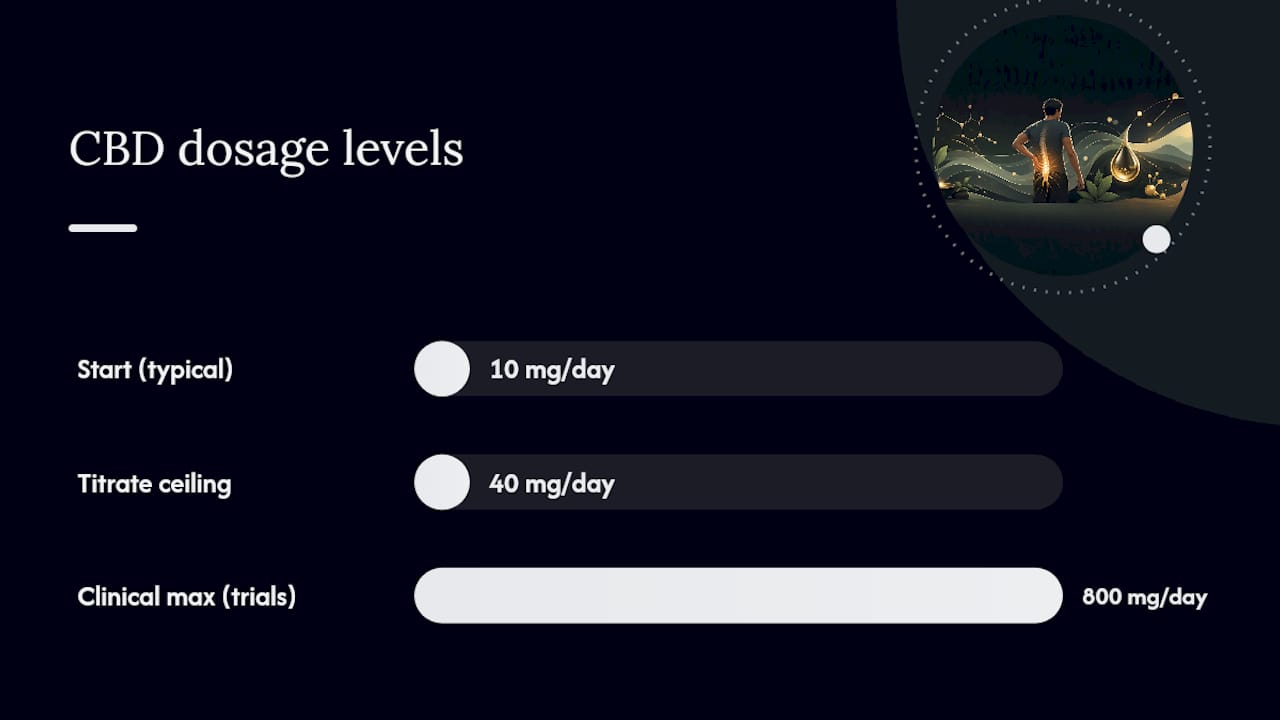
- Start at 5 mg of CBD twice daily (morning and evening) for two to three days.
- If tolerated with minimal effect, increase by 5 to 10 mg per dose every two to three days.
- Continue titrating until you reach meaningful relief or hit roughly 40 mg per day total, the point at which the consensus guidance suggests considering the addition of THC rather than pushing CBD higher.
- Log each day: dose taken, pain score (0 to 10), sleep quality, and any side effects.
That journal is not busywork. Tracking dose against pain and sleep is one of the fastest ways to spot your effective dose and avoid escalating past the point of real benefit. Some clinical trials for neuropathic pain have pushed doses as high as 800 mg per day, but that happened under direct medical supervision with careful monitoring. Self-escalating anywhere near that range without a clinician involved is not a reasonable comparison to make from your own kitchen table.
Pro Tip: Take your evening dose about an hour before bed rather than right before you turn off the lights. CBD's calming effect on sleep tends to show up gradually, and giving it a head start improves both sleep quality and next-morning pain levels.
If you've titrated to 40 mg per day for two weeks with no meaningful change, that's your signal to talk to a clinician about next steps rather than continuing to push the dose upward on your own.
Is CBD Safe to Take With Other Medications?
The side effects reported in trials are generally mild: drowsiness, dry mouth, mild gastrointestinal upset (loose stools, nausea), and occasional dizziness at higher doses. Most people tolerate CBD reasonably well at the doses used in the titration protocol above.
The bigger concern is drug interactions. CBD is metabolized by liver enzymes in the CYP450 family, the same pathway responsible for processing many common prescription drugs. If your medication label carries a grapefruit warning, that's a useful red flag, since grapefruit and CBD affect overlapping enzymes.
- Blood thinners (like warfarin) can have altered blood levels when combined with CBD, raising bleeding risk.
- Certain antidepressants and antiseizure medications metabolized through CYP enzymes may interact unpredictably.
- Full-spectrum products contain trace THC, which shows up on standard workplace drug screens even in small amounts; if you're tested, choose broad-spectrum or isolate products instead.
The meta-analysis on cannabinoids for spinal cord injury pain found elevated odds of adverse events in cannabinoid groups compared to placebo, a reminder that "natural" doesn't mean risk-free. Stop and seek immediate medical care if you experience sudden leg weakness, numbness spreading into the groin, or changes in bladder or bowel control. Those are signs of nerve compromise that CBD cannot address and that need urgent evaluation.
Should You Use CBD Alongside Physical Therapy?
CBD works best as a supporting tool, not a standalone treatment. Reducing baseline pain makes it easier to actually do the physical therapy and stretching that address sciatica's root cause, rather than avoiding movement out of fear of flaring things up.
A practical rhythm: apply a topical to the affected area 15 to 20 minutes before stretching or PT exercises to reduce guarding and improve range of motion. Take your oral dose consistently to keep systemic inflammation and sleep quality on track. On flare days, lean harder on topical spot treatment and gentler movement. On maintenance days, stick to your titrated oral dose and your regular exercise routine. CBD lowers the volume on pain enough that the actual rehab work, the thing that changes outcomes long term, becomes possible.

How Do You Know a CBD Product Is Actually High Quality?
A Certificate of Analysis (COA) is non-negotiable. It should show the exact cannabinoid potency per serving, confirm THC content matches the label (critical for anyone drug-tested), and screen for solvents, pesticides, and heavy metals. If a brand doesn't show you a batch-specific COA, walk away.
- Look for milligrams of CBD per serving stated plainly, not vague terms like "hemp extract blend."
- Confirm the COA is batch-specific, not a generic marketing document.
- Check for third-party (not in-house) lab testing.
- Verify U.S.-sourced hemp when that claim is made on the label.
Pro Tip: Search the batch number printed on your product's packaging against the brand's published COA library before your first dose, not after you've already opened it. Kingbuddha publishes lab results for this exact reason, and our guide to finding lab-tested CBD walks through what to check line by line.
What Actually Matters Here, and What Doesn't
The sciatica-and-CBD conversation online skews toward two extremes: miracle-cure testimonials on one side, blanket dismissal on the other. Neither matches what the trial data actually shows. The VER-01 results and the spinal stenosis observational data point to a real, modest, reproducible effect on nerve-related pain, not a placebo illusion, but not a cure either.
Where conventional advice falls short is dosing. Most people buy a bottle, take an eyeballed dropper amount once, feel nothing dramatic, and quit within a week. The Delphi consensus protocol exists precisely because effective dosing takes 10 to 14 days of patient titration, and almost nobody sticks with it that long without a plan.
What should come first: pick one lab-verified product, follow a written titration schedule, and keep a simple daily log of pain and sleep. Skip the mechanism obsession and the brand-hopping. The people who get real results are the ones boring enough to track a number every day for two weeks. That's not exciting advice, but it's the one piece of conventional wisdom this evidence base actually confirms works.
— Juiced
Where to Start With Kingbuddha's Lab-Tested CBD Options
Kingbuddha's product lineup maps directly onto the layered approach this guide recommends: CBD tinctures for your daily systemic base dose, CBD topicals for targeted relief along the sciatic pathway, and gummies for people who want consistent, pre-measured maintenance dosing without a dropper.

Every product ships with third-party lab testing and a published Certificate of Analysis, sourced from U.S. hemp farms, so you can verify exactly what you're titrating before you start. If you're just beginning, a low-risk starting combination is a tincture for your twice-daily base dose paired with a topical for flare spots, following the 5 mg titration schedule outlined above. Browse the full tincture and topical selection to compare potency options and find a starting point that matches where you are in your titration.
Primary Sources for Further Reading
- VER-01 phase 3 trial: strongest controlled evidence for cannabis extract and chronic low back pain.
- Delphi consensus dosing guidelines: the titration framework used in this guide.
- Spinal cord injury cannabinoid meta-analysis: the necessary counterpoint on inconsistent benefit and adverse events.
Individual response to CBD varies, and a clinician familiar with your medication list can interpret these findings for your specific situation better than any general guide.
This article is general information, not a substitute for advice from a qualified doctor. Consult a qualified healthcare professional about your own circumstances before acting on anything here.
Sources
- Full‑spectrum extract from Cannabis sativa DKJ127 for chronic low back pain: a phase 3 randomized placebo‑controlled trial
- Consensus recommendations on dosing and administration of medical cannabis to treat chronic pain: results of a modified Delphi process
- The Use of Cannabidiol in Patients With Low Back Pain Caused by Lumbar Spinal Stenosis: An Observational Study
- High‑dose cannabidiol for chronic neuropathic pain associated with spinal cord injury: a randomised clinical trial
- Cannabinoid use for pain reduction in spinal cord injuries: a meta-analysis of randomized controlled trials
FAQ
How much CBD should I take for sciatica pain?
Most consensus dosing guidance suggests starting at 5 mg of CBD twice daily and increasing by 5 to 10 mg every two to three days, up to about 40 mg per day, before considering anything stronger. Track your pain score and sleep quality daily so you know exactly what dose is working for you.
Will CBD help with a pinched nerve?
CBD can ease the inflammation and pain signaling that come with a pinched nerve, but it cannot physically relieve the compression causing it. Think of it as symptom management that runs alongside treatments like physical therapy, not a replacement for addressing the structural cause.
What is the miracle stretch for sciatica?
There's no single stretch that works for everyone, since sciatica has multiple possible causes, from disc issues to piriformis tightness. A physical therapist can identify which specific stretches target your source of nerve irritation, and applying a topical beforehand may make those stretches more tolerable.
How much CBD should I take for nerve pain?
Nerve pain dosing follows the same start-low approach: 5 mg twice daily, titrating upward every few days based on your response. Some clinical trials have used doses up to 800 mg per day for severe neuropathic pain, but that level requires direct medical supervision, not self-directed titration.