

Start 2.5–5 mg Tonight: Delta 9 Gummy Dosage for Beginners
A safe starting session dose for most first time adult users is a low amount of Delta 9 THC. Casual users with some tolerance typically feel comfortable within a moderate dose range, while experienced users may require higher amounts. The one rule that keeps everyone out of trouble: wait at least two hours before deciding whether to take more.
TL;DR:Kingbuddha
- Unless you're a regular user with high tolerance, start with a dose between 2.5 and 5 mg and wait a minimum of two hours before redosing.
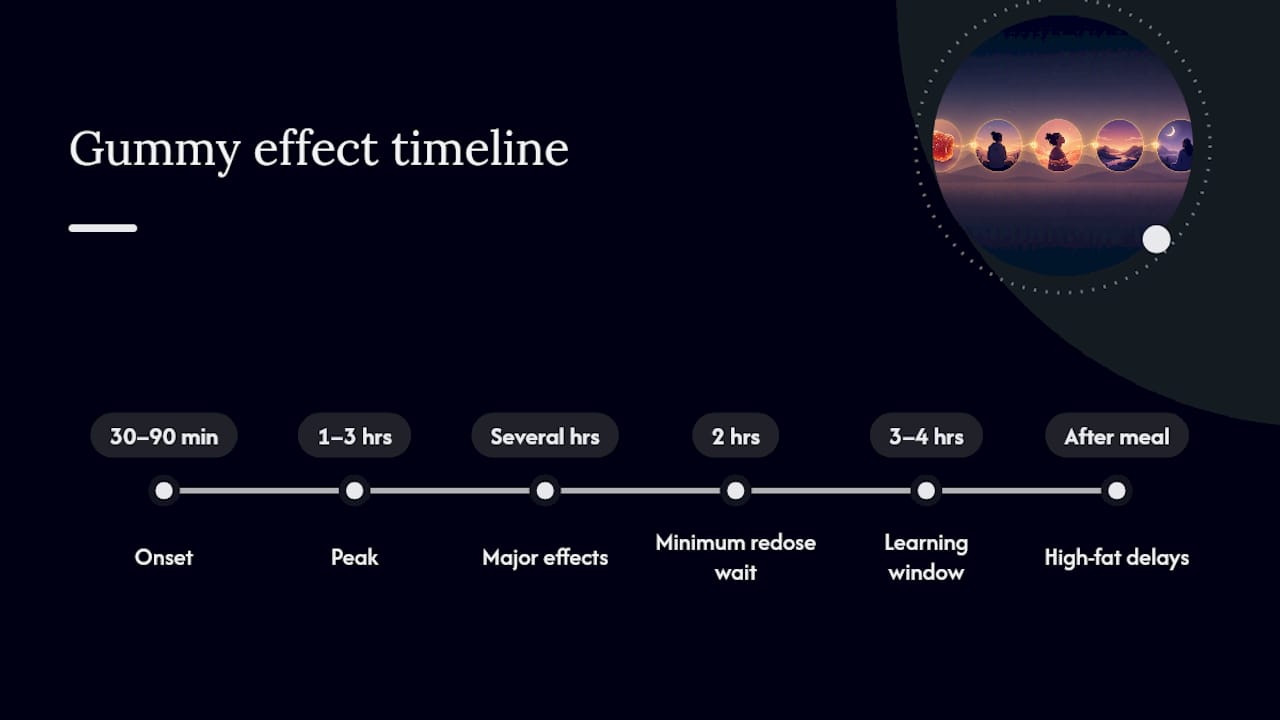
- The effects of edible Delta 9 THC can take from 30 to 90 minutes to onset, and peak around one to three hours, with longer durations for high-fat meals.
- Individual response varies widely due to genetics, eating habits, body weight, and medications, making lab testing and dose tracking essential.
- Full spectrum gummies may produce different effects compared to isolate formulations, often longer-lasting and smoother, depending on personal response.
- Avoid THC if pregnant, under 21, or on sedating medications, and always check batch-specific lab tests before trying new gummies.
Table of Contents
- What Is the Right Delta 9 Gummy Dosage for You?
- Dosing Tiers and a Simple Delta 9 Gummy Dosage Chart
- Why Two People Feel Different Effects From the Same Gummy
- How Long Do Delta 9 Gummy Effects Last?
- Delta 9 Safety Checklist: Who Should Avoid It and Warning Signs
- What Lab Testing Tells You Before You Take a Gummy
- Isolate vs Full Spectrum: How Formulation Changes the Effect
- A Beginner's First Night: One Realistic Titration Plan
- Where to Find Lab Tested Low Dose Delta 9 Gummies
- Sources
- FAQ
What Is the Right Delta 9 Gummy Dosage for You?
Delta 9 THC is the primary intoxicating compound in cannabis, and gummy dosage refers to the milligram amount of it in a single serving, not the whole package. That distinction trips up more beginners than anything else on this list, because a package might contain 100 mg of THC split across 20 gummies, meaning each piece is only 5 mg. Read the label twice before you eat anything.
Dosage guidance exists because Delta 9 gummies behave differently in your body than smoking or vaping the same compound. When you eat THC, your liver converts it into 11 hydroxy THC, a metabolite that crosses into the brain more efficiently and produces stronger, longer lasting effects than inhaled cannabis. That single fact explains almost every dosing mistake beginners make: they expect the fast, predictable hit of a joint and instead get hit an hour later with something much heavier.
There's no fixed delta 9 dosage that works for everyone. Your ideal dose depends on body weight, tolerance, metabolism, what you ate that day, and even your genetics. The individual variability in cannabinoid response is well documented, and the standard recommendation across the research is consistent: start low, go slow, and give each dose time to fully show itself before judging it.
Dosing Tiers and a Simple Delta 9 Gummy Dosage Chart
Most Delta 9 gummy dosage guidance breaks down into four practical tiers based on your experience level and goals for the session.
- Microdose (2 to 5 mg): best for daytime use, focus, mild mood lift, or for anyone who wants the benefits of THC without feeling "high." Good starting point for cannabis-sensitive users.
- Beginner (2.5 to 5 mg): the standard entry point for anyone who has never taken an edible or hasn't in a long time. Expect mild relaxation, possible euphoria, and noticeably relaxed muscles within an hour or two.
- Casual (5 to 15 mg): for users with some THC tolerance who want a clearer, more social or recreational effect. This is where most moderate users settle once they know how their body responds.
- Experienced (15 to 30+ mg): reserved for people with established, regular tolerance. Effects at this level are strong, long, and can include impaired coordination and significant sedation for anyone not used to that dose.
If your gummy is labeled with a certain dose per piece, you can cut it approximately in half for a smaller dose though exact dosing may vary since gummies may not be perfectly homogenous. Pay attention to whether the label lists milligrams per gummy or milligrams per package. It's the single most common source of accidental overdosing.
Session dose and daily total aren't the same thing. Beginners should keep daily totals low while their tolerance is still unknown.
Why Two People Feel Different Effects From the Same Gummy
Genetics play a bigger role than most people realize. The enzyme CYP2C9 metabolizes THC in the liver, and people with slow metabolizer variants of that gene can see exposure increase by roughly 300% compared to normal metabolizers. That means the same 5 mg gummy that barely registers for one person could feel like a much larger dose to someone else, with no way to know in advance which type you are.
Food matters more than most labels admit. A high fat meal eaten before or with your gummy significantly increases both the peak concentration and total exposure to THC and its active metabolite, according to a randomized crossover pharmacokinetic study. The same study also found that women showed a higher peak concentration than men after a 5 mg fasted dose, one more reminder that sex differences in cannabinoid metabolism are real and still not fully mapped.
Other variables worth tracking:
- Tolerance and recent use: if you've used cannabis in the past month, your baseline response will differ from a true first timer.
- Body weight and composition: heavier body weight sometimes buffers effects, but it's an unreliable predictor on its own. Don't dose by weight alone.
- Medications and age: older adults and anyone on medications metabolized by the liver should treat any dose as a genuine unknown quantity until tested cautiously.
How Long Do Delta 9 Gummy Effects Last?
Expect onset between roughly half an hour and one and a half hours, and it can be longer if you have food in your stomach when you take it. This delay is the single biggest reason people accidentally overdo it: they feel nothing at the 30 minute mark, assume the gummy is weak, take another, and then get hit by both doses at once an hour later.
Peak effects usually arrive within one to three hours of eating the gummy, and a pharmacokinetic comparison of five commercial edible products with identical 10 mg labels found time to peak ranging from 35 to 90 minutes and peak blood concentrations varying nearly twofold between brands. Same label, same milligram count, meaningfully different experience. That's a strong argument for going slower with any new brand, even one you've used before at a different dose.
Once you're past the peak, major effects commonly last several hours, with some residual grogginess or mild effects lingering longer in certain users. A high fat meal shifts this whole timeline later and stretches it longer, so a gummy eaten after a heavy dinner will hit later, peak higher, and linger longer than the same gummy on an empty stomach.
The redosing rule that matters most: wait at least two hours before taking more, and give yourself three to four hours if you're still learning your tolerance. If you still feel nothing after two hours on an empty stomach, a small increase of 2.5 mg is reasonable. Never double a dose out of impatience.
Pro Tip: Keep a simple note on your phone: time taken, milligram amount, whether you ate first. After two or three sessions you'll know your personal onset window better than any general chart can tell you.
If you do feel more intoxicated than expected, the fix is patience, not panic. Sit down somewhere comfortable, hydrate, and let it pass. Most uncomfortable highs peak and fade within a few hours even when they feel endless in the moment.
Delta 9 Safety Checklist: Who Should Avoid It and Warning Signs
Some people should skip Delta 9 gummies entirely, and this isn't a gray area. Avoid THC if you're pregnant or breastfeeding, if you're under 21, or if you're immunocompromised with a condition that makes sedation or altered cognition genuinely risky. There's no dose considered universally safe for these groups.
Mixing THC with alcohol or sedating medications (benzodiazepines, certain sleep aids, some antihistamines) without talking to a doctor first is a common and avoidable mistake. Both substances slow you down in overlapping ways, and combined effects are unpredictable even at doses that would be fine alone.
Higher doses warrant real caution, especially for anyone without established tolerance, and combining THC with CBD can shift how a dose feels since CBD may moderate or extend certain effects. That's worth knowing before you assume "it has CBD in it too" automatically makes a gummy gentler.
Never drive or operate machinery until you're certain you're fully sober. Given that residual effects can extend past the main window, this means waiting longer than you'd expect, sometimes the better part of a day after a strong dose.
Watch for these warning signs that need medical attention, not just patience:
- Chest pain or a racing heart that doesn't settle down
- Severe breathing trouble
- Prolonged unconsciousness or inability to be roused
- Vomiting that won't stop or signs of severe dehydration
None of these are typical THC reactions, and none should be waited out. Call for medical help if you see them. The broader point echoed across the research on cannabinoid safety is simple: there's no single safe dose for everyone, so the "start low, go slow, stay low" approach isn't a suggestion, it's the only strategy that accounts for how differently people actually respond.
What Lab Testing Tells You Before You Take a Gummy
A milligram number on a label only means something if you trust how it was measured. Third party lab testing on Delta 9 and CBD product lines means every batch gets verified for potency and screened for contaminants by a lab with no financial stake in the result. That's the report you actually want to check before eating anything new, not the marketing copy on the front of the package.
Before you try a new gummy, look up its batch specific certificate of analysis (COA) if one is available, and confirm the milligram per serving figure matches what you expect. If a product doesn't publish COAs or makes it hard to find them, that's a reason for caution regardless of how confident the packaging sounds.
For readers who want a broader walk through product types, ingredient sourcing, and how Delta 9 gummies are made, Kingbuddha's complete guide to Delta 9 THC gummies covers that ground in more depth. If you're leaning toward a lower starting point, the 2 mg microdosing guide walks through exactly why that's often the smarter first move. Choose low milligram servings until you know your own response, and treat every COA check as a five minute step that's worth the time.
Isolate vs Full Spectrum: How Formulation Changes the Effect
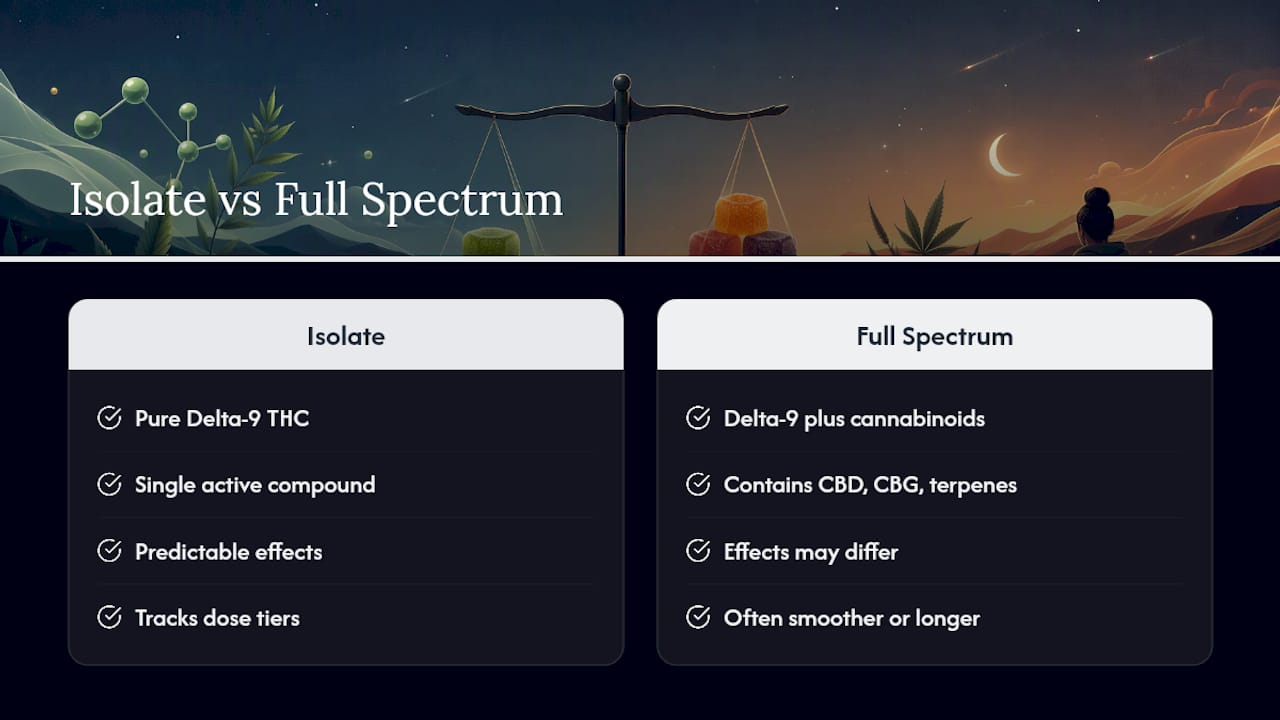
Not all Delta 9 gummies are built the same way, and the formulation behind the milligram number matters almost as much as the number itself. THC isolate gummies contain purified Delta 9 THC with nothing else riding along. What you feel is closer to a clean, predictable dose of THC alone, with effects that track fairly closely to the tier ranges most guides use.
Full spectrum gummies include a broader range of cannabinoids and terpenes alongside the Delta 9 THC, often including CBD, CBG, or trace amounts of other minor compounds naturally present in hemp. Many users report that full spectrum products feel different at the same labeled THC dose, sometimes smoother, sometimes longer lasting, because those additional compounds can influence how THC is absorbed and experienced. This interaction between cannabinoids is often called the entourage effect, though how strongly it shows up varies by product and person.
For a true beginner, isolate products offer a more predictable starting point precisely because there's only one variable to learn. Once you understand your response to plain Delta 9 at a given milligram amount, trying a full spectrum product becomes a useful second data point rather than an added unknown stacked on top of an unknown. Neither formulation is inherently stronger. They simply feel different, and that difference is exactly why the label should tell you which one you're holding.
A Beginner's First Night: One Realistic Titration Plan
Here's how a cautious first session might actually go. Take 2.5 to 5 mg with a light snack, not a heavy meal, and set a timer for three hours before you even consider more. Pick a comfortable, familiar setting, ideally with someone you trust nearby, and clear your evening of anything that requires focus or driving.
If three hours pass and you feel little to nothing, a 2.5 mg increase is reasonable for a future session, not necessarily that same night. Write down the milligram amount and time on your phone, and store the rest of the package somewhere out of reach of kids or pets, clearly labeled with its mg per serving.
— Juiced
Where to Find Lab Tested Low Dose Delta 9 Gummies
If you're ready to try your first low dose gummy, the product itself matters as much as the number on the label. Choosing options built specifically for the "start low, go slow" approach means lab tested batches, clearly labeled milligram servings, and product pages that provide detailed ingredient information before purchase.

The CBD Sleep Support Gummies are a solid low intensity option if you're easing in gently, while the Chocolate Chip THC + CBD Cookies suit readers who already know their tolerance and want a combined THC and CBD edible. Whichever you choose, pull up the batch's certificate of analysis before you eat anything, confirm the milligram per serving figure, and keep a simple dosing note going for your first few sessions. Browse the current lineup and check a COA before your next order.
Sources
- Human pharmacokinetic parameters of orally administered THC altered by fed versus fasted conditions (PubMed 31872060)
- An individuality of response to cannabinoids: challenges in safety and efficacy (PMC10058560)
This article is general information, not a substitute for advice from a qualified doctor. Consult a qualified healthcare professional about your own circumstances before acting on anything here.
FAQ
How Many mg of Delta 9 Should a Beginner Start With?
Start with 2.5 to 5 mg for your first session, and wait at least two hours before deciding whether you need more.
How Long Does It Take a Delta 9 Gummy to Kick In?
Onset typically falls between 30 and 90 minutes, though eating with a high fat meal can delay it further while increasing the eventual intensity.
Can I Take Delta 9 Gummies With Medication?
Combining THC with sedating medications, alcohol, or certain prescriptions without medical guidance isn't recommended, since interactions can amplify sedation unpredictably.
How Long Should I Wait Before Driving After a Gummy?
Wait until you're certain you're fully sober, allowing for the full effect window of four to eight hours plus any residual grogginess, which can occasionally last longer in certain users.
How Should I Store Delta 9 Gummies?
Keep them in their original labeled container, out of reach of children and pets, and note the milligram per serving on the package so dosing never becomes a guessing game.