

How to Identify Quality CBD: Your No-BS Guide
TL;DR:
- Many CBD products on the market are mislabeled or lack proper third-party testing, compromising safety and efficacy. Verifying quality involves matching batch numbers on COAs from accredited labs, checking cannabinoid levels, and assessing hemp sourcing and extraction methods. Educated consumers who verify lab reports and avoid suspicious pricing or unsupported health claims can ensure they select safe, high-quality CBD.
The CBD market is flooded with products making big promises, but a significant portion of what's on shelves doesn't match its label. If you've ever wondered how to identify quality CBD before spending money on something that might not work, or worse, might not be safe, you're asking exactly the right question. Mislabeled concentrations, unverified lab reports, and misleading health claims are all real problems in this space. This guide gives you the concrete tools to shop with confidence, from decoding lab reports to spotting the red flags that signal a product isn't worth your trust.
Table of Contents
- Key Takeaways
- How to identify quality CBD: the foundational checklist
- Decoding certificates of analysis
- Hemp sourcing and extraction methods
- Recognizing misleading marketing and pricing traps
- Your step-by-step quality verification process
- What I've learned about quality in the CBD market
- Why Kingbuddha makes quality easy to verify
- FAQ
Key Takeaways
| Point | Details |
|---|---|
| COA batch matching is non-negotiable | Always match the product's lot number to a batch-specific Certificate of Analysis before purchasing. |
| Third-party lab accreditation matters | Only trust COAs from ISO/IEC 17025-accredited labs. In-house lab reports are not credible. |
| Hemp source affects safety | Organic, regulated hemp from the U.S. or EU minimizes pesticide and heavy metal exposure. |
| Extraction method signals purity | Supercritical CO2 extraction produces cleaner CBD with no toxic solvent residues. |
| Low price is a quality warning | Unrealistically cheap CBD often reflects skipped testing or low-grade ingredients. |
How to identify quality CBD: the foundational checklist
Before you evaluate any specific product, you need to understand what quality actually means in the CBD space. It's not just about the brand looking polished or a celebrity endorsing it. Quality in CBD comes down to a few measurable, verifiable factors.
CBD spectrum types
The three main product types are full-spectrum, broad-spectrum, and CBD isolate. Full-spectrum contains all the cannabinoids naturally found in hemp, including trace amounts of THC (under 0.3% per federal law). Broad-spectrum removes THC but keeps other cannabinoids and terpenes. Isolate is pure CBD with everything else stripped away. None of these is inherently superior. The right choice depends on your sensitivity to THC, your wellness goals, and the testing profile you can verify.
Label accuracy and concentration
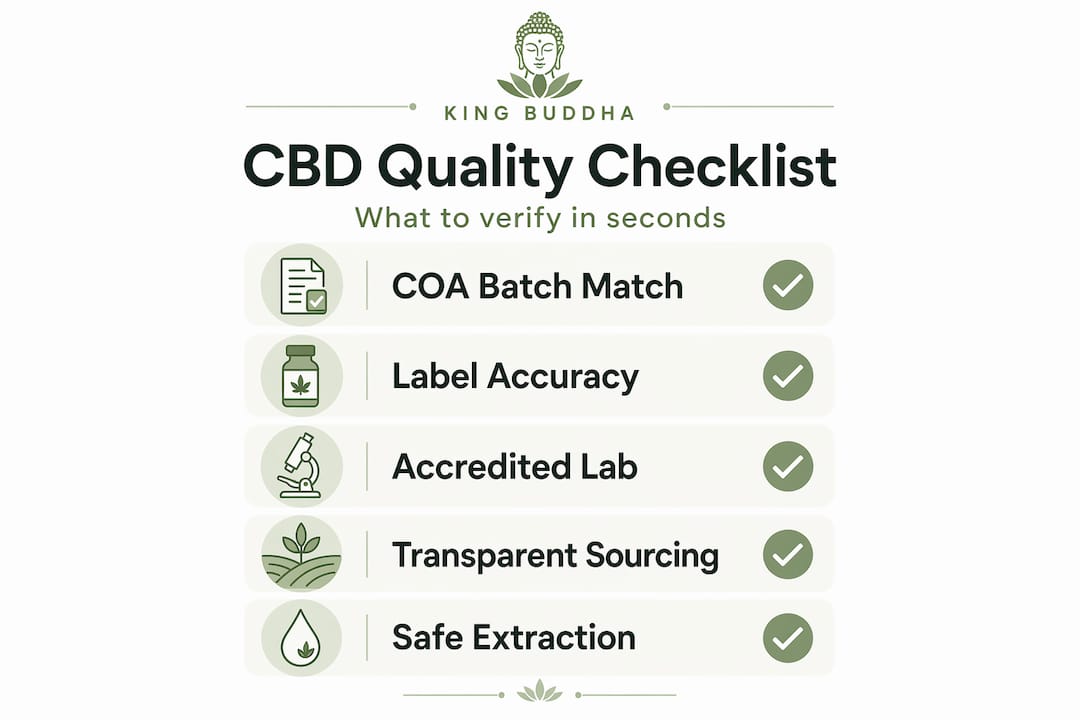
One of the clearest signs of good CBD is a product whose actual cannabinoid content matches what the label claims. A quality CBD product must show a CBD concentration on the COA within plus or minus 10% of the labeled amount. Anything outside that range is a red flag for mislabeling, and it's more common than most people realize.
Regulatory reality
The FDA does not currently require pre-market approval for most CBD products. That means the burden of verification falls entirely on you, the consumer. Understanding this keeps your expectations grounded and makes the steps below even more important.
Pro Tip: Before buying any CBD product online, search the brand name alongside "COA" or "lab report." If nothing comes up in the first few results, that's a signal worth paying attention to.
Decoding certificates of analysis
A Certificate of Analysis, or COA, is the most important document you can review before purchasing CBD. Think of it as a product's report card, showing exactly what's inside. But not all COAs are equal, and knowing how to evaluate one is a real skill.
Here's what to check, step by step:
-
Confirm it's from a third-party lab. The lab that produced the COA should have no financial connection to the company selling the product. ISO/IEC 17025 accreditation is the international benchmark for lab competence. Look for the lab's accreditation number on the document.
-
Match the batch number. The lot or batch number on the COA must match the number printed on your product's packaging. Generic or outdated COAs cannot confirm that the product you're holding has actually been tested. This is one of the most common tricks low-quality brands use.
-
Review the cannabinoid profile. Check for the listed CBD content and THC content. Make sure CBD levels fall within that 10% tolerance of the labeled dose. For full-spectrum products, confirm THC is under 0.3%.
-
Check the contaminant panels. A legitimate COA will include testing for heavy metals, pesticides, residual solvents, and microbial contaminants with clear pass/fail indicators. If any of these panels are missing, the COA is incomplete and the product should be treated as unverified.
-
Note the test date. COAs older than 12 months or tied to a different production run than your product tell you nothing about what's in your bottle or bag right now.
King Buddha publishes its lab reports and COAs directly on its website, so you can verify products before checkout. That kind of transparency is the baseline you should expect from any brand you buy from.
Pro Tip: When reviewing a COA, type the lab name directly into Google along with "ISO 17025 accreditation" to independently confirm their credentials. Don't just take the brand's word for it.
Hemp sourcing and extraction methods
Where the hemp comes from and how CBD is extracted from it directly affect what ends up in your body. These two factors don't get enough attention from casual buyers, but they matter enormously.
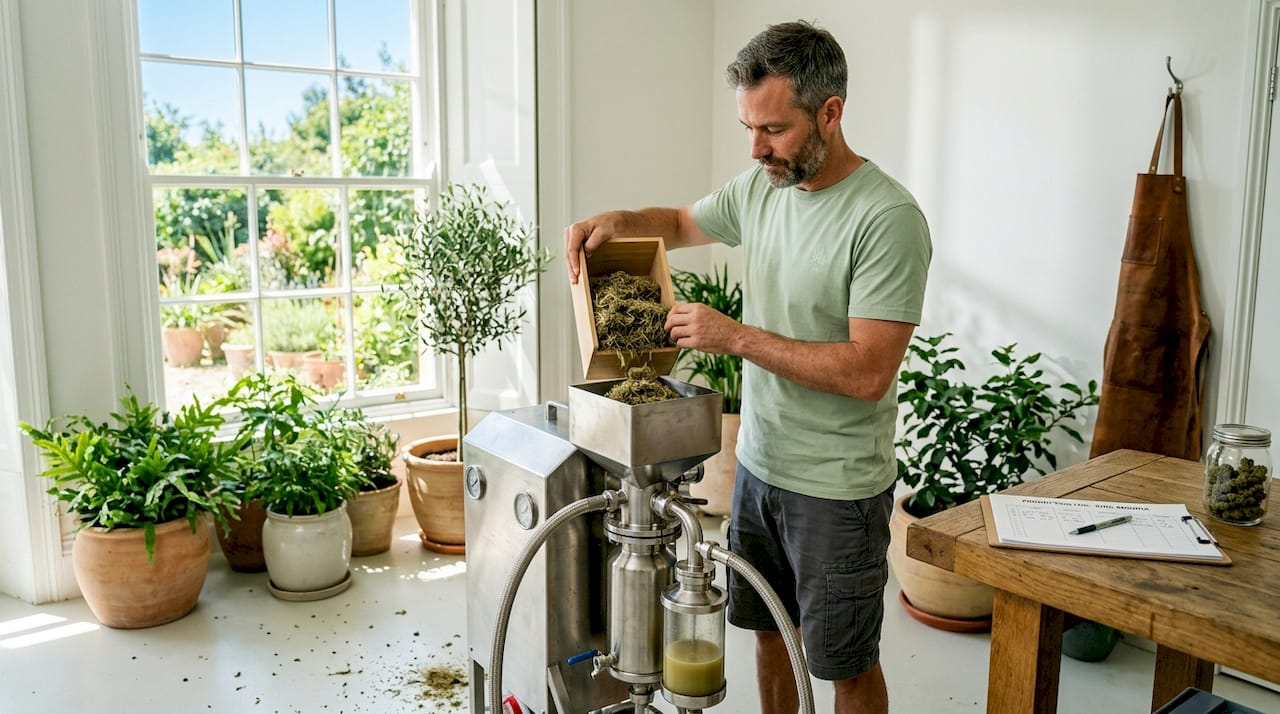
Hemp is a bioaccumulator. That means it pulls substances from the soil as it grows, including both beneficial compounds and harmful ones like lead, arsenic, and pesticides. Organic, regulated hemp farming minimizes the risk of these contaminants reaching finished products. The European Union and the United States both have agricultural frameworks that set limits on pesticides and heavy metals, which is why sourcing from these regions matters.
Here's what to look for when evaluating sourcing and extraction:
- U.S. or EU-grown hemp. Both regions operate under regulated agricultural standards. Unverified offshore hemp from unregulated sources carries a higher risk of contamination.
- Organic certifications or farming practices. Not every quality brand is USDA certified organic, but they should be able to describe their farming practices clearly.
- Supercritical CO2 extraction. CO2 extraction preserves terpenes and cannabinoids while leaving zero toxic solvent residues. Ethanol extraction can be clean too if done carefully, but cheaper solvent methods using butane or propane leave residual chemicals that should show up on a proper COA.
- Brand transparency. Quality producers are proud of their sourcing. If a brand won't tell you where its hemp comes from or how it extracts its CBD, that silence is informative.
Good packaging also plays a supporting role here. Packaging quality signals brand commitment to transparency and professionalism, though it should never substitute for actual lab verification. You can find more on how brands signal trustworthiness through packaging in this cannabis storage guide.
Recognizing misleading marketing and pricing traps
Some of the most important signals about CBD quality have nothing to do with the product itself. They show up in how a brand markets and prices what it sells.
Here are the red flags that should make you pause:
- Prices that seem too good to be true. Low prices often reflect skipped testing or inferior ingredients. Quality CBD production, including organic farming, CO2 extraction, and third-party lab testing, has real costs. A 1,500mg tincture for $12 should raise immediate questions.
- Disease cure claims. Any brand claiming their CBD "cures" anxiety, cancer, pain, or any specific condition is violating FDA guidelines. Currently, Epidiolex is the only FDA-approved CBD-based medication, and it's for seizure disorders. Health-supportive language is fine; cure claims are not.
- Proprietary blends with no per-serving breakdown. If a product lists "500mg hemp blend" without clarifying how much of that is actual CBD, you have no way to evaluate potency or value.
- Influencer endorsements without lab data. A celebrity posting about a CBD brand tells you about their marketing budget. It tells you nothing about the product's purity or concentration.
| Marketing Signal | What It Tells You |
|---|---|
| Batch-specific COA available | Brand invests in genuine quality verification |
| Cure or treatment claims | Violates FDA rules; likely fraudulent marketing |
| No ingredient source listed | Brand isn't transparent about inputs |
| Price far below market average | Testing or quality likely cut to reduce cost |
| Only influencer reviews, no lab data | Marketing-first brand with no verified quality |
Your step-by-step quality verification process
When you're ready to evaluate a specific product, run through these steps before you buy:
- Find the COA. Check the brand's website or look for a QR code on the packaging. If neither exists, stop here and move on to another brand.
- Confirm the lab's accreditation. Look up the testing lab independently and verify its ISO/IEC 17025 status. Do not assume the brand listed accurate credentials.
- Match the batch number. Compare the lot number on the product packaging to the one on the COA. They must match exactly.
- Check the cannabinoid content. Confirm that CBD concentration falls within 10% of the labeled dose. For THC content, verify it aligns with the product type you're buying.
- Review the contaminant panels. Make sure the COA includes testing for heavy metals, pesticides, residual solvents, and microbial contamination. All panels should show pass/fail results.
- Verify the hemp source. Look for U.S. or EU-grown hemp. Bonus points if the brand specifies organic farming or USDA-certified inputs.
- Evaluate pricing and claims. If the price is significantly below the market average or the brand makes disease cure claims, walk away.
This process takes about five to ten minutes and protects you from the majority of low-quality products on the market.
What I've learned about quality in the CBD market
After years of reviewing CBD products and watching this market evolve, one thing stands out above everything else: consumer education is the single most effective quality control mechanism that exists right now.
I've seen products with beautifully designed packaging and compelling backstories turn out to have COAs from unaccredited labs, or worse, batch numbers that didn't match anything in the document. The brands doing this aren't always malicious. Some simply don't invest in quality because they've discovered that most buyers don't check. That's the gap you close when you learn how to verify CBD quality yourself.
The frustrating truth is that companies providing transparent batch-specific lab data are genuinely the exception, not the rule. But that's also good news. Once you know what to look for, those brands become easy to identify, and they tend to stand behind their products in ways that matter.
My advice is to treat every CBD purchase like a small investigation. Spend five minutes on the COA. Ask the brand a direct question about their hemp source if the answer isn't on the site. Pay the fair price for a properly tested product rather than chasing the cheapest option. The people who consistently get results from CBD are almost always the ones who took the time to choose high quality CBD from the start.
The market is getting better. More brands are investing in proper testing and transparent sourcing. But until regulatory oversight tightens, the responsibility sits with you as a buyer. That's not a burden once you have the right framework. It becomes second nature.
— Juiced
Why Kingbuddha makes quality easy to verify
Spending time on quality research only to hit a wall when you can't find a brand that actually meets the standard is genuinely frustrating. Kingbuddha was built to remove that friction.
Every product in the Kingbuddha lineup comes with batch-specific lab reports from accredited third-party labs, so you can check cannabinoid content and contaminant panels before your order ships. The hemp is U.S.-sourced and processed using supercritical CO2 extraction, which means no solvent residues and a clean cannabinoid profile you can verify. Whether you're browsing CBD tinctures or looking for a precisely dosed edible to support better sleep, the potency on the label reflects what's actually in the product. If you want a great starting point, the CBD Sleep Support Gummies are a customer favorite with transparent dosing and confirmed lab results. Quality shouldn't require detective work. At Kingbuddha, it doesn't.
FAQ
What makes a CBD product high quality?
High-quality CBD comes from organically grown, regulated hemp and is processed using clean extraction methods like supercritical CO2. It will have a batch-specific COA from an ISO/IEC 17025-accredited lab confirming cannabinoid content and the absence of harmful contaminants.
How do I verify CBD quality using a lab report?
Match the lot number on your product to the batch number on the COA, then confirm that the CBD concentration is within 10% of the labeled dose. Check that the report includes testing panels for heavy metals, pesticides, residual solvents, and microbial contamination with clear pass/fail results.
Why does CBD quality matter for effectiveness?
Mislabeled or contaminated CBD won't deliver the results you're looking for and may pose safety risks. Accurate potency and clean ingredients are the foundation of any product that performs consistently.
How can I spot a low-quality CBD brand?
Watch for prices well below the market rate, disease cure claims, missing or generic COAs, and sourcing information that doesn't appear anywhere on the brand's website or packaging.
What is the role of ISO/IEC 17025 accreditation in CBD testing?
ISO/IEC 17025 is the international standard for lab competence and reliability. Only labs with this accreditation should be trusted to provide third-party CBD testing, as the credential confirms audited equipment and personnel standards.