

Hemp Genetics and Potency: What Researchers Need to Know
TL;DR:
- Hemp genetics, especially the B locus supergene, determine the plant's chemotype and maximum potency. Environmental factors influence cannabinoid levels but cannot alter genetic controls, making genetic profiling essential for breeding. Clonal propagation and SNP marker screening ensure consistent potency and cultivar identity.
The role of hemp genetics in potency is defined by the plant's inherent genetic blueprint, specifically the B locus supergene and its associated biosynthetic enzymes, which set hard limits on what any cultivar can produce. Cannabinoid profile, formally called chemotype, is genetically encoded at this locus through the expression of either THCA synthase (THCAS) or CBDA synthase (CBDAS). Environmental conditions like light, temperature, and soil quality can shift expression within those limits, but they cannot override the genetic architecture itself. A 2026 body of research has sharpened this picture considerably, linking specific SNP markers to delta-9-THC, CBD, and CBG content across hemp populations and opening new doors for marker-assisted breeding. Understanding the genetic influence on hemp quality is no longer optional for serious researchers. It is the foundation of every potency decision made in the field or the lab.
How does the B locus supergene control hemp chemotype and potency?
The B locus supergene is the primary switch controlling whether a hemp plant produces predominantly CBD or THC. Structural polymorphisms at this locus determine which synthase gene is present, expressed, and active. The result is a Mendelian-like inheritance pattern where chemotype segregates in predictable ratios across offspring populations.
THCAS and CBDAS are the two enzymes that convert the shared precursor cannabigerolic acid (CBGA) into either THCA or CBDA. Whichever enzyme dominates at the B locus dictates the plant's cannabinoid ratio. A plant carrying functional CBDAS and a silenced or absent THCAS will produce high-CBD flower regardless of how it is grown.
This genetic lock has a direct practical consequence. Cultivar identity fixes the enzymatic framework for cannabinoid production. Environment affects expression variance but cannot change chemotype. A high-THC plant grown in low-light conditions will still produce THC, just less of it. A high-CBD plant will never become a high-THC plant through agronomic manipulation alone.
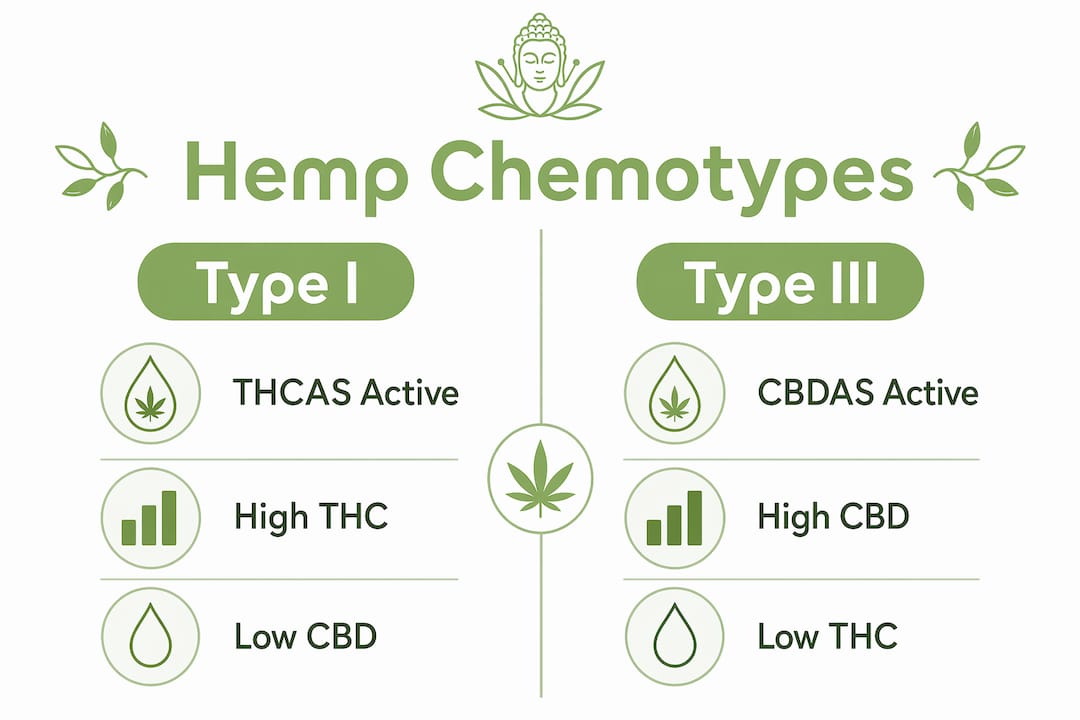
The table below maps the three recognized chemotypes to their genetic signatures and expected cannabinoid profiles.
| Chemotype | Synthase gene expressed | Primary cannabinoid | CBD:THC ratio |
|---|---|---|---|
| Type I (drug type) | THCAS dominant | THC | Low CBD, high THC |
| Type II (intermediate) | Both THCAS and CBDAS | Mixed THC and CBD | Roughly 1:1 |
| Type III (fiber/hemp type) | CBDAS dominant | CBD | High CBD, low THC |
| Type IV (CBG type) | Neither synthase active | CBG | Minimal THC and CBD |
Type II plants are heterozygous at the B locus, carrying one copy of each synthase allele. They are genetically unstable and produce variable offspring, which creates real problems for breeders targeting consistent cannabinoid profiles.
What SNP markers are linked to cannabinoid potency in hemp?
Genome-wide association studies (GWAS) have become the most powerful tool for connecting specific DNA variants to cannabinoid output. A 2026 GWAS study analyzed 3,670 SNP markers across 45 phenotypic traits in hemp, identifying key loci on chromosome 7 and the X chromosome associated with delta-9-THC and CBG content. That level of resolution gives breeders a molecular map for selecting high-potency parents before a single seed germinates.
Marker-assisted selection (MAS) uses these SNP associations to screen germplasm at the DNA level. Instead of growing a full crop and testing cannabinoid content at harvest, breeders can genotype seedlings and discard low-potency candidates early. This cuts breeding cycles significantly and reduces the cost of phenotypic screening.
The same GWAS study identified a berberine-bridge enzyme-like gene associated with both CBD-A and THC-A traits. This finding expands the genetic picture beyond THCAS and CBDAS, suggesting that a broader network of enzyme families contributes to cannabinoid regulation. Potency is not a single-gene trait.
Key SNP markers and their trait associations identified in recent hemp GWAS research:
- Chromosome 7 loci: Strongly associated with delta-9-THC content across diverse hemp populations
- X chromosome loci: Linked to CBG accumulation and cannabinoid precursor flux
- Berberine-bridge enzyme-like 15 (BBE-like 15): Correlated with both CBD-A and THC-A levels, implicating secondary enzyme families in cannabinoid biosynthesis
- Terpene synthesis loci: Co-located with cannabinoid SNPs, suggesting shared regulatory regions for the full phytochemical profile
- Heterozygosity markers: Flag genetically unstable individuals likely to produce variable offspring, useful for early culling in breeding programs
Pro Tip: When building a breeding program for potency, genotype your parent lines with SNP panels before crossing. Selecting homozygous parents at key cannabinoid loci dramatically reduces phenotypic variance in F1 and F2 generations.
Researchers can also use SNP data to track cannabinoid profiles across breeding generations, building a molecular pedigree that connects genotype to chemotype with precision.
Why do precursor supply and trichome density matter for potency?
Synthase gene expression is necessary but not sufficient for high cannabinoid output. Enhanced cannabinoid accumulation is primarily driven by increased precursor supply from fatty-acid metabolism and trichome density rather than direct changes in synthase gene expression. This finding reframes how researchers should think about potency optimization.
CBGA, the universal cannabinoid precursor, is synthesized through a fatty-acid-derived pathway. If that upstream supply is limited, even a plant with perfect CBDAS expression will produce modest CBD levels. Fatty-acid metabolism genes, many of which are regulated epigenetically, control how much CBGA is available for conversion.
Chromatin accessibility studies using ATAC-seq and transcriptomic profiling show that epigenetic states at gene promoters regulate fatty-acid metabolism, trichome development, and flowering time. These are indirect but powerful levers on cannabinoid output. A plant with open chromatin at fatty-acid pathway promoters will produce more precursor and, consequently, more cannabinoid.
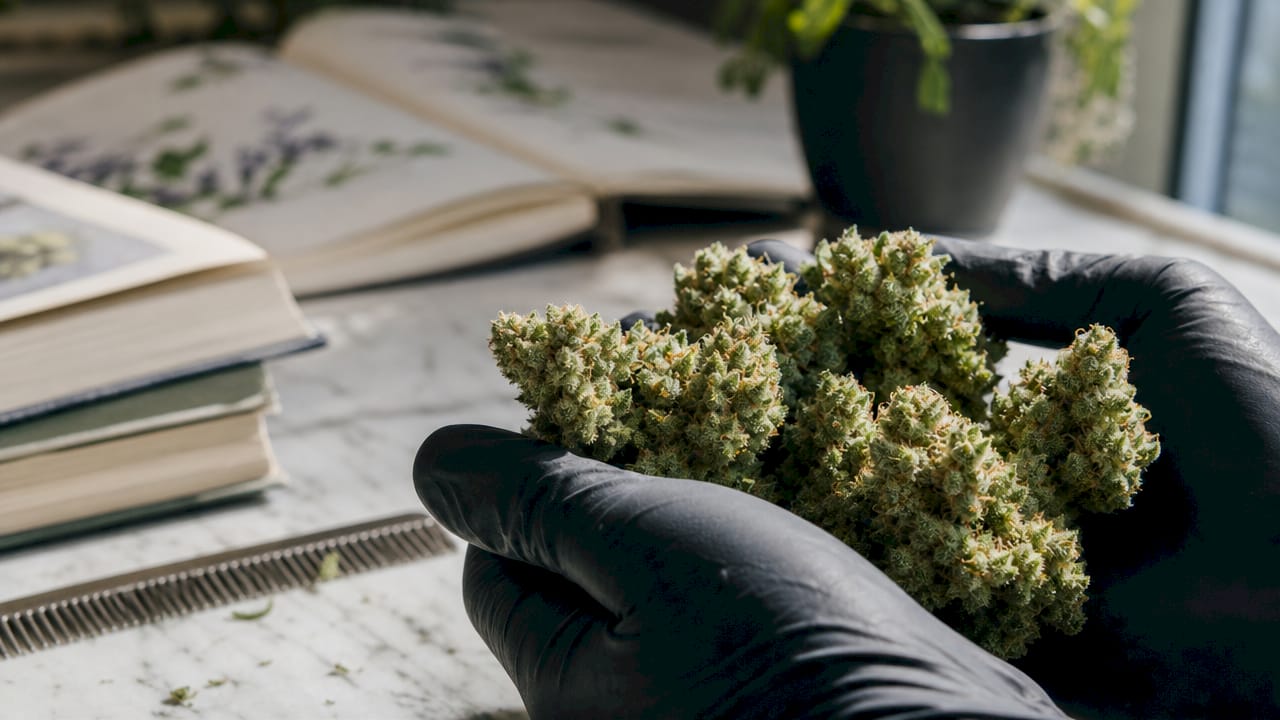
Trichome density is the physical site of cannabinoid synthesis. Glandular trichomes on the flower surface are where CBGA is converted to THCA or CBDA. Plants with more trichomes per unit of flower surface area produce more cannabinoid mass, independent of synthase expression levels. Breeding for trichome density is therefore a legitimate potency strategy, separate from chemotype selection.
Two plants with identical B locus genotypes can show meaningfully different potency if one has higher trichome density or more active fatty-acid metabolism. This explains why potency variations in hemp genetics are not fully captured by chemotype classification alone. Researchers who ignore plant physiology alongside genetics will consistently underestimate the complexity of cannabinoid output.
Pro Tip: Combine trichome density scoring with SNP genotyping in your selection pipeline. Plants that score high on both metrics are your best candidates for high-potency cultivar development.
How does genetic heterozygosity create potency inconsistency in hemp?
Most commercial hemp cultivars show high heterozygosity, which produces significant intravarietal variability in cannabinoid potency. This is the central problem for anyone trying to standardize hemp for pharmaceutical or research applications. Two plants from the same seed lot can differ substantially in CBD content, making batch-level consistency nearly impossible without additional controls.
Heterozygosity means that each plant in a population carries different allele combinations at potency-linked loci. When those plants reproduce sexually, offspring inherit unpredictable combinations. The result is a population with a wide distribution of cannabinoid levels rather than a tight, consistent profile.
Clonal propagation solves this problem by bypassing sexual reproduction entirely. A single high-performing plant, selected for both genotype and phenotype, can be propagated vegetatively to produce genetically identical copies. Every clone carries the same allele combinations and, under consistent growing conditions, produces consistent cannabinoid profiles. This is the standard approach in pharmaceutical-grade hemp production.
Genetic source verification at the SNP level is the next layer of quality control. Even clonal lines can drift over time through somatic mutation or contamination. SNP fingerprinting of each propagation batch confirms genetic identity and catches deviations before they reach the product stage.
Best practices for breeders targeting potency consistency:
- Use clonal selection for any cultivar destined for pharmaceutical or research applications
- Develop inbred lines through repeated self-pollination to reduce heterozygosity at key cannabinoid loci
- Implement SNP fingerprinting at each propagation cycle to verify genetic identity
- Screen seed lots for intravarietal variability before committing to large-scale production
- Document pedigree records linking genotype data to cannabinoid test results across multiple harvests
Understanding THC variants and their genetic determinants is equally relevant here, since heterozygosity at the B locus produces plants that express both synthases and generate mixed cannabinoid profiles that complicate compliance with the 2018 Farm Bill's 0.3% delta-9-THC threshold.
Key Takeaways
Hemp genetics set the absolute ceiling for cannabinoid potency through the B locus supergene, and no agronomic practice can override that genetic constraint.
| Point | Details |
|---|---|
| B locus controls chemotype | THCAS or CBDAS expression at the B locus determines whether a plant produces THC, CBD, or a mix. |
| SNP markers enable precision breeding | GWAS-identified SNPs on chromosome 7 and the X chromosome allow breeders to select for potency before planting. |
| Precursor supply drives output | Fatty-acid metabolism and trichome density, not synthase expression alone, determine how much cannabinoid a plant accumulates. |
| Heterozygosity causes variability | High heterozygosity in commercial cultivars produces inconsistent potency; clonal lines or inbred populations are required for standardization. |
| Genetic verification is non-negotiable | SNP fingerprinting at each propagation cycle is the only reliable method for confirming cultivar identity and potency consistency. |
The genetic foundation is where serious breeding has to start
Researchers and breeders spend enormous energy on environmental optimization, nutrient protocols, and harvest timing. Those variables matter, but they are secondary. The genetic architecture of a cultivar sets the ceiling, and no amount of environmental fine-tuning lifts a plant above what its B locus allows.
What I find underappreciated in current breeding practice is the gap between chemotype classification and full genetic characterization. Calling a plant "Type III" tells you it expresses CBDAS. It tells you nothing about its trichome density genetics, its fatty-acid pathway activity, or its heterozygosity at secondary loci. Two Type III plants can produce dramatically different CBD yields because the B locus is only one piece of the potency puzzle.
The 2026 GWAS findings on chromosome 7 and the BBE-like 15 gene are a signal that the field is moving in the right direction. But most commercial breeding programs have not yet integrated multi-locus SNP panels into their selection pipelines. They are still selecting primarily on phenotype, which is slow, expensive, and blind to the genetic reasons behind performance differences.
My recommendation for any research program focused on potency: build the molecular marker profile first, then layer in phenotypic selection. Integrate GACP (Good Agricultural and Collection Practices) frameworks with SNP-level source verification from the start. Epigenetic factors and metabolic pathway activity deserve dedicated study as independent variables, not afterthoughts. The cultivars that will define pharmaceutical-grade hemp five years from now are being selected today, and the programs that use full genetic characterization will produce them.
— Juiced
Kingbuddha's hemp products, built on genetic quality
Kingbuddha sources and formulates its hemp products with cannabinoid profile integrity at the center of every decision. The genetic knowledge behind chemotype selection and potency consistency directly informs the quality you find in every product.

Kingbuddha's CBD tinctures are formulated from hemp with verified cannabinoid profiles, giving you a product where the CBD content you see on the label reflects what is actually in the bottle. For those who prefer an edible format, Kingbuddha's hemp flower is sourced from cultivars selected for consistent cannabinoid output. Every product goes through third-party lab testing to confirm potency before it reaches you. When genetics and quality control work together, the result is a product you can trust.
FAQ
What is the B locus supergene in hemp?
The B locus is the primary genetic region controlling hemp chemotype. Structural polymorphisms at this locus determine whether a plant expresses THCAS, CBDAS, or both, which directly dictates its cannabinoid profile.
Can growing conditions change a hemp plant's chemotype?
No. Cultivar identity fixes the enzymatic framework for cannabinoid production. Environmental factors can raise or lower total cannabinoid output within genetic limits but cannot switch a plant from high-CBD to high-THC expression.
How do SNP markers help breeders improve potency?
SNP markers identified through GWAS allow breeders to screen germplasm at the DNA level before planting. Key loci on chromosome 7 and the X chromosome are directly associated with delta-9-THC and CBG content, enabling selection for potency without waiting for harvest data.
Why do plants with the same chemotype produce different potency levels?
Potency also depends on trichome density and fatty-acid precursor supply, both of which vary genetically and epigenetically. Two plants with identical B locus genotypes can differ in cannabinoid output because of differences in these upstream physiological factors.
What is the best way to achieve consistent cannabinoid potency across a hemp crop?
Clonal propagation from a genetically verified, high-performing parent plant is the most reliable method. Combined with SNP fingerprinting at each propagation cycle, this approach minimizes intravarietal variability and supports pharmaceutical-grade consistency.