
CBD Relaxation Techniques: A Practical Pairing Guide
Yes, you can combine CBD with relaxation techniques, and for many adults the pairing works better than either approach alone. The fastest way to start: take a low dose (5–10 mg) of a sublingual tincture from a lab-tested brand like Kingbuddha 15–30 minutes before a 5–10 minute breathing session. That's it. You don't need to overhaul your
routine.
Before you go further, three quick steps:
- Check the COA. Any product you buy should have a third-party certificate of analysis confirming CBD content and showing it's clear of heavy metals, solvents, and microbial contaminants.
- Start low and go slow. A 5–10 mg serving is a reasonable first dose. Don't double it because you don't feel anything in 20 minutes.
- Flag your medications. CBD inhibits CYP450 liver enzymes, which affects how your body processes dozens of common drugs. If you take any prescription medication, check with your pharmacist before trying CBD.
Pro Tip: Don't mix CBD with alcohol during your first few sessions. Alcohol amplifies sedative effects and makes it impossible to know what the CBD is actually doing.
The 2018 Farm Bill made hemp-derived CBD federally legal in the U.S. when it contains less than 0.3% delta-9 THC. That's the legal baseline, but state laws vary, so check your state's rules before ordering.
Table of Contents
- What is CBD and why does it matter for relaxation?
- Does CBD actually reduce stress and anxiety?
- How to pair CBD with specific relaxation techniques
- CBD product forms, onset times, and starter doses
- What you need to know about safety, interactions, and legality
- How to choose a CBD product you can actually trust
- Four sample routines you can try tonight
- Why combining CBD with relaxation techniques often works better than either alone
- Key Takeaways
- A note on where this guide comes from
- Kingbuddha products worth trying for these routines
- Useful sources and further reading
What is CBD and why does it matter for relaxation?
CBD (cannabidiol) is a non-intoxicating cannabinoid found in hemp. It won't get you high. What it does do is interact with the endocannabinoid system, a regulatory network that helps the body maintain balance across mood, sleep, pain, and stress responses.
For relaxation specifically, two mechanisms get the most attention. First, CBD appears to modulate endocannabinoid signaling, which can dampen the physiological stress response. Second, it may act on serotonin-related receptors (particularly 5-HT1A), which are also targeted by several anti-anxiety medications. Neither mechanism is fully understood, and CBD is not a substitute for clinical treatment.
A few practical points U.S. buyers should know:
- Hemp-derived CBD products are sold legally in all 50 states under the 2018 Farm Bill, provided THC content stays below 0.3%.
- The FDA has not approved CBD as a dietary supplement for anxiety or stress; the only FDA-approved CBD drug is Epidiolex, prescribed for specific seizure disorders.
- Quality varies enormously between brands. Third-party lab testing (COA) is the only reliable way to verify what's actually in a product.
Does CBD actually reduce stress and anxiety?
The honest answer: the evidence is promising but not definitive. A review of clinical trials identified seven double-blind, placebo-controlled trials totaling 232 participants, all reporting significant reductions in stress-related measures with no serious adverse events. That's a real signal. It's also a small body of evidence.
A review of clinical trials found seven double-blind, placebo-controlled studies totaling 232 participants, with all reporting significant reductions in stress-related measures and no serious adverse events. While promising, this is still a relatively small collection of studies.
Where the science gets murkier: a systematic review of neuroimaging studies covering 12 studies found mixed directions of brain activation and inconsistent behavioral effects, with the authors rating overall certainty as low to very low. In other words, we don't yet have a clean picture of exactly how CBD changes brain activity under stress.
Key limitations to keep in mind:
- Most trials use small samples and short durations.
- Dosing protocols vary widely, making comparisons difficult.
- Placebo effects are real and substantial in anxiety research. Some of what people experience as CBD-induced calm may be the ritual of taking something intentionally.
- Individual responses differ based on weight, metabolism, prior cannabis use, and baseline anxiety levels.
How to pair CBD with specific relaxation techniques
Timing is everything here. The form you choose determines when CBD's effects peak, and you want that window to overlap with your relaxation session.
Breathing exercises
Sublingual tinctures work best for breathwork because onset runs 15–30 minutes and you can feel the effect building. Take 5–10 mg under the tongue, hold for 60–90 seconds, then swallow. Set a 20-minute timer. When it goes off, start a 4-4-6 breathing cycle: inhale for 4 counts, hold for 4, exhale for 6. Run 8–10 cycles. The extended exhale activates the parasympathetic nervous system, and the mild anxiolytic effect from the CBD can make it easier to stay with the breath instead of drifting into mental chatter.

Mindfulness and meditation
CBD may reduce ruminative thinking before meditation, which is one of the most common barriers for beginners. The recommended window is 15–30 minutes before you sit. Use a tincture or a low-dose capsule (10–15 mg). Keep the session short at first, 10–15 minutes, using a body-scan or breath-awareness format. The goal isn't to feel sedated; it's to lower the activation threshold so you can actually settle.
Progressive muscle relaxation (PMR)
PMR works by systematically tensing and releasing muscle groups, so the target is physical tension rather than mental noise. A CBD topical applied to the neck, shoulders, or lower back 10–15 minutes before the session addresses localized tension directly. Pair it with a low systemic dose (5–10 mg tincture) if you want broader calming support. PMR sessions typically run 15–20 minutes, so a sublingual dose timed 15 minutes before gives good overlap.
Yoga and gentle movement
For a morning or midday yoga session, a sublingual tincture 20–30 minutes before works well. For an evening restorative session, an edible taken 45–60 minutes before gives a longer, softer effect that carries through the cool-down and into sleep preparation. Avoid vaping before yoga if you're doing any breath-focused practice; it complicates the breathing work.

Sleep hygiene and bedtime routines
This is where edibles shine. A CBD sleep gummy taken 45–90 minutes before bed, combined with a 10-minute guided body scan or progressive relaxation, gives the CBD time to reach peak effect right as you're winding down. Pair with consistent sleep timing, dim lighting, and no screens for the last 30 minutes.
Pro Tip: Keep a simple log for the first two weeks: dose, form, time taken, technique used, and a 1–10 stress rating before and 30 minutes after. Patterns emerge fast, and you'll know within a week what's actually working for you.
CBD product forms, onset times, and starter doses
Choosing the wrong form is the most common reason people conclude CBD "doesn't work." A gummy taken 20 minutes before a session hasn't even started metabolizing yet.
| Form | Onset | Duration | Best For | Pros / Cons | Typical Serving |
|---|---|---|---|---|---|
| Tincture / oil (sublingual) | 15–30 min | 4–6 hrs | Acute anxiety, pre-session | Fast onset, precise dosing / taste | 5–25 mg |
| Gummies / edibles | 45–90 min | 6–8 hrs | Sleep, sustained calm | Discreet, consistent / slow onset | 10–25 mg |
| Topicals (cream, balm) | 10–20 min | 2–4 hrs | Muscle tension, localized | No systemic effect / limited reach | Per label |
| Capsules / softgels | 45–60 min | 6–8 hrs | Daily maintenance | Precise, tasteless / slow onset | 10–25 mg |
| Vape / inhalation | 2–5 min | 1–3 hrs | Acute panic, fast relief | Fastest onset / lung risk, short duration | 1–3 puffs |
Starter dosing protocol:
- Week 1: 5–10 mg once daily, same time each day, before a relaxation session.
- Week 2: If well tolerated and effects are minimal, increase to 15–20 mg.
- Week 3 onward: Adjust based on your log. Most people find their sweet spot between 15–50 mg for relaxation purposes.
Clinical trials have tested 50–150 mg/day ranges, but those are supervised settings with titration monitoring. Over-the-counter use should stay conservative until you know how your body responds.
Pro Tip: Higher concentration doesn't always mean better results. A 1,500 mg tincture bottle at 50 mg/mL lets you take smaller, more precise doses than a 300 mg bottle at 10 mg/mL. Do the math before you buy.
What you need to know about safety, interactions, and legality
CBD is generally well tolerated, but "generally" is doing real work in that sentence.
Common side effects:
- Drowsiness (especially at higher doses or when combined with other sedatives)
- Dry mouth
- Reduced appetite
- Mild GI upset, particularly with oil-based products on an empty stomach
Drug interactions (CYP450):
This is the most important safety consideration. CBD inhibits cytochrome P450 enzymes, particularly CYP3A4 and CYP2C19, which metabolize a large portion of prescription medications. Drug classes that commonly interact include:
- Blood thinners (warfarin) — CBD can raise blood levels significantly.
- Antiepileptics (clobazam, valproate) — documented interactions in Epidiolex trials.
- Antidepressants and anxiolytics — SSRIs, benzodiazepines, and tricyclics all run through CYP pathways.
- Immunosuppressants and some statins — variable but real interaction potential.
If you take any of these, talk to your prescriber or pharmacist before adding CBD. This is not optional.
Populations who should avoid CBD or consult a clinician first:
- Pregnant or breastfeeding individuals (insufficient safety data; FDA advises against use).
- Children (except under medical supervision for specific conditions).
- Anyone with liver disease (CBD is hepatically metabolized; elevated liver enzymes have been reported at high doses).
Drug testing and workplace considerations:
Full-spectrum products contain trace THC (up to 0.3%). That can accumulate with daily use and potentially trigger a positive drug test. If workplace testing is a concern, use broad-spectrum or isolate products and check the COA for THC levels.
U.S. legal summary:
Hemp-derived CBD with less than 0.3% delta-9 THC is federally legal under the 2018 Farm Bill. State laws vary; a handful of states have additional restrictions on specific product types. Always buy from brands that provide COAs and clearly state their hemp source.
This article is general information, not medical or legal advice. Confirm current rules and any drug interactions with a qualified healthcare provider before starting CBD.
How to choose a CBD product you can actually trust
The supplement market has no shortage of products with inflated claims and no lab data to back them. Here's what to check before you buy.
Buying checklist:
- COA present and current. The certificate of analysis should be from an accredited third-party lab, batch-specific, and dated within the last 12 months.
- Cannabinoid profile confirmed. The COA should show actual CBD content matching the label, plus THC levels. Broad-spectrum products should show non-detectable THC; full-spectrum will show trace amounts.
- Contaminant screening. Look for panels covering heavy metals (lead, arsenic, mercury, cadmium), residual solvents, pesticides, and microbial contaminants.
- Clear serving size. The label should state mg of CBD per serving, not just per bottle.
- Batch and lot numbers. These let you match the product to a specific COA.
- Terpene information. Some products include terpene profiles (myrcene, linalool, limonene) that may contribute to relaxation effects. This is a quality signal, not a requirement.
- U.S.-sourced hemp. Domestic hemp is grown under USDA oversight, which provides a baseline quality standard.
When reading a COA, focus on three things: the CBD potency matches the label claim (within about 10%), THC is at or below 0.3%, and the contaminant panels show "ND" (non-detected) or values below action limits. A COA that only shows cannabinoid content without contaminant screening is incomplete.
Keep a trial log for the first 2–4 weeks. Note the product, batch number, dose, timing, technique used, and your subjective stress level before and after. That data is more useful than any online review.
Four sample routines you can try tonight
These are starting points, not prescriptions. Adjust based on your log.
Routine 1: Quick calm (5–10 minutes, breathing)
- Take 5–10 mg sublingual tincture. Hold under tongue 60–90 seconds.
- Wait 15–20 minutes (drink water, dim the lights).
- Sit comfortably. Run 8–10 cycles of 4-4-6 breathing (inhale 4, hold 4, exhale 6).
- Finish with 2 minutes of normal breathing, eyes closed.
Safety note: don't drive for at least 2 hours after dosing. Avoid alcohol.
Routine 2: 20-minute mindfulness session
- Take 10–15 mg tincture or capsule 20–30 minutes before sitting.
- Use a body-scan or breath-awareness format (apps like Insight Timer offer free guided sessions).
- If thoughts race in the first 5 minutes, that's normal. The CBD isn't suppressing thought; it's lowering the urgency attached to it.
- Close with 2 minutes of gratitude or intention-setting.
Safety note: avoid high doses before tasks requiring concentration.
Routine 3: PMR for muscle tension
- Apply a CBD topical to the neck, shoulders, or target area 10–15 minutes before starting.
- Optionally add 5–10 mg tincture for broader support.
- Work through major muscle groups from feet to face: tense each group for 5–7 seconds, release for 20–30 seconds.
- Full session runs 15–20 minutes.
Routine 4: Bedtime wind-down
- Take 10–25 mg CBD gummy 60–90 minutes before your target sleep time.
- At the 45-minute mark, begin a 10-minute body scan or guided sleep meditation.
- Dim all lights. No screens after the gummy.
- If you wake in the night, don't redose. Note it in your log and adjust timing the next evening.
Safety note: if you feel groggy the next morning, reduce the dose by half.
Why combining CBD with relaxation techniques often works better than either alone
The stress response has two components that don't always respond to the same intervention. Psychological techniques like mindfulness, PMR, and breathing directly target the cognitive and physiological symptoms: racing thoughts, muscle tension, elevated heart rate. CBD, based on the clinical trial evidence, appears to constrain the underlying stress-response signaling through endocannabinoid and serotonin-related pathways.
When you stack them, you're addressing both layers at once. For acute anxiety, a fast-onset tincture paired with breathwork can interrupt the stress cycle before it escalates. For chronic stress, a daily low-dose routine combined with consistent mindfulness practice may produce more durable benefit than either alone. For sleep, the combination of a longer-duration edible and a body-scan routine addresses both the physiological and cognitive barriers to falling asleep.
The neuroimaging evidence is inconsistent on mechanism, so don't get too attached to any single explanation of why it works. Focus on functionally meaningful outcomes: did your stress rating drop? Did you fall asleep faster? Did the session feel easier?
Tracking template (simple diary):
- Date and time
- CBD product, form, dose, and batch number
- Relaxation technique and session length
- Stress rating before (1–10)
- Stress rating at 30 minutes, 60 minutes, and 120 minutes
- Any side effects or notes
Pro Tip: Run the same routine for at least five consecutive sessions before changing anything. One data point tells you nothing; five starts to show a pattern.
For readers who want to go deeper on the research, the Kingbuddha wellness blog covers the clinical evidence in more detail, and the integration guide offers practical daily-routine frameworks.
Key Takeaways
Combining CBD with relaxation techniques works best when you match the product form to the timing of your session, start at 5–10 mg, verify every product with a third-party COA, and check for CYP450 drug interactions before you begin.
| Point | Details |
|---|---|
| Match form to timing | Tinctures onset in 15–30 min; edibles take 45–90 min — plan your dose accordingly. |
| Start low and go slow | Begin at 5–10 mg and increase only after 5+ consistent sessions at the same dose. |
| Always check the COA | Third-party lab reports confirm CBD potency, THC levels, and contaminant screening. |
| CYP450 interactions are real | CBD affects how dozens of medications metabolize; consult a pharmacist before starting. |
| Kingbuddha for lab-tested options | Kingbuddha offers U.S.-sourced, third-party tested tinctures and gummies suited to the routines above. |
A note on where this guide comes from
The recommendations in this guide are grounded in peer-reviewed clinical trial literature, systematic reviews, and the practical product transparency standards that Kingbuddha applies to every product it sells. The emphasis on COA verification, conservative starter doses, and drug-interaction warnings reflects what the evidence actually supports, not what makes CBD sound like a cure-all.
Kingbuddha's commitment to U.S.-sourced hemp, third-party lab testing, and educational resources on CBD for relaxation is what makes it a credible starting point for readers who want to try these routines with a product they can actually verify. The science on CBD is real but still developing. Honest guidance means saying that plainly.
Kingbuddha products worth trying for these routines
If you've read this far and want to put the routines above into practice, two Kingbuddha products fit the use-cases covered here particularly well.
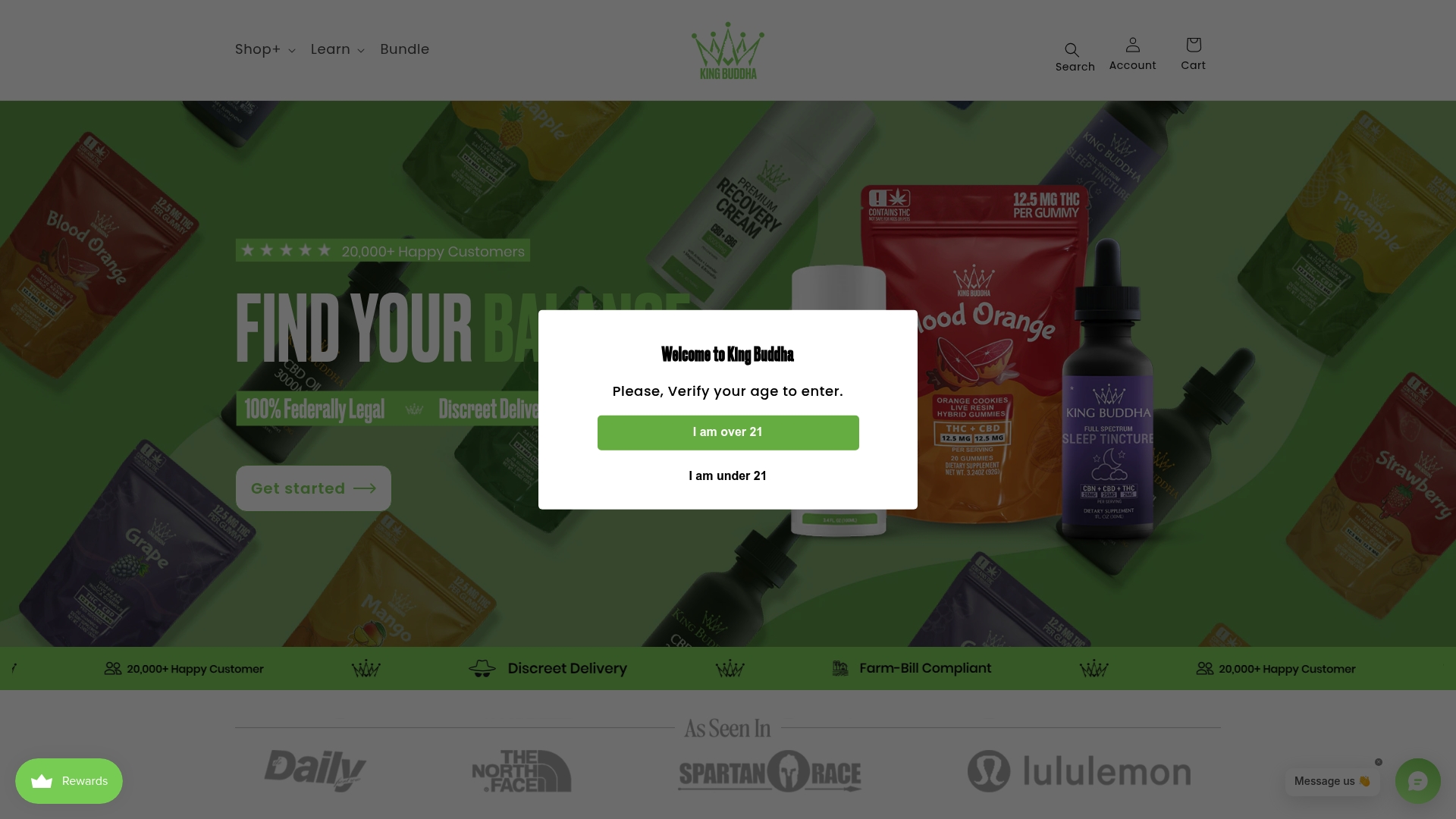
The CBD Sleep Support Gummies are built for the bedtime routine: a consistent edible dose that takes 45–90 minutes to reach peak effect, timed perfectly for the wind-down sequence described above. Each batch comes with a COA you can verify before you open the bag.
For pre-session dosing with breathing or meditation, the Terpene Tinctures offer sublingual delivery with terpene profiles selected for relaxation support. The 15–30 minute onset window makes them the most practical option for pairing with a structured session. Start with the lowest available serving size and work up from there.
Both products use U.S.-sourced hemp and are third-party tested. Check the COA on the product page before your first order, note the batch number, and start with the lowest recommended serving. That's the same protocol the clinical trials use, scaled to a consumer context.
Useful sources and further reading
- Enhancing endocannabinoid control of stress with cannabidiol — PMC review covering seven double-blind, placebo-controlled trials (232 participants) on CBD and stress-related outcomes.
- Use of CBD in the Treatment of Anxiety (NCT06672666) — Active clinical trial using 50–150 mg/day titration with HAM‑A and GAD‑7 outcome measures; useful for understanding clinical dosing context.
- Functional neuroimaging of CBD in stress and anxiety — Systematic review of 12 neuroimaging studies; explains why neural-mechanism claims should be treated cautiously.
- Phase 3 trial: nanodispersible CBD oral solution vs. placebo — 178-participant RCT showing significant GAD‑7 and HAM‑A improvements (p<0.0001).
- Investigating CBD for Social Anxiety Disorder (NCT05649059) — Ongoing DBPC trial using Epidiolex and fMRI to measure anxiety and stress responses; good context for neuroimaging limitations.
- The endocannabinoid system: essential and mysterious — Harvard Health overview of the endocannabinoid system for readers who want accessible background on mechanism.
- Kingbuddha: 7 Ways CBD Promotes Relaxation Naturally — Brand educational content covering practical relaxation mechanisms and product guidance with COA references.
- Kingbuddha: CBD for Stress Relief — 5 Safe Steps — Step-by-step starter guide with titration advice and pairing suggestions for nonpharmacologic relaxation methods.