
CBD Explained: Natural Wellness, Safety, and Smart Use
TL;DR:
- CBD is a non-intoxicating compound from hemp used for stress, sleep, and pain relief.
- It interacts with the endocannabinoid system indirectly, supporting mood and inflammation regulation.
- Use third-party tested products within safe dosage guidelines to maximize benefits and minimize risks.
CBD shows up everywhere now, from coffee shops to yoga studios to your neighbor's medicine cabinet. Yet most people still mix it up with THC, the compound in marijuana that gets you high. CBD (cannabidiol) is a completely separate, non-intoxicating compound from the Cannabis sativa plant, and that distinction changes everything about how it works and why millions of people are turning to it for stress relief, better sleep, and pain management. This guide walks you through what CBD actually is, how it works in your body, what the research says about its real benefits, and how to use it safely without getting lost in the hype.
Table of Contents
- What is CBD? The basics explained
- How does CBD work in your body?
- Is CBD effective for stress, sleep, and pain?
- CBD safety, side effects, and smart use
- Our take: What most CBD guides fail to mention
- Explore quality CBD for your wellness journey
- Frequently asked questions
Key Takeaways
| Point | Details |
|---|---|
| CBD is non-intoxicating | CBD will not make you feel high and is different from THC. |
| Best evidence for seizure relief | Prescription CBD has strongest proven benefit for certain epilepsies. |
| Wellness results are modest | CBD may help with stress, sleep, and pain, but effects are usually subtle. |
| Quality and safety matter | Choose third-party lab-tested products and check for pure, accurate labeling. |
| Start low, monitor effects | Begin with a low dose and watch for side effects, especially with other drugs. |
What is CBD? The basics explained
CBD stands for cannabidiol, a naturally occurring compound found primarily in the hemp variety of the cannabis plant. Hemp and marijuana both come from Cannabis sativa, but they are legally and chemically different. Hemp is bred to contain almost no THC (tetrahydrocannabinol), which is the compound responsible for the "high" associated with marijuana use.
This is the core distinction that matters: CBD is non-intoxicating, meaning it will not alter your perception, impair your coordination, or produce the euphoric rush that THC does. They come from the same plant family, but they act on your brain and body in fundamentally different ways. Understanding CBD vs THC differences can save you a lot of confusion when reading product labels.
Under U.S. federal law, CBD products derived from hemp must contain less than 0.3% THC to be legal. That tiny threshold is not enough to produce any psychoactive effect.
CBD is available in many forms today:
- Oils and tinctures: Drops placed under the tongue for faster absorption
- Gummies: Pre-dosed, easy to take, and popular for sleep and stress
- Topicals: Creams and balms applied directly to sore muscles or joints
- Capsules: Familiar pill format, slower to absorb but convenient
Common misconceptions vs. facts:
| Misconception | Fact |
|---|---|
| CBD gets you high | CBD is non-intoxicating |
| CBD and marijuana are the same | Hemp-derived CBD is legally and chemically distinct |
| All CBD is illegal in the U.S. | Hemp CBD under 0.3% THC is federally legal |
| CBD works instantly for everyone | Effects vary by person, dose, and product form |
"CBD products come in many forms and are widely marketed for wellness, but not all are equally accurate in labeling or effective in delivery."
How does CBD work in your body?
With the basics clear, let's explore how CBD interacts with your body at a deeper level.
Your body has a built-in system called the endocannabinoid system (ECS). Think of the ECS as a dimmer switch for your nervous system. It helps regulate mood, pain perception, sleep, appetite, and immune response. Your body produces its own natural cannabinoids to keep this system balanced, and CBD appears to support that balance by interacting with it indirectly.
Unlike THC, CBD does not bind tightly to the primary cannabinoid receptors (CB1 and CB2). Instead, CBD modulates stress and inflammation through multiple signaling pathways, including serotonin receptors, which help regulate mood and anxiety. This multi-target action is part of why CBD feels subtler than THC but may still produce meaningful shifts in how you feel.

| Body system | CBD's potential action |
|---|---|
| Nervous system | Modulates stress response, supports calm |
| Immune system | May reduce inflammation via CB2 pathway |
| Sleep regulation | Interacts with adenosine and serotonin receptors |
| Pain pathways | Reduces inflammatory and neuropathic signals |
One important concept here is the entourage effect. Full-spectrum CBD products contain not just CBD but also trace cannabinoids, terpenes, and plant compounds. The theory is that these compounds work better together than any single one alone. CBD isolate, by contrast, is pure CBD with everything else removed.
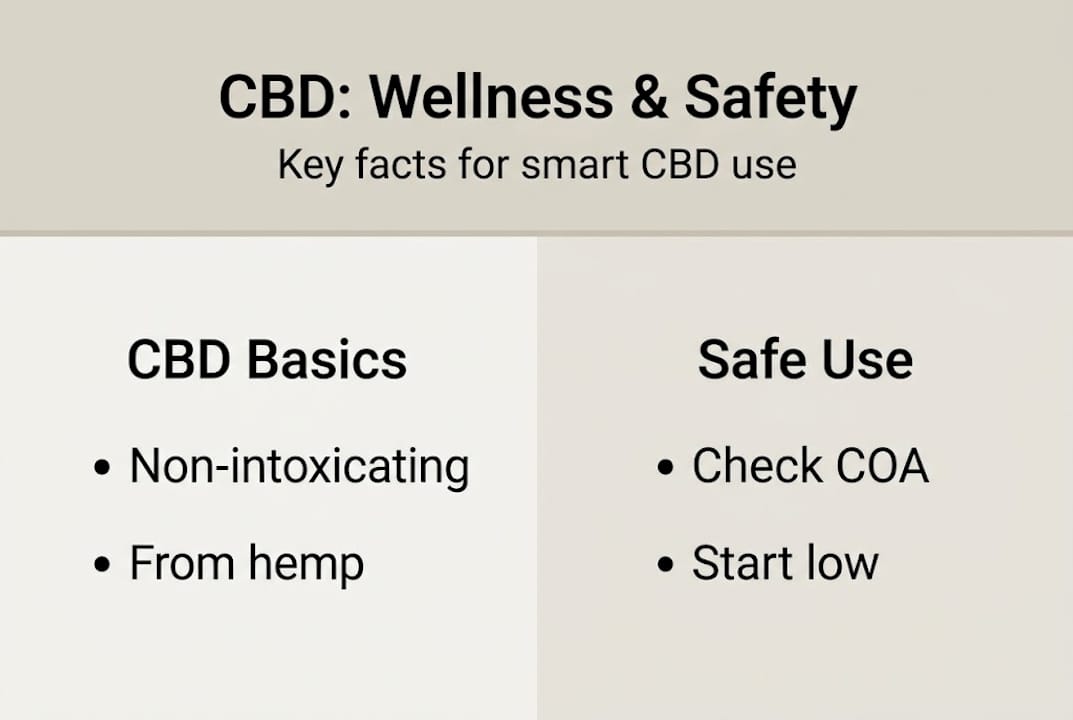
Bioavailability (the percentage of CBD that actually reaches your bloodstream) varies a lot by product type. Sublingual oils score higher than gummies, which pass through your digestive system first. Check out CBD dosage basics to understand how delivery method affects how much you actually absorb.
Pro Tip: Start with the lowest recommended dose and track how you feel over two weeks before adjusting. Your body weight, metabolism, and sensitivity all play a role in your personal response.
Is CBD effective for stress, sleep, and pain?
But what does the research actually show about CBD's real-world benefits?
The most definitive clinical win for CBD is in seizure treatment. FDA-approved prescription CBD (Epidiolex) is used to treat rare childhood epilepsy syndromes. That is a high bar of evidence. For stress, sleep, and pain, results are more modest but genuinely promising.
Here is what the evidence shows for each:
- Stress and anxiety: Multiple small trials show CBD reduces self-reported anxiety in controlled settings. The effect is real but not dramatic, and long-term data is still limited.
- Sleep: CBD appears to help people fall asleep faster and wake less often, particularly in those whose sleep problems are tied to anxiety. Learn more about using CBD for sleep and pain in practice.
- Pain: Full-spectrum cannabis extract reduced chronic low back pain in a clinical trial, with a number needed to treat (NNTB) of 6.8 for a 30% response. That means roughly 7 people need to try it for one person to achieve meaningful relief. Modest but real.
"CBD is not a substitute for proven medical treatments, but for many people managing daily stress and discomfort, it may offer a meaningful, low-risk complement to other wellness strategies."
For CBD for anxiety evidence, current studies suggest that full-spectrum products often outperform isolates, likely because of the entourage effect mentioned earlier. The takeaway here is realistic: CBD can support wellness goals but is not a miracle cure.
CBD safety, side effects, and smart use
Understanding CBD's effects is only half the story. Here's how to use it safely and wisely.
CBD is generally well tolerated, but side effects do exist. Common side effects include dry mouth, diarrhea, fatigue, changes in appetite, and elevated liver enzymes at higher doses. Drug interactions are also a real concern. CBD is processed by the same liver enzymes as many prescription medications, which can raise or lower drug levels in your blood.
A meta-analysis confirms increased diarrhea risk at higher doses, though other side effects tend to be less significant at typical wellness doses. Still, knowing your baseline is important.
Who should be especially careful:
- People taking blood thinners, anti-seizure medications, or immunosuppressants
- Pregnant or breastfeeding individuals (avoid CBD entirely)
- Children (only under direct medical supervision)
- Anyone with liver conditions
The acceptable daily intake (ADI) for healthy adults is around 10 mg of pure CBD per day for general wellness use. Some people use more, but higher doses increase the risk of side effects.
One major safety issue is label accuracy. OTC CBD products often have inaccurate labels, meaning what's on the bottle may not match what's inside. Third-party lab testing is the only real safeguard here. A certificate of analysis (COA) from an independent lab tells you the actual CBD and THC content. Review CBD side effects before starting and follow CBD dosing guidance to stay within safe ranges.
Pro Tip: Always ask for a COA before buying any CBD product. If a brand can't provide one, that's a red flag worth taking seriously.
Our take: What most CBD guides fail to mention
Most CBD content online focuses on the benefits and glosses over the messy reality. Here is the part that matters more: the placebo effect in CBD studies is substantial, often hovering around 30 to 40% in trials. That does not mean CBD isn't working. It means individual responses vary widely, and expecting the same result as a friend or an influencer is a setup for disappointment.
The regulatory gap is also real. Product innovation has moved far faster than oversight. Brands can make sweeping wellness claims without being held to pharmaceutical standards of proof. That is not necessarily dishonest. It just means you have to do some of the quality control work by checking for published lab results.
Our perspective at King Buddha is straightforward: CBD is a legitimate wellness adjunct, not a first-line treatment for serious conditions. Full-spectrum formulations often deliver better results than isolates, but only when backed by solid third-party lab data. Read up on CBD overview and precautions before choosing a product, and approach CBD the same way you would any other supplement: with curiosity, patience, and a healthy dose of skepticism.
Explore quality CBD for your wellness journey
You now know what CBD is, how it works, what the research supports, and how to use it safely. The next step is finding products that actually deliver on those promises.
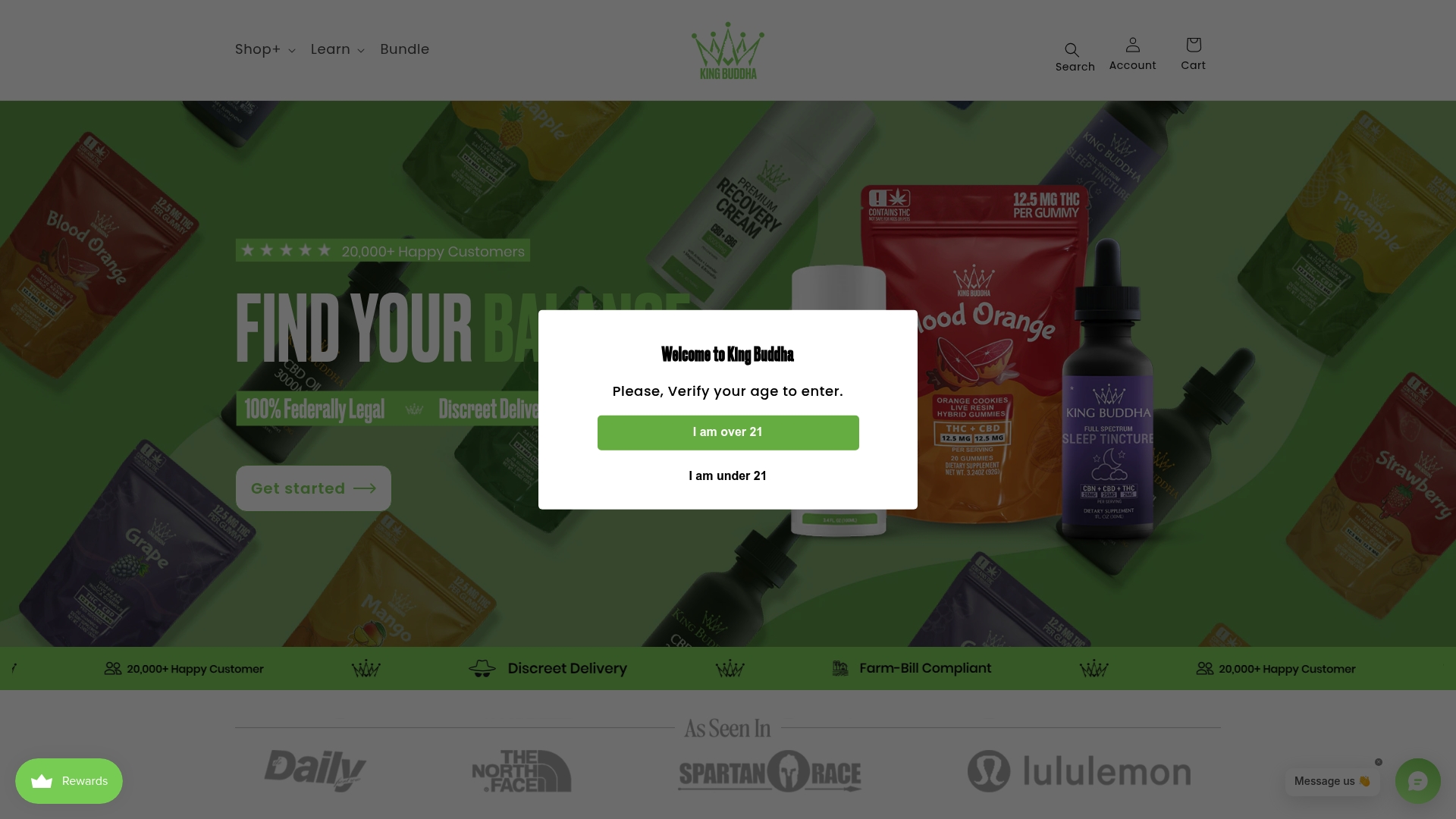
At King Buddha, every product is third-party lab tested, made with U.S.-sourced hemp, and formulated to support real wellness goals. Whether you're looking for CBD sleep support gummies to ease nighttime restlessness or exploring broad and full-spectrum CBD tinctures for daily stress relief, our lineup is built with transparency and quality first. No guesswork. No inflated claims. Just clean, tested CBD designed to fit into your routine and support your goals.
Frequently asked questions
Can CBD make you feel high?
CBD is non-intoxicating and works through entirely different pathways than THC, so it will not produce a high or alter your perception.
Is CBD legal in the United States?
Hemp-derived CBD with less than 0.3% THC is federally legal under the 2018 Farm Bill, though some states have their own additional restrictions worth checking.
How much CBD should I take?
Start with 10 to 25 mg daily and increase slowly over one to two weeks, paying attention to how your body responds before adjusting further.
What are the main side effects of CBD?
The most common side effects are dry mouth, diarrhea, fatigue, and drug interactions with medications, so always check with your doctor if you take prescription drugs.
How can I tell if a CBD product is high quality?
Always look for a certificate of analysis from a third-party lab that confirms the actual CBD content and verifies the THC level is within legal limits.